
Manchester Terrier Dog Breed Information
Also known as: Black-and-Tan Terrier, English Black-and-Tan Terrier
The original sleek black-and-tan English ratting terrier. Smaller than most people expect, larger than the English Toy Terrier (its toy-sized sister breed), and one of the lowest-maintenance terriers the NZKC registers.
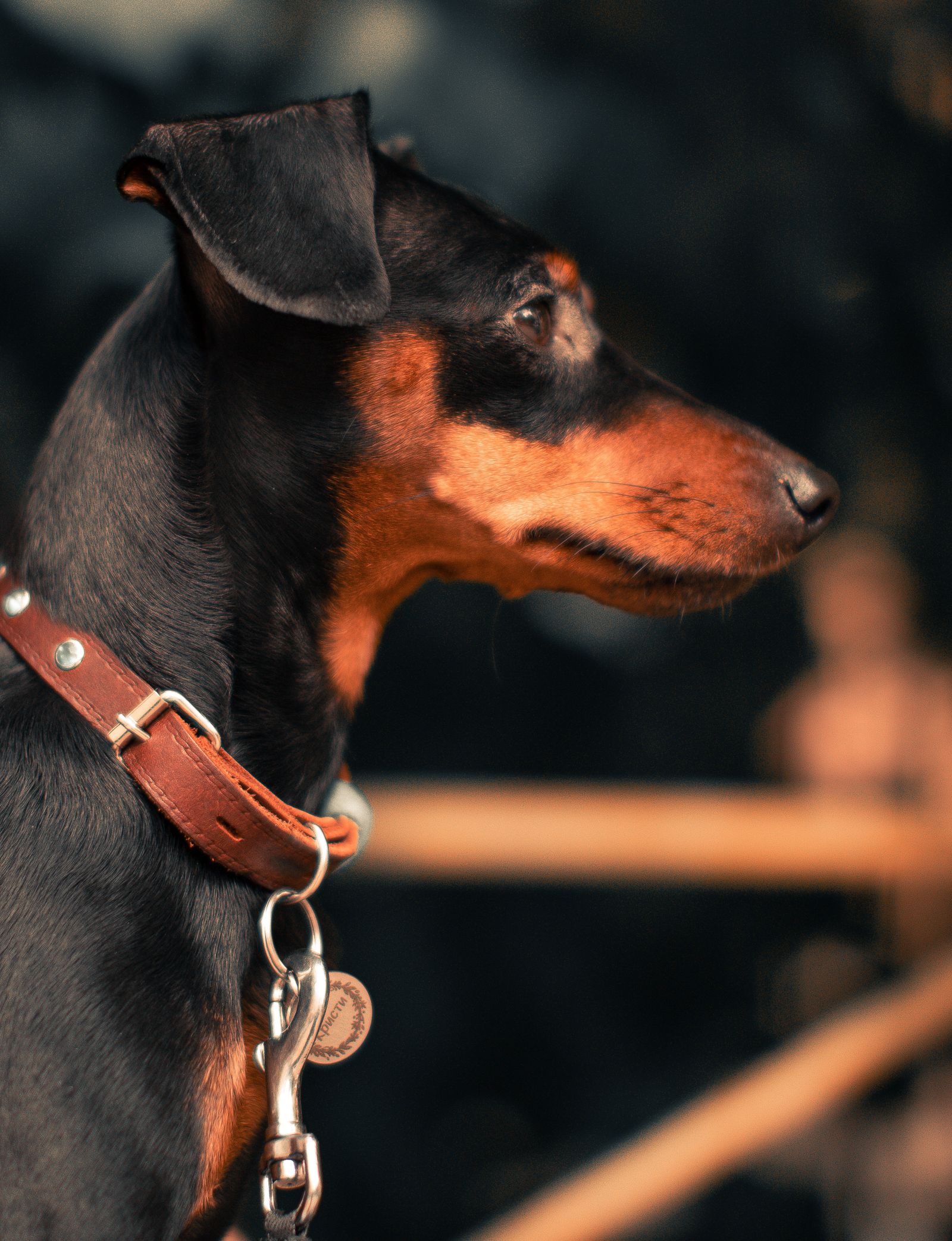
A highly affectionate, highly trainable, high energy dog. On the practical side: low grooming demands and minimal drool.
About the Manchester Terrier.
The Manchester Terrier is the original sleek black-and-tan English ratting dog, and one of the most overlooked small breeds in New Zealand. The dog you usually see at NZ shows or in suburban Auckland is mistaken for a Miniature Pinscher (a separate German breed) or, less often, for a small black-and-tan crossbreed. The Manchester is its own breed with its own working history, and one of the easiest small terriers the NZKC registers when it comes to grooming, shedding and indoor manners.
Adults stand 38 to 41 cm at the shoulder and weigh 5 to 10 kg. The coat is short, single, close to the body and glossy black with rich tan markings on the legs, chest, throat and face. Black-and-tan is the only colour in the standard. Build is athletic and lean, somewhere between a small terrier and a small Whippet, reflecting the 19th-century cross that created the breed.
Personality and behaviour
Manchesters are alert, busy, watchful small dogs that bond hard to one or two people in the household. The breed defaults to confident behaviour around the house, reserved with strangers (warming up after introduction rather than greeting like a Labrador), and athletic outdoors. Most adult Manchesters are happy with one main person who handles training, walks and most of the household interaction.
The trait that surprises new owners is the combination of intensity and indoor calm. The breed runs hot in pursuit and looks like a working terrier outside, then settles cleanly on a couch indoors. Manchesters do not dig out of boredom or chew the kitchen the way many other terrier breeds do, provided exercise is real and structured.
The other surprise is the prey drive. Manchesters were rat-pit dogs in industrial Manchester, and the drive to chase, catch and dispatch small running animals is intact. Households with rabbits, guinea pigs or aviary birds need a careful introduction protocol or a separation routine. Cats they live with from puppyhood are usually fine; visiting cats are usually not.
The breed alerts at the door but does not run continuous bark commentary on neighbourhood traffic. Most NZ Manchester owners describe a more dignified small dog than a Jack Russell or a Mini Schnauzer.
Care and exercise
Plan on around an hour of structured exercise a day, split between a brisk walk and a play or training session. The breed is athletic enough to run on a lead with a fit owner and excels at agility, lure coursing, scentwork and obedience. NZKC clubs in most centres run classes that suit the breed.
Grooming is the easy part. The short single coat sheds very little year-round and is essentially self-cleaning. A weekly going-over with a hound glove or rubber curry mitt handles loose hair. Bath every 8 to 12 weeks unless the dog rolls in something. Nails grow fast and stay hard; if you can hear them on a kitchen floor, they need a trim. The coat offers very little cold protection, so a fitted dog coat for winter walks below five degrees matters in Wellington, Christchurch and Otago.
Dental disease is the lifetime watchpoint. Small jaw, crowded teeth, plaque builds, and most Manchesters need a scale-and-polish under general anaesthetic from age six (NZ$400 to NZ$900 per session). Daily tooth brushing pushes that out by years.
The cardiomyopathy risk is the breed-typical health watch. Reputable NZKC breeders cardiac-screen parents. Annual vet checks from age 5 catch most issues early enough to manage. Von Willebrand disease (an inherited bleeding disorder) is the other genetic concern; the DNA test is available and ethical breeders test parents before breeding.
Climate fit across New Zealand
The Manchester’s smooth single coat shapes the climate fit more than the breed’s ancestry suggests.
- Auckland and Northland. A natural fit. The coat handles upper North Island heat well, the breed is small enough for suburban sections, and most Auckland Manchesters spend the year coat-free. Pale-bellied dogs need shade in midday summer sun.
- Wellington. Wind is fine; cold rain is harder. A fitted coat for winter walks below seven degrees is sensible. The hill-suburb walk-up house routine suits the breed’s athletic build.
- Christchurch and Canterbury. Frosty winters need a fitted coat or fleece for walks below five degrees. The breed is too sleek to thermoregulate in heavy frost. Summer is fine. Grass-seed risk on plains paddocks needs checking after rural walks.
- Central Otago and Southland. Cold is the limiting factor. The coat is too thin for sustained winter walks without proper insulation. Indoor warmth, raised beds off cold floors and shorter outdoor sessions on snow days.
Where to find a Manchester Terrier in New Zealand
The Manchester is a low-volume breed in NZ. Active NZKC breeders are few and waitlists run long.
- Registered NZKC breeders. The Dogs NZ breeders directory lists active Manchester Terrier breeders, often only one or two by region. Expect a 12 to 18 month waitlist and NZ$2,500 to NZ$4,000 per puppy. A reputable breeder will DNA-test for von Willebrand disease, cardiac-screen parents, and supply NZKC pedigree papers.
- Australian import. Some NZ owners import from Australian breeders. Expect total cost (puppy, MPI import process, transit) to land between NZ$5,500 and NZ$8,000.
- SPCA NZ and small-breed rescue. Manchesters are uncommon in NZ rescue. The breed turns up perhaps once or twice a year through SPCA centres or specialist small-breed rescues, usually as adolescents or seniors. Adoption fees typically NZ$300 to NZ$600.
Avoid online listings selling “miniature Manchester” or “Toy Manchester” puppies. The English Toy Terrier is a separate registered breed; mixed-breed dogs marketed under those names are usually poorly bred crosses.
Insurance and lifetime cost
Manchester insurance claims in NZ skew toward dental, the occasional cardiac claim, and orthopaedic issues from the breed’s high-impact play style. Three things to weigh on a policy:
- Lifetime cover vs accident-only. Lifetime cover continues to pay for chronic conditions year after year. For a 14 to 16 year breed, this is meaningful. Annual difference is roughly NZ$200 to NZ$400.
- Pre-existing exclusions. Cardiac and dental issues often surface in the first year. A policy taken out at puppy collection avoids this trap.
- Sub-limits per condition. Cardiac treatment can run NZ$2,000 to NZ$5,000 a year; cheaper policies cap this at NZ$3,000.
For a typical NZ Manchester on a mid-range lifetime policy, lifetime cost (purchase plus 14 to 16 years of food, vet, insurance, gear) lands around NZ$22,000 to NZ$30,000. The breed is one of the cheaper small dogs to own well in NZ, mostly because the grooming line is small and the dog rarely needs professional trimming.
The Manchester Terrier, by the numbers.
Each trait scored 1 to 5 on the AKC scale. The verdict synthesises the data; the panels below show the strengths, group averages, and the full trait table.
Top strengths
Family Life
avg 3.3Affectionate with Family
Good with Young Children
Good with Other Dogs
Physical
avg 1.3Shedding
Grooming Frequency
Drooling
Social
avg 3.8Openness to Strangers
Playfulness
Watchdog / Protective
Adaptability
Personality
avg 3.8Trainability
Energy Level
Barking Level
Mental Stimulation Needs
Living with a Manchester Terrier.
A 24-hour breakdown of how this breed's day typically goes, scaled to its energy, mental-stimulation, and grooming needs.
What a Manchester Terrier costs to own.
An indicative NZ lifetime cost: purchase, setup, then food, vet, insurance, grooming and other annual outgoings. Adjust the inputs to see how your choices change the total.
A Manchester Terrier costs about
$210per month
$48
$7
$41,500
Adjust the inputs:
Where the monthly cost goes
Food
$60 / mo
$725/yr · breed-appropriate dry & wet food
Insurance
$53 / mo
$635/yr · lifetime cover protects against breed-specific claims
Vet (avg)
$59 / mo
$710/yr · routine checks plus breed-specific risk
Grooming
$0 / mo
$0/yr · brushes, shampoo, professional clips
Other
$38 / mo
$450/yr · toys, treats, dental, boarding
Indicative NZ averages calculated from breed weight, grooming need and screened-condition count. One-off costs (purchase $3,250 + setup $450) are factored into the lifetime total but not the monthly figure.
How does the Manchester Terrier compare?
This breed
Manchester Terrier
$41,500
15-year lifetime cost
- Purchase + setup$3,700
- Food (lifetime)$10,875
- Vet (lifetime)$10,650
- Insurance (lifetime)$9,525
- Grooming (lifetime)$0
- Other (lifetime)$6,750
Reference
Average NZ medium dog
$38,920
12-year lifetime cost
- Purchase + setup$2,200
- Food (lifetime)$13,200
- Vet (lifetime)$6,000
- Insurance (lifetime)$11,400
- Grooming (lifetime)$2,400
- Other (lifetime)$3,720
A Manchester Terrier costs about $2,580 more over a lifetime than the average nz medium dog, mostly highervet and higherother.
What to ask the breeder.
Reputable NZKC breeders test for these conditions and share results without being prompted. If a breeder won't share screening results, that is itself an answer.
Occasional
6 conditionsVon Willebrand disease
Inherited bleeding disorder. DNA test available; reputable breeders test parents.
Juvenile cardiomyopathy
An occasional condition in the Manchester Terrier. Worth asking about and DNA testing where available.
Patellar luxation
An occasional condition in the Manchester Terrier. Worth asking about and DNA testing where available.
Glaucoma and lens luxation
An occasional condition in the Manchester Terrier. Worth asking about and DNA testing where available.
Hypothyroidism
An occasional condition in the Manchester Terrier. Worth asking about and DNA testing where available.
Dental crowding
Daily brushing pushes the first scale-and-polish out by years.
The Manchester Terrier in NZ.
- NZ popularity: ranked #110
- Popularity: A small but persistent NZKC presence. Active breeders are few and waitlists run long. Most NZ Manchester Terriers come from a handful of NZKC breeders or Australian imports.
- Typical price: NZ$2500–4000 from registered breeders
- Rescue availability: rare
- NZ climate fit: The smooth single coat handles warm weather well and offers very little protection in cold weather. Auckland and Northland suit the breed naturally; Wellington, Christchurch and Otago need a fitted coat for winter walks. Pale-bellied dogs need shade in upper North Island summer sun.
- Living space: Suits apartments, townhouses and suburban houses given the low-shed easy-care coat. A securely fenced section is essential, since the breed is a strong jumper and persistent prey-driven escape artist.
Who the Manchester Terrier is for.
Suits
- Active owners wanting a small low-shed athletic dog
- Apartment dwellers willing to commit to daily exercise
- Households without small caged pets
- Adult and adult-with-older-children households
Less suited to
- Households expecting a quiet lapdog
- Owners with rabbits, guinea pigs or aviary birds
- Cold-region households unwilling to use a dog coat in winter
Common questions.
How is the Manchester Terrier different from the English Toy Terrier?
How is the Manchester Terrier different from the Miniature Pinscher?
Are Manchester Terriers good for apartments?
If the Manchester Terrier appeals, also consider.
Breeds with a similar profile that might suit your household.

English Toy Terrier
A 2.7 to 3.6 kg sleek black-and-tan toy, the smaller cousin of the Manchester Terrier and a miniaturised ratting terrier from Victorian England. Listed as a vulnerable native breed in the UK by the Kennel Club. Genuinely uncommon in NZ, with most pups coming from a small handful of NZKC-registered breeders.

Miniature Pinscher
A compact German ratting toy with a hackney trot, big personality and zero off-switch. Looks like a small Doberman but is a separate, older breed. Rare in NZ but loved by owners who want a high-drive, low-shedding 4 kg dog.

Whippet
A small to medium sighthound that runs at 55 km/h and sleeps 18 hours a day. Quiet, clean, low-shedding, and unusually well-suited to NZ apartment and townhouse living.
Last reviewed:
Sources for this pageInformation only. Breed traits and health notes on this page are aggregated from public registry and breed-authority sources. Individual animals vary; this page is general information, not veterinary, behavioural, or insurance advice. Always consult a registered NZ vet or breeder for guidance specific to your situation.