
New Zealand Huntaway Dog Breed Information
Also known as: Huntaway, NZ Huntaway
A New Zealand-developed working sheepdog known for its deep, deliberate bark used to drive stock. Athletic, clever, fiercely loyal to its handler.
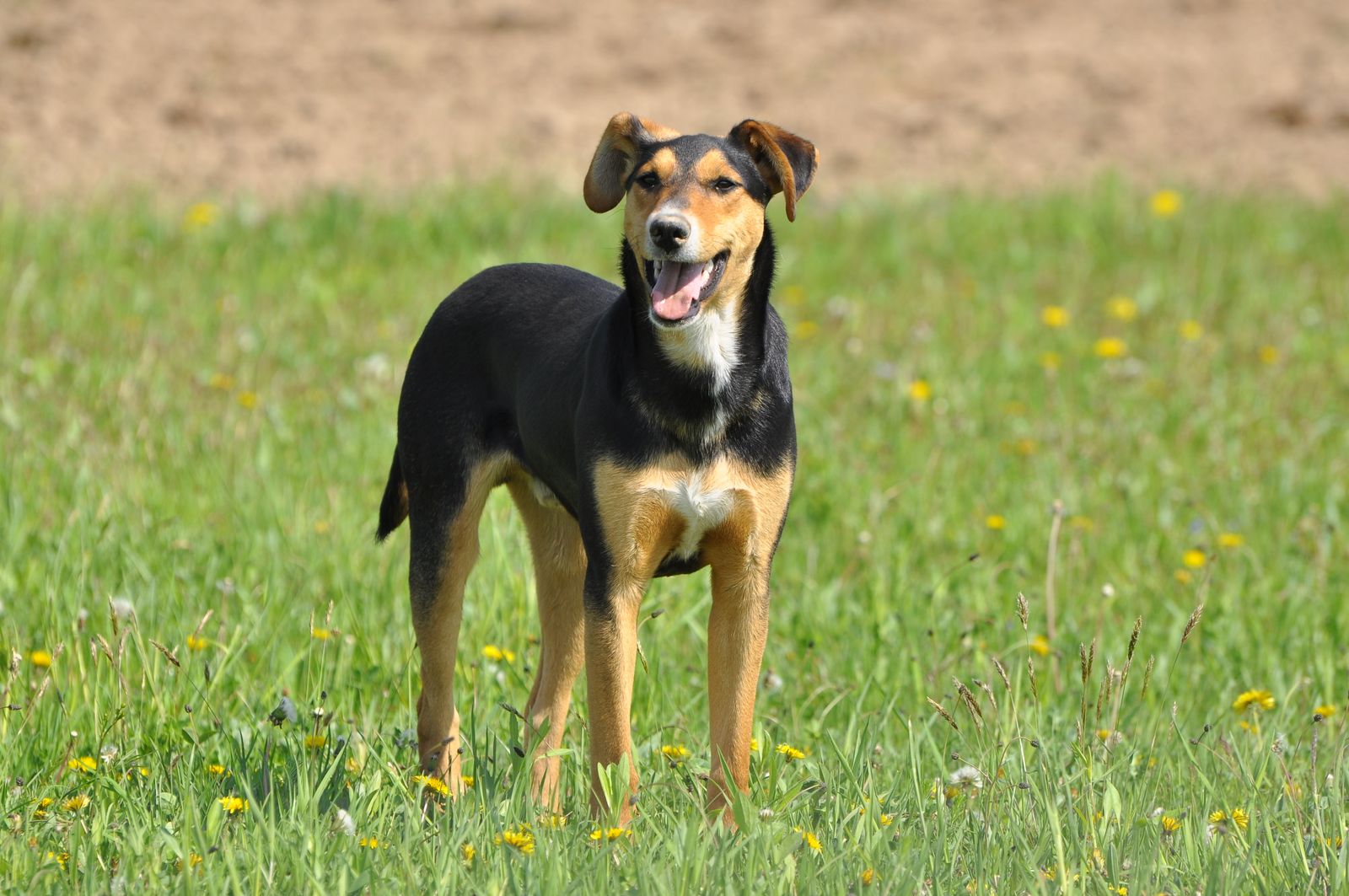
A highly affectionate, highly trainable, great with young children dog. On the practical side: low grooming demands and minimal drool. The trade-off is vocal.
About the New Zealand Huntaway.
The Huntaway is the only dog breed developed in New Zealand. It was bred for one purpose: to move sheep up steep hill country using a deep, deliberate bark, complementing the silent stalking work of the NZ Heading dog. Today it is the second-most-registered breed in the country.
Huntaways stand 50 to 66 cm at the shoulder and weigh 20 to 40 kg, with significant size variation reflecting that they were bred for function over conformation. Coat is short and either smooth or slightly rough, most commonly black and tan.
Personality and behaviour
A working-bred Huntaway is athletic, clever, biddable with its handler and reserved with strangers. They form strong bonds with one or two people and are reliable in a working partnership. They retain puppy energy until two to three years old and need a job at all life stages.
The defining behavioural feature is the bark. It is purposeful, loud, and frequent. Pet Huntaways need this redirected through training or it becomes a household problem.
Care and exercise
Plan on at least two hours of activity a day for an adult Huntaway, ideally combining a long walk or run with mental work (scent, herding, agility, fetch). Anything less and they will create their own job, usually involving the lawn, the fence, or the neighbours.
Coat care is minimal: a weekly brush is enough.
The New Zealand Huntaway, by the numbers.
Each trait scored 1 to 5 on the AKC scale. The verdict synthesises the data; the panels below show the strengths, group averages, and the full trait table.
Top strengths
Family Life
avg 4.0Affectionate with Family
Good with Young Children
Good with Other Dogs
Physical
avg 1.7Shedding
Grooming Frequency
Drooling
Social
avg 3.3Openness to Strangers
Playfulness
Watchdog / Protective
Adaptability
Personality
avg 5.0Trainability
Energy Level
Barking Level
Mental Stimulation Needs
Living with a New Zealand Huntaway.
A 24-hour breakdown of how this breed's day typically goes, scaled to its energy, mental-stimulation, and grooming needs.
What a New Zealand Huntaway costs to own.
An indicative NZ lifetime cost: purchase, setup, then food, vet, insurance, grooming and other annual outgoings. Adjust the inputs to see how your choices change the total.
A New Zealand Huntaway costs about
$285per month
$66
$9
$46,310
Adjust the inputs:
Where the monthly cost goes
Food
$117 / mo
$1,400/yr · breed-appropriate dry & wet food
Insurance
$87 / mo
$1,040/yr · lifetime cover protects against breed-specific claims
Vet (avg)
$44 / mo
$530/yr · routine checks plus breed-specific risk
Grooming
$0 / mo
$0/yr · brushes, shampoo, professional clips
Other
$38 / mo
$450/yr · toys, treats, dental, boarding
Indicative NZ averages calculated from breed weight, grooming need and screened-condition count. One-off costs (purchase $1,400 + setup $450) are factored into the lifetime total but not the monthly figure.
How does the New Zealand Huntaway compare?
This breed
New Zealand Huntaway
$46,310
13-year lifetime cost
- Purchase + setup$1,850
- Food (lifetime)$18,200
- Vet (lifetime)$6,890
- Insurance (lifetime)$13,520
- Grooming (lifetime)$0
- Other (lifetime)$5,850
Reference
Average NZ medium dog
$38,920
12-year lifetime cost
- Purchase + setup$2,200
- Food (lifetime)$13,200
- Vet (lifetime)$6,000
- Insurance (lifetime)$11,400
- Grooming (lifetime)$2,400
- Other (lifetime)$3,720
A New Zealand Huntaway costs about $7,390 more over a lifetime than the average nz medium dog, mostly higherfood and lowergrooming.
What to ask the breeder.
Reputable NZKC breeders test for these conditions and share results without being prompted. If a breeder won't share screening results, that is itself an answer.
Occasional
2 conditionsHip dysplasia
An occasional condition in the New Zealand Huntaway. Worth asking about and DNA testing where available.
Joint strain
Demanding work over rough country can lead to early joint wear.
Rare but urgent
1 conditionCerebellar abiotrophy
Genetic condition documented in NZ working sheepdog lines; reputable breeders DNA-test.
The New Zealand Huntaway in NZ.
- NZ popularity: ranked #2
- Popularity: The second-most-registered breed in NZ overall, dominant in rural districts. Combined with Border Collie and Heading, working dogs make up roughly 12% of all national registrations (DIA 2025).
- Typical price: NZ$800–2000 from registered breeders
- Rescue availability: common
- NZ climate fit: Bred for NZ hill country. Thrives across the full NZ climate range, from Northland summers to Central Otago winters.
- Living space: Built for paddocks and hills. A standard suburban backyard is rarely enough.
Who the New Zealand Huntaway is for.
Suits
- Working farms and lifestyle blocks
- Active rural families
- Experienced owners who can commit to two hours of daily work
Less suited to
- Apartments
- Owners who cannot tolerate frequent loud barking
- Sedentary households
Common questions.
Can a Huntaway live in an Auckland or Wellington flat?
How much do Huntaways bark?
Where can I adopt a Huntaway in NZ?
If the New Zealand Huntaway appeals, also consider.
Breeds with a similar profile that might suit your household.

Border Collie
Widely considered the most intelligent dog breed. Tireless, focused, and demanding to live with unless you give the brain a job.

Australian Cattle Dog
A compact Australian working breed bred to drove cattle by nipping at heels. Tireless, clever, fiercely bonded to its handler, and a regular sight on NZ lifestyle blocks and beef farms.
Last reviewed:
Sources for this pageInformation only. Breed traits and health notes on this page are aggregated from public registry and breed-authority sources. Individual animals vary; this page is general information, not veterinary, behavioural, or insurance advice. Always consult a registered NZ vet or breeder for guidance specific to your situation.