
For New Zealand pet owners
Pets in New Zealand: breed reference, comparison and owner services.
Trait-rated profiles for every NZ-recognised dog and cat breed, a side-by-side comparison tool, and a directory of 80+ vets, groomers, boarding and trainers across NZ's main cities. Drawn from public registries (Dogs NZ, NZCF, DIA, SPCA, AKC) with sources cited on every page.
What's on every breed page
- 14 to 16 trait ratings, AKC-style 1 to 5 scale
- Physical specs, coat, lifespan, exercise need
- Common health conditions, screening to ask for
- NZ context: climate, council registration, price band
- Lifetime cost calculator with NZ figures
- Side-by-side compare against up to 4 breeds
- Sources cited inline for every claim
What's on this site
Two pillars: breeds and services.
If you're choosing a pet, start with the breed reference. If you already own one, the Owners directory has every vet, groomer, day care and trainer we've verified, organised by city.
Breed reference
266 dog and cat breed profiles with NZ-specific context. AKC-style trait ratings, NZ council registration data, climate fit notes for Auckland through Otago, lifetime cost calculator per breed, and a side-by-side compare tool. Sourced from Dogs NZ, NZCF, AKC, SPCA NZ and the DIA national dog database.
Browse breeds →Owners directory
80+ verified service listings for vets, emergency vets, mobile vets, dog and cat groomers, boarding kennels and catteries, doggy day care, dog training, walkers and pet sitters. Organised by city across Auckland, Wellington, Christchurch, Hamilton, Tauranga and Dunedin.
Find services →Decision helper
Find your perfect breed.
Start with the most-registered NZ dogs and cats below, take the match quiz for a personalised shortlist, or compare any two breeds side by side.
Take the match quiz
Twelve questions on lifestyle, household, exercise and grooming time. Get a ranked top 5 with match scores.
Start the quiz → Up to 4 breedsCompare breeds
Pick up to four dogs or cats and see traits, physical specs, health and NZ context side by side.
Open compare tool → 220 breedsBrowse all dogs
Filter by NZKC group, size, energy and NZ-native status. Every NZKC-recognised breed has a full profile.
All dog breeds →Top 10 NZ dog breeds
By DIA national dog database registrations, 2025. Rank to the left.
Most popular NZ cats
From the NZCF and Catz Inc registers, plus the Domestic Shorthair which dominates the unregistered population.
- 1 Australian Mist
- 2 Abyssinian
- 3 Bengal
- 4 Balinese
- 5 Bombay
- 6 Birman
Featured profiles
Popular dog breeds.

Labrador Retriever
New Zealand's most popular dog. Friendly, biddable, athletic, and equally happy retrieving on the harbour or sleeping on the couch.
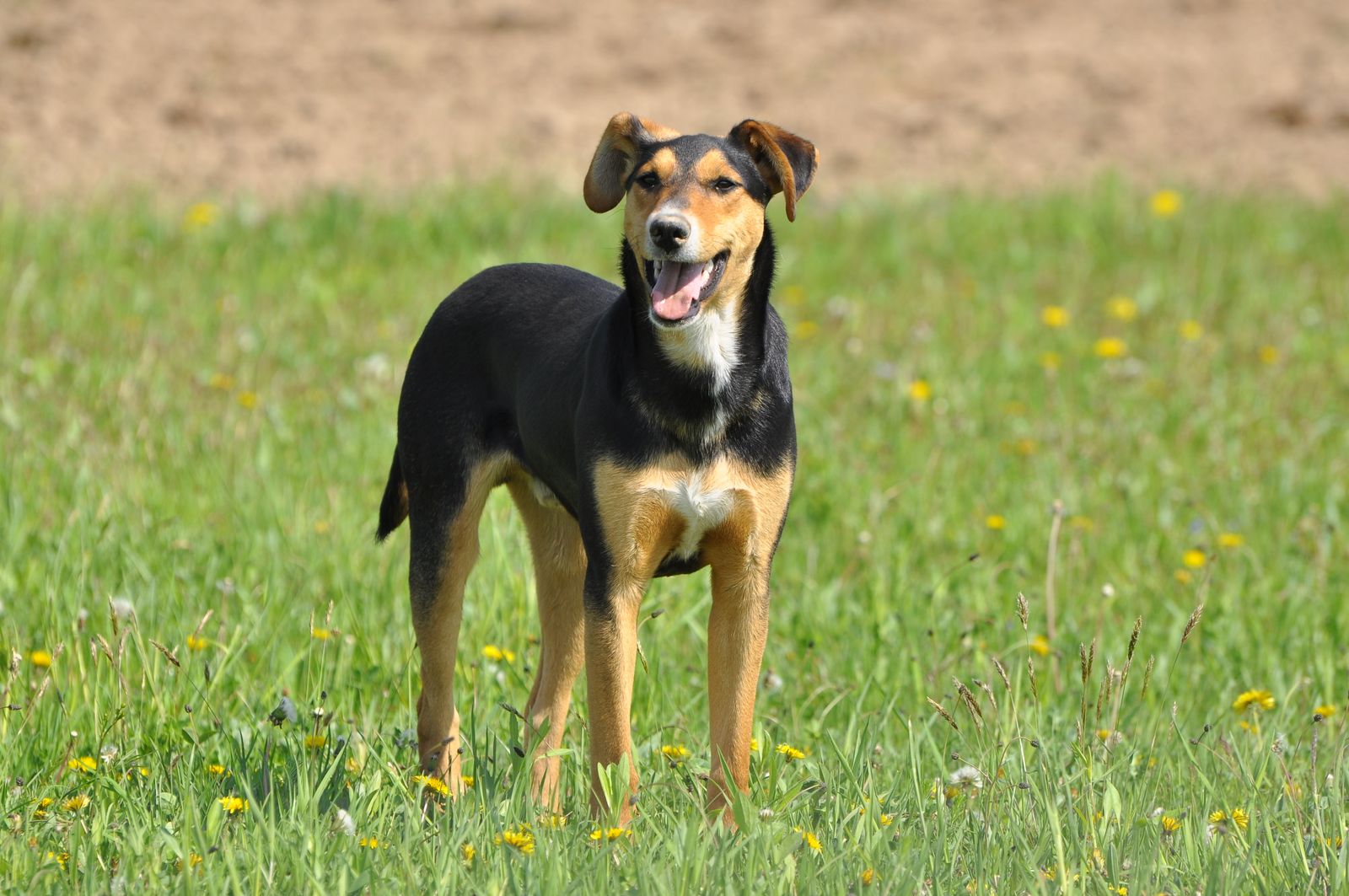
New Zealand Huntaway
A New Zealand-developed working sheepdog known for its deep, deliberate bark used to drive stock. Athletic, clever, fiercely loyal to its handler.

Border Collie
Widely considered the most intelligent dog breed. Tireless, focused, and demanding to live with unless you give the brain a job.

German Shepherd Dog
Athletic, sharp-minded working dog with strong protective instincts. Bonds tightly to its handler and needs a real job to be a good house dog.
From pedigree to moggy
Popular cat breeds.

British Shorthair
Stocky, plush-coated shorthair with a calm, undemanding temperament. Consistently in the top three pedigree cats registered in NZ alongside the Persian and Maine Coon. Famous for the "British Blue", a dense grey coat that sheds more than its short length suggests.

Persian
Calm, sedate longhaired cat with a flat face and dense double coat. One of the top three pedigree cats in NZ. High-maintenance grooming and well-documented brachycephalic health concerns make this a deliberate, indoor-only choice.

Siamese
Slender, blue-eyed colourpoint cat from Thailand. Among the most vocal and people-bonded breeds in the world. Smart, demanding, and a poor fit for households where the cat is alone all day.
Editorially maintained
Recently updated profiles.
Profiles get re-reviewed against new DIA registration data, breed club updates and primary-source changes. The freshest 6 across dogs and cats.
Abyssinian
Lithe, ticked-coated, and famously busy. The Abyssinian is one of the most active and intelligent cat breeds, often described as a small wild-cat in build with the temperament of a curious, people-oriented terrier.
Read profile →Afghan Hound
An ancient sighthound from the mountains of Afghanistan with a long silky coat. Independent, dignified, demanding to groom, and far better suited to cooler NZ regions like Wellington and Otago than to humid Northland summers.
Read profile →Airedale Terrier
The largest terrier the NZKC registers. A 25 to 30 kg working dog with a tan and black wire coat, a long history of military and farm work, and a steady but small presence on NZ rural lifestyle blocks.
Read profile →Akita
A large Japanese guarding spitz with a curled tail, a thick double coat and a famously dignified, one-family temperament. Quiet at home, intolerant of other dogs of the same sex, and a bigger commitment than most NZ owners realise.
Read profile →Alaskan Malamute
Heavy freight sled dog, larger and stronger than the Siberian Husky and built for power rather than speed. Affectionate with family, independent, vocal, and a serious commitment for first-time owners.
Read profile →American Cocker Spaniel
The smaller, longer-coated, show-line cocker recognised by the AKC in 1946 as a separate breed from the English Cocker. Distinct from the NZ "Cocker Spaniel", which is the English type. The Disney Lady is an American Cocker.
Read profile →Side-by-side
Most-compared breed pairings.
Common decisions NZ owners face. Each link opens the comparison tool with both breeds preloaded.
Owners directory
Pet services across New Zealand.
63 vet listings, 12 groomers, plus boarding, day care, training, walkers and pet sitters. Filter by city. Listings are free to claim.
Costs and lifetime planning
What does a pet actually cost in NZ?
Every breed page has an interactive lifetime cost calculator with NZ figures, plus a comparison against similar breeds. Quick reference below.
Council registration
$50 to $180
Annually, varies by council. Desexed dogs cheaper. Required for every dog over 3 months.
Vet consultation
$70 to $110
Standard appointment. Vaccinations $40 to $90 per dose. Emergency higher.
Pet insurance
$600 to $1,400
Annual premium. Heavily breed-dependent. French Bulldog costs more than Greyhound.
Lifetime total
$25k to $40k
Mid-sized dog over 12 years. Use breed-page calculator for per-breed estimate.
First-time owners
Choosing your first pet in New Zealand.
Five things that matter more than the breed itself.
1. Climate fit, not just popularity
The Labrador is the most-registered dog in New Zealand for good reason: a thick double coat that handles wet Wellington winters and mild Auckland summers, an exercise tolerance that suits beach walks year-round, and a temperament that copes with NZ's outdoor lifestyle. The same logic cuts the other way. The Siberian Husky is a beautiful dog and a poor fit for upper North Island summers (regular heat-related vet visits in February are common). The Sphynx cat is impractical in unheated South Island homes. Read the climate fit section on every breed page before falling in love with the photo.
2. Council registration is non-negotiable
Every dog over three months old must be registered with the local council under the Dog Control Act 1996. The fee runs $50 to $180 per year depending on council and whether the dog is desexed. Cats are not centrally registered, but the Companion Animals NZ database (microchipping) has become the de facto register. A small but growing list of councils now require cat containment in newer subdivisions; Selwyn District Council was the first to do so for new builds. Factor compliance into the decision before bringing the animal home.
3. Lifestyle match: urban, suburban or lifestyle block
NZ owners often underestimate the gap between a 600 sqm Auckland section and a 2 hectare lifestyle block. A Border Collie or New Zealand Huntaway in a small Mt Eden backyard without a structured job is a common cause of behaviour-related vet referrals; the same dog on a Waikato lifestyle block with stock to move is a different animal. Apartment dogs need different things again: a Greyhound, a Cavalier King Charles Spaniel or a Pug suits high-rise living far better than a Jack Russell Terrier or a working line Spaniel. Check your body corporate or tenancy agreement before committing; many Auckland CBD buildings cap dog weight at 10 to 15 kg.
4. Adoption versus reputable breeder
The SPCA is the largest national rescue network and lists adoptable dogs and cats at every regional centre. Smaller breed-specific groups exist for several breeds: the Greyhound Protection League, Retired Working Dogs NZ for Huntaways and Heading Dogs, and various breed-club rescues affiliated with Dogs New Zealand. If you want a registered breeder, start with the Dogs NZ breeder directory (dogs) or the New Zealand Cat Fancy and Catz Inc directories (cats). A reputable breeder shares full health-test results, allows visits, asks searching questions of you, and writes a return-to-breeder clause into the contract. Avoid Trade Me listings without registration papers and any breeder who advertises multiple unrelated breeds.
5. Lifetime cost beyond the purchase price
The purchase price of a registered NZKC puppy ($1,800 to $3,500 for most breeds) is roughly 5% of the dog's lifetime cost. Ongoing costs dominate the math: food, preventive vet care, pet insurance, grooming for the long-coated breeds, and boarding for travel. A French Bulldog is cheaper to feed than a Mastiff but vastly more expensive to insure (Frenchies have one of the highest insurance loss ratios in NZ; brachycephalic breathing, spinal disease and skin infections drive claim frequency). Use the cost calculator on each breed page for a per-breed estimate, and read the "Insurance and lifetime cost" section before committing.
NZ-specific data
NZ pet ownership by the numbers.
A quick reference. Sources at the bottom of the page.
38 of 67
Number of NZ territorial authorities where the Labrador Retriever is the most-registered dog. The Labrador has been NZ's number one for over a decade.
~600,000
Registered dogs in NZ as of 2025 (DIA national dog database). Over 4,400 individual breed and cross-breed combinations recorded.
~1,200,000
NZ cat population estimate (Companion Animals NZ, 2024). Domestic Shorthair and Domestic Longhair dominate; pedigree breeds make up roughly 5%.
2
NZ-developed dog breeds in active use: the New Zealand Huntaway (recognised by Dogs NZ in the working group) and the Heading Dog (descended from Border Collie lines, used in tandem with the Huntaway).
~64%
Estimated proportion of NZ households with a pet (Companion Animals NZ). Among pet-owning households, dogs and cats are split roughly evenly with substantial overlap.
221
Dog breeds recognised by Dogs NZ. Compare to roughly 200 by the AKC; NZ recognises a small set of breeds that the US does not.
Common questions
NZ pet owner FAQs.
High-intent questions we hear from new and prospective NZ pet owners. More detail on the relevant breed and service pages.
What is the most popular dog breed in New Zealand?
The Labrador Retriever has been New Zealand's most-registered dog breed for over a decade. The 2025 DIA national dog database puts the Labrador at number one in 38 of 67 territorial authorities. The New Zealand Huntaway sits at number two nationally, the only NZ-developed breed in the top 10.
How much does it cost to own a dog in New Zealand?
Lifetime cost varies by breed and city, but a typical mid-sized dog runs roughly $25,000 to $40,000 over a 12 year life. Annual outgoings break down to council registration ($50 to $180 depending on council and de-sexed status), food ($800 to $2,000), preventive vet care ($300 to $700), pet insurance ($600 to $1,400), and ad-hoc grooming and boarding. Use the cost calculator on each breed page for a per-breed estimate.
How do I register my dog with my council?
Every dog over three months old must be registered with the local council under the Dog Control Act 1996. Registration runs annually from 1 July to 30 June. Most councils offer a discount for desexed dogs and selected responsible-owner programmes. The DIA national dog database tracks every registered dog in the country and is the authoritative source for NZ dog statistics.
Should I keep my cat indoors in New Zealand?
There is no national rule, but the SPCA NZ and the Department of Conservation both recommend containing cats at night at minimum, and a growing list of councils (including Selwyn District) require cat containment in newer subdivisions. The Predator Free 2050 strategy and concerns about native wildlife have shifted the conversation. High-prey-drive breeds like the Bengal and Abyssinian are less suited to outdoor access in NZ than low prey drive breeds like the Ragdoll or British Shorthair.
Where can I adopt a dog or cat in New Zealand?
The SPCA is the largest national network and lists adoptable dogs and cats at every regional centre. Smaller breed-specific rescues operate in NZ for several breeds, including the Greyhound Protection League, Retired Working Dogs NZ for Huntaways and Heading Dogs, and various breed-specific rescue groups affiliated with Dogs NZ clubs. Lifestyle-block-suited dogs are sometimes available through farm-based rehoming.
How do I find a reputable breeder in New Zealand?
Start with Dogs New Zealand (the national kennel club, NZKC) for dogs and the New Zealand Cat Fancy (NZCF) or Catz Inc for cats. Both maintain breeder directories of registered breeders. A reputable breeder will share full health-test results without being prompted, allow visits, ask searching questions of you, and have a return-to-breeder clause in writing. Avoid Trade Me listings without registration papers and any breeder who breeds multiple unrelated breeds.
How much does a vet visit cost in New Zealand?
A standard consultation runs roughly $70 to $110 in most NZ cities. Vaccinations add $40 to $90 per dose depending on the schedule. Dental work under general anaesthetic ranges from $500 to $1,500. Emergency consultations at after-hours hospitals are higher. The Owners directory has clinic listings by city if you need to compare.
What pet insurance is available in New Zealand?
The major NZ pet insurance providers are Cove, Southern Cross Pet Insurance, PD Insurance, Petplan, and Petcover. Most cover accident, illness, and routine care at varying tiers. Premiums depend heavily on breed (a French Bulldog costs more to insure than a Greyhound for the same age) and city. Most NZ vets do not offer direct billing, so you typically pay at the visit and claim back.
What are the most NZ-specific dog breeds?
The New Zealand Huntaway is the country's only fully NZ-developed breed recognised by Dogs NZ, bred from the late 1800s for moving large mobs of sheep across rough hill country using its bark. The Heading Dog is the other NZ working sheepdog, descended from Border Collie lines. Both are working breeds first; pet-suitability depends entirely on whether you can give the dog a job.
Can I keep a large dog in an Auckland or Wellington apartment?
It depends more on the dog's energy level and the building rules than on size. A Greyhound (large, low energy, indoor-loving) suits an apartment better than a Jack Russell Terrier (small, high energy, vocal). Check the body corporate rules first; many Auckland CBD buildings cap dog weight at 10 to 15 kg or have a no-pets clause. Wellington is generally more pet-permissive than Auckland.
Methodology and sources
How we put this together.
Trait ratings use a 1 to 5 scale modelled on the AKC framework. Where the AKC publishes a numeric score for a breed we use it; where they don't, we score conservatively against the breed's documented characteristics from primary sources. The 16-trait set lives in src/data/traitDefinitions.ts.
Sources are cited inline on every breed page. Public registries we lean on:
- Dogs New Zealand (NZKC) for breed group classification and recognition status.
- American Kennel Club (AKC) for the trait rating framework and individual breed traits.
- New Zealand Cat Fancy and Catz Inc for cat breed standards.
- Companion Animals NZ for microchipping and ownership data.
- The Department of Internal Affairs (DIA) National Dog Database for council registration counts.
- SPCA NZ for adoption and welfare guidance.
Service-listing data comes from OpenStreetMap contributors (ODbL), supplemented with manual additions where coverage is thin. Listings are free to claim or update via the contact page.
Read more about the project on the about page, or check the disclaimer for our editorial limits (not vet advice, not a breeder directory, not an insurance comparison site).
Ready to choose?
Start with the match quiz.
Twelve questions on lifestyle, household and exercise time. Get a ranked top five with match scores and a link straight to each breed profile. Two minutes.
Take the match quizAlready know what you want? Open the compare tool →