
German Pinscher Dog Breed Information
Also known as: Deutscher Pinscher, Standard Pinscher
A medium-sized, athletic, smooth-coated working dog, historically the foundation breed for both the Doberman and the Miniature Pinscher. Rare in NZ, low maintenance on grooming, and best suited to active homes that can match the drive.
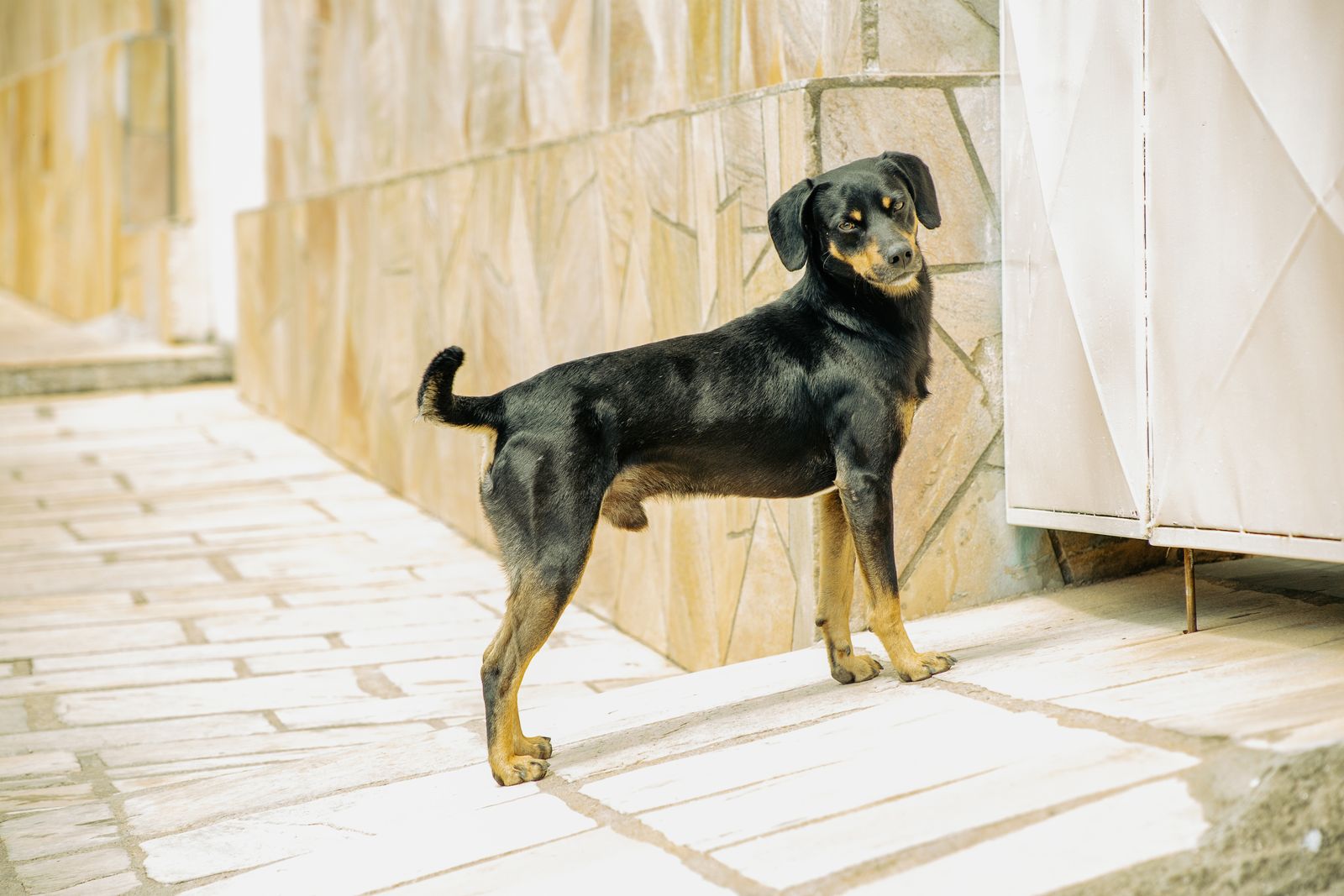
A highly affectionate, highly trainable, great with young children dog. On the practical side: low grooming demands and minimal drool.
About the German Pinscher.
The German Pinscher is one of the rarer pedigree breeds in New Zealand, with fewer than a hundred dogs typically registered nationally. The breed is the historical ancestor of both the Doberman and the Miniature Pinscher, and shares the smooth coat and the intelligent watchful temperament of both. Compared to its descendants, the German Pinscher sits in a middle size band: athletic, medium-build, low-grooming, with a strong working-dog brain and a real prey drive carried over from its rat-catching origins.
Adults stand 43 to 51 cm at the shoulder and weigh 11 to 20 kg. The smooth single coat sits in red, stag red, black and tan, blue and tan or fawn and tan, with the rich red and the classic black-and-tan being the most common in NZ. Lifespan runs 12 to 14 years, longer than most pedigree breeds in the medium-large bracket.
The trade-off worth naming up front is the drive. German Pinschers are not casual companion dogs in the Cavalier King Charles sense; the breed is athletic, opinionated, watchful and highly motivated to chase small moving things. Owners who match the energy and respect the working temperament do brilliantly. Owners who expected a low-input apartment dog regret the choice fast.
Personality and behaviour
German Pinschers are confident, alert and intelligent, with a strong bond to their primary household and an instinctive caution toward strangers. The default temperament is watchful rather than aggressive; well-socialised adults are calm and observant with new people after a polite introduction. Poorly socialised adults are reactive and noisy. Early consistent socialisation before 16 weeks is the difference between the two outcomes.
In the home they are affectionate without being needy, clean in their habits, and genuinely funny. The breed has a playful streak that surprises owners coming from terrier or guard-dog backgrounds; German Pinschers will retrieve, chase, problem-solve and clown around the house with their family. They are not lap dogs but they are contact-seeking and prefer to be in the same room as their people.
The defining behavioural feature is the brain plus the drive. German Pinschers solve problems. They learn how doors and gates open, where the food lives, and which family member is the soft touch. Underemployed German Pinschers redirect the drive into vocalising, digging, fence-running and small-mammal hunting. The breed wants a job; structured training, agility, scent work, NZKC trick titles and even straight-line jogging or cycling all give the breed an outlet.
The prey drive is real. German Pinschers were bred for two centuries to kill rats and yard vermin, and the modern breed retains the chase reflex strongly. Cats, rabbits, chickens and guinea pigs are at risk without careful management; coexistence is possible with a German Pinscher raised alongside the other species from puppyhood, but introducing an adult German Pinscher to a household cat is a serious gamble.
Vocalising is moderate to high when triggered. The breed alert-barks decisively at strangers, postal workers and unfamiliar sounds, but most NZ German Pinschers settle quickly when reassured. Owners in shared-wall housing should commit to training the alert-bark down early; the breed is loud when it chooses to be.
Care and exercise
Plan on around 75 minutes of exercise a day, more if the breed is doing dog sports. The exercise should include real movement (running, off-lead chase games, cycling) and a brain element (training, scent work, puzzle feeders). Daily structure beats weekend hits. The breed is well suited to dog sports and many NZ German Pinschers compete at NZKC agility and obedience events.
Grooming is the easiest of any common breed. Weekly rub-down with a rubber curry mitt or a hound glove handles year-round shedding. The smooth single coat dries fast after a wet walk and shows lumps, scrapes and weight changes clearly. No professional grooming is needed; nails need monthly trimming and ears need a routine wipe. Bathe every 8 to 12 weeks or when actually dirty. Total annual grooming spend is among the lowest of any pedigree dog at perhaps NZ$60 to NZ$120 a year for nail clippers, a curry mitt and bathing supplies.
Diet watch-outs are limited. The breed is athletic and easy to keep lean if portions are measured. Adults do well on 200 to 300 g of quality dry food a day, split into two meals. Free-feeding ends in weight gain.
Heat is managed easily; the smooth coat copes with NZ summers comfortably and the breed self-regulates well. Cold is the harder end; in Wellington, Christchurch and Otago winters, a fitted dog coat for early-morning walks is sensible from May through August. The breed is comfortable indoors year-round.
Finding a German Pinscher in NZ takes time and homework. The Dogs NZ breeders directory lists the small group of registered NZKC German Pinscher breeders. Many NZ German Pinschers are imported from Australian or European lines. Expect 12 to 24 month waitlists, NZ$2,500 to NZ$4,500 per puppy. Reputable breeders show hip scores, von Willebrand DNA results, eye examinations and parent temperament. Ask about the parents’ interaction with cats and small pets if that matters to your household.
Avoid breeders selling German Pinschers as a “rare colour” premium or anyone confusing the breed with the Miniature Pinscher in marketing. The two are separate breeds with separate standards.
For a typical NZ German Pinscher on a mid-range lifetime policy, lifetime cost (purchase plus 12 to 14 years of food, vet, insurance, registration and incidentals) lands around NZ$22,000 to NZ$32,000. The low grooming spend, manageable food cost and lower-than-average orthopaedic claim profile make the breed one of the more economical pedigree dogs to own across a full lifetime, despite the high purchase price.
The German Pinscher, by the numbers.
Each trait scored 1 to 5 on the AKC scale. The verdict synthesises the data; the panels below show the strengths, group averages, and the full trait table.
Top strengths
Family Life
avg 3.7Affectionate with Family
Good with Young Children
Good with Other Dogs
Physical
avg 1.3Shedding
Grooming Frequency
Drooling
Social
avg 4.0Openness to Strangers
Playfulness
Watchdog / Protective
Adaptability
Personality
avg 4.0Trainability
Energy Level
Barking Level
Mental Stimulation Needs
Living with a German Pinscher.
A 24-hour breakdown of how this breed's day typically goes, scaled to its energy, mental-stimulation, and grooming needs.
What a German Pinscher costs to own.
An indicative NZ lifetime cost: purchase, setup, then food, vet, insurance, grooming and other annual outgoings. Adjust the inputs to see how your choices change the total.
A German Pinscher costs about
$242per month
$56
$8
$41,702
Adjust the inputs:
Where the monthly cost goes
Food
$80 / mo
$965/yr · breed-appropriate dry & wet food
Insurance
$65 / mo
$779/yr · lifetime cover protects against breed-specific claims
Vet (avg)
$59 / mo
$710/yr · routine checks plus breed-specific risk
Grooming
$0 / mo
$0/yr · brushes, shampoo, professional clips
Other
$38 / mo
$450/yr · toys, treats, dental, boarding
Indicative NZ averages calculated from breed weight, grooming need and screened-condition count. One-off costs (purchase $3,500 + setup $450) are factored into the lifetime total but not the monthly figure.
How does the German Pinscher compare?
This breed
German Pinscher
$41,702
13-year lifetime cost
- Purchase + setup$3,950
- Food (lifetime)$12,545
- Vet (lifetime)$9,230
- Insurance (lifetime)$10,127
- Grooming (lifetime)$0
- Other (lifetime)$5,850
Reference
Average NZ medium dog
$38,920
12-year lifetime cost
- Purchase + setup$2,200
- Food (lifetime)$13,200
- Vet (lifetime)$6,000
- Insurance (lifetime)$11,400
- Grooming (lifetime)$2,400
- Other (lifetime)$3,720
A German Pinscher costs about $2,782 more over a lifetime than the average nz medium dog, mostly highervet and lowergrooming.
What to ask the breeder.
Reputable NZKC breeders test for these conditions and share results without being prompted. If a breeder won't share screening results, that is itself an answer.
Occasional
5 conditionsHip dysplasia
Lower than in many breeds but reputable NZ breeders still score parents.
Hereditary cataracts
Eye examination of parents through Dogs NZ is standard.
Von Willebrand''s disease (Type 1)
DNA-testable bleeding disorder; reputable breeders screen routinely.
Heart disease (mitral valve, aortic stenosis)
An occasional condition in the German Pinscher. Worth asking about and DNA testing where available.
Hypothyroidism
An occasional condition in the German Pinscher. Worth asking about and DNA testing where available.
Rare but urgent
1 conditionDelayed post-operative bleeding (Greyhound-like response)
Breed-specific consideration around surgical recovery; flag with your vet pre-desex.
The German Pinscher in NZ.
- NZ popularity: ranked #120
- Popularity: Very rare in NZ. Fewer than 100 dogs registered nationally at any time. The small NZKC breeder pool is concentrated in Auckland, Waikato and Canterbury, with most owners coming from working-breed or terrier-breed backgrounds.
- Typical price: NZ$2500–4500 from registered breeders
- Rescue availability: rare
- NZ climate fit: Single short coat handles NZ summers comfortably and needs a fitted coat for cold, wet winters from Wellington south. The thin coat shows lumps, scrapes and weight changes clearly, which most owners find useful.
- Living space: Adapts to apartment, house or lifestyle block. Securely fenced yard is essential; the breed jumps and digs and the prey drive is real. Six-foot fencing is sensible. Coexistence with household cats requires careful management from puppyhood.
Who the German Pinscher is for.
Suits
- Active owners who want a low-grooming athletic dog
- Households experienced with working or terrier-type breeds
- Owners willing to invest in early training and socialisation
Less suited to
- Households with cats or small pets (high prey drive)
- Long workdays with the dog left alone
- Owners hoping for a casually friendly social dog
- Tight backyards without secure fencing
Common questions.
How is a German Pinscher different from a Doberman?
How much do German Pinschers cost in NZ?
Are German Pinschers good with cats?
Are they good apartment dogs?
If the German Pinscher appeals, also consider.
Breeds with a similar profile that might suit your household.

Doberman
A sleek, athletic guarding breed with high drive and a deep bond to its owner. Calm and biddable in the right hands, demanding and intense in the wrong ones.

Miniature Pinscher
A compact German ratting toy with a hackney trot, big personality and zero off-switch. Looks like a small Doberman but is a separate, older breed. Rare in NZ but loved by owners who want a high-drive, low-shedding 4 kg dog.

Manchester Terrier
The original sleek black-and-tan English ratting terrier. Smaller than most people expect, larger than the English Toy Terrier (its toy-sized sister breed), and one of the lowest-maintenance terriers the NZKC registers.
Last reviewed:
Sources for this pageInformation only. Breed traits and health notes on this page are aggregated from public registry and breed-authority sources. Individual animals vary; this page is general information, not veterinary, behavioural, or insurance advice. Always consult a registered NZ vet or breeder for guidance specific to your situation.