
Finnish Lapphund Dog Breed Information
Also known as: Lappy, Suomenlapinkoira
An Arctic spitz-type herder developed by the Sámi to move reindeer in Finnish Lapland. Friendly, calm-headed, weather-resistant, and increasingly popular with NZ families in the cooler southern regions.

A highly affectionate, highly trainable, great with young children dog. On the practical side: minimal drool. The trade-off is sheds plenty.
About the Finnish Lapphund.
The Finnish Lapphund is an Arctic herding spitz developed by the Sámi people of Finnish Lapland to move semi-domesticated reindeer across snow and tundra. The breed has grown steadily in NZ over the past decade, with most placements going to families in cooler southern regions where the dense double coat is an asset rather than a liability. It is increasingly recognised as a calm-headed, friendly alternative to the more familiar working breeds (Border Collie, Australian Shepherd) for households that want a working dog without the on-tap intensity.
Adults stand 41 to 52 cm at the shoulder and weigh 15 to 24 kg, with bitches notably smaller than dogs. The defining feature is the long, weather-resistant double coat: a soft, dense undercoat under a longer outer coat with a profuse mane around the neck and chest. Colours run black, brown, tan, cream, wolf sable, and various combinations with white markings. The expression is open and friendly, ears pricked, tail carried in the typical spitz curl over the back.
Personality and behaviour
Lapphunds are affectionate, sociable family dogs. They bond closely to the household, are patient with school-age children, and tend to greet visitors with friendly curiosity rather than reserve. With other dogs they are typically sociable, although small-animal prey drive shows up at times (the breed was bred to work near, not against, livestock, but loose chickens and rabbits are still tempting).
The trait that surprises new owners is the voice. Lapphunds bark, and they were bred to. The reindeer-herding job involved warning the herd of wolves and the handler of strays, often at distance. Modern pet Lapphunds carry the trait into the household, vocalising during play, alerting on visitors, and “talking” at family in conversation. Households on a small section with neighbours close by need to manage barking from the start. The bark is high and clear, not deep, but it is frequent.
Energy is moderate by working-spitz standards. A Lapphund will happily walk and play for an hour or two, then settle on the rug. They are not dog-sport machines on the level of a Border Collie, although the breed enjoys agility, rally and herding at club level and increasingly competes in NZ trials.
Sensitivity is a real factor. Lapphunds notice household tension, react to harsh handling by switching off, and bond intensely to family. They are not stoic working dogs. Lapphunds left isolated for long days become anxious and destructive.
Care and exercise
Plan on 60 minutes of daily exercise. A structured walk plus free play covers most adult Lapphunds. The breed enjoys hill walks, swimming in cool water, and snow if you can find any (Cardrona, Tongariro, Ohau in winter are the breed’s idea of a good day out).
The double coat is the main grooming consideration but is far less demanding than an Old English Sheepdog or Briard. Two brushing sessions a week through most of the year keeps it in order. The breed sheds heavily for two to three weeks in spring and autumn (the seasonal coat blow), and during those windows daily brushing is the only way to keep the floor liveable. The coat is largely self-cleaning. Snow, dirt and mud fall out as it dries, and bathing more than every six to eight weeks is rarely necessary.
Heat tolerance is the genuine NZ-specific issue. The dense double coat is built for sub-zero Lapland winters and translates poorly to upper-North-Island summers. The breed handles cool, damp NZ weather without complaint, but humidity above 70% with daytime temperatures over 25C creates heat-stress risk. Walk early or late, never midday, and ensure indoor cool space. Counter-intuitive but documented: shaving the coat does not help and disrupts the insulating airflow layer. Pet trims for hygiene only (rear, paws, ears) are fine; full clips are discouraged by reputable breeders and groomers familiar with the breed.
Training and household life
Lapphunds are intelligent and biddable, but not as keen to push hard at training as a Labrador or Border Collie. Reward-based training works well, especially food and toy rewards combined. The breed is sensitive enough that harsh corrections backfire, and independent enough that motivation needs to be clear.
Adolescence runs from about 10 to 18 months and is generally manageable compared to high-drive working breeds. Recall in open spaces is the most common training gap. The herding instinct kicks in around joggers, cyclists and small children, and a Lapphund that has decided to circle a moving target needs to come back when called. NZKC obedience and rally clubs in main centres run group classes (NZ$120-280 for a six to eight week course) which sort recall early.
Where to find one in NZ is now reasonably accessible compared to a decade ago. Dogs NZ lists active Lapphund breeders, mainly in the Wellington, Canterbury, Otago and Southland regions. Realistic options:
- Registered NZKC breeder. 6 to 12 month waitlist, NZ$2,500 to NZ$4,000 per puppy, hip scores plus prcd-PRA and Pompe disease DNA results available on request.
- Breed rescue. Rare. The Finnish Lapphund Club of NZ occasionally helps rehome adults but most years there is no surrendered dog.
- SPCA. Very rare appearance. Lapphund crosses (often Lapphund-x-Border or Lapphund-x-Husky) appear more often than purebreds.
The breed’s growing NZ profile reflects the genuine fit with cool-climate NZ households. Wellington’s wind, Canterbury’s frost and Otago’s winters all suit the breed comfortably, and the temperament works well with families looking for a calm-headed working dog rather than a high-drive sport one.
What surprises new owners
The amount of barking, the seasonal coat blow (it really is two to three weeks of vacuuming twice a day), and the speed at which the breed picks up training when motivation is right. The Finnish Lapphund is a working dog with the volume turned down. For households in the cooler half of NZ, the fit is unusually good.
The Finnish Lapphund, by the numbers.
Each trait scored 1 to 5 on the AKC scale. The verdict synthesises the data; the panels below show the strengths, group averages, and the full trait table.
Top strengths
Family Life
avg 4.7Affectionate with Family
Good with Young Children
Good with Other Dogs
Physical
avg 2.7Shedding
Grooming Frequency
Drooling
Social
avg 3.8Openness to Strangers
Playfulness
Watchdog / Protective
Adaptability
Personality
avg 3.5Trainability
Energy Level
Barking Level
Mental Stimulation Needs
Living with a Finnish Lapphund.
A 24-hour breakdown of how this breed's day typically goes, scaled to its energy, mental-stimulation, and grooming needs.
What a Finnish Lapphund costs to own.
An indicative NZ lifetime cost: purchase, setup, then food, vet, insurance, grooming and other annual outgoings. Adjust the inputs to see how your choices change the total.
A Finnish Lapphund costs about
$271per month
$63
$9
$49,284
Adjust the inputs:
Where the monthly cost goes
Food
$90 / mo
$1,085/yr · breed-appropriate dry & wet food
Insurance
$71 / mo
$851/yr · lifetime cover protects against breed-specific claims
Vet (avg)
$49 / mo
$590/yr · routine checks plus breed-specific risk
Grooming
$23 / mo
$280/yr · brushes, shampoo, professional clips
Other
$38 / mo
$450/yr · toys, treats, dental, boarding
Indicative NZ averages calculated from breed weight, grooming need and screened-condition count. One-off costs (purchase $3,250 + setup $450) are factored into the lifetime total but not the monthly figure.
How does the Finnish Lapphund compare?
This breed
Finnish Lapphund
$49,284
14-year lifetime cost
- Purchase + setup$3,700
- Food (lifetime)$15,190
- Vet (lifetime)$8,260
- Insurance (lifetime)$11,914
- Grooming (lifetime)$3,920
- Other (lifetime)$6,300
Reference
Average NZ medium dog
$38,920
12-year lifetime cost
- Purchase + setup$2,200
- Food (lifetime)$13,200
- Vet (lifetime)$6,000
- Insurance (lifetime)$11,400
- Grooming (lifetime)$2,400
- Other (lifetime)$3,720
A Finnish Lapphund costs about $10,364 more over a lifetime than the average nz medium dog, mostly higherother and highervet.
What to ask the breeder.
Reputable NZKC breeders test for these conditions and share results without being prompted. If a breeder won't share screening results, that is itself an answer.
Occasional
3 conditionsHip dysplasia
Ask breeders for hip scores from both parents.
Progressive retinal atrophy (prcd-PRA)
DNA-testable. Reputable NZ breeders test breeding stock.
Hereditary cataract
An occasional condition in the Finnish Lapphund. Worth asking about and DNA testing where available.
Rare but urgent
1 conditionPompe disease (GSD type II)
DNA-testable. Carrier rate documented in the breed; reputable breeders avoid carrier-to-carrier matings.
The Finnish Lapphund in NZ.
- NZ popularity: ranked #70
- Popularity: A growing presence in NZ over the past decade, with steady year-on-year increases in Dogs NZ registrations. Most concentrated in Wellington, Canterbury, Otago and Southland.
- Typical price: NZ$2500–4000 from registered breeders
- Rescue availability: rare
- NZ climate fit: Built for Arctic Lapland. Excellent in Wellington, Canterbury, Otago and Southland. Auckland and Northland summers are the hardest environment in NZ for the breed: humidity above 70% with daytime temperatures over 25C is a real heat-stress concern.
- Living space: Best with a fenced yard and access to off-lead walks. Apartments work only with a committed daily exercise routine.
Who the Finnish Lapphund is for.
Suits
- NZ families with school-age kids
- Lifestyle-block owners in cool regions
- Households wanting a smaller working spitz with a calm head
Less suited to
- Auckland and Northland households without aircon
- Apartments without daily off-lead exercise
- Owners who can't tolerate a vocal breed
Common questions.
Are Finnish Lapphunds good NZ family dogs?
How much exercise does a Finnish Lapphund need?
Are Finnish Lapphunds easy to find in New Zealand?
If the Finnish Lapphund appeals, also consider.
Breeds with a similar profile that might suit your household.

Swedish Vallhund
A short-legged Scandinavian herding spitz that looks like a wolf in a corgi's body. Rare in NZ, robust, vocal, and a strong fit for active owners who want the herding brain in a small frame.

Samoyed
The white "smiling" Siberian sled and reindeer-herding dog. Friendly, vocal, fluffy beyond reason and built for cold. Suits Otago and Southland far better than Northland.
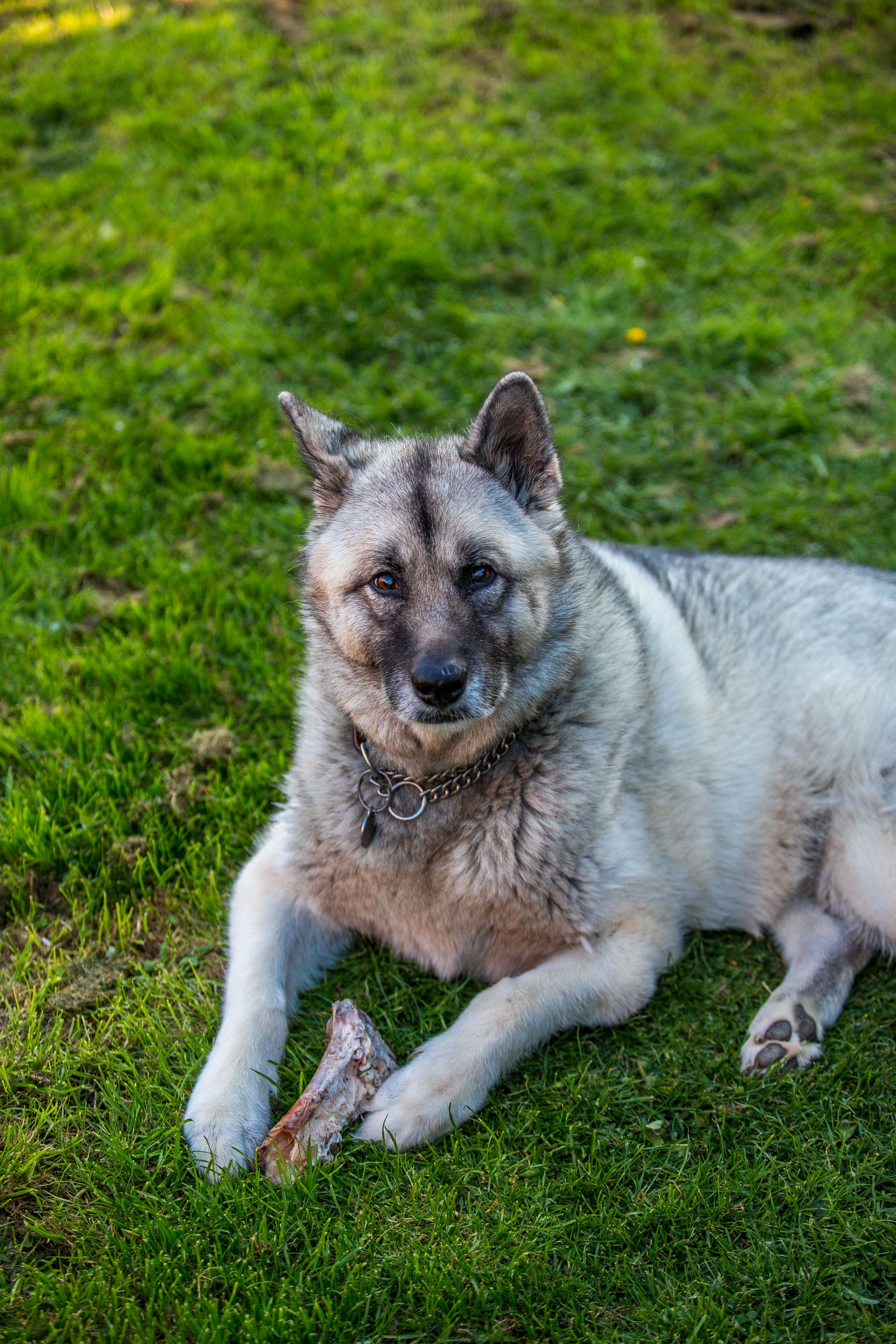
Norwegian Elkhound
A Nordic hunting spitz built for moose tracking in deep snow. Bold, vocal, heavy-shedding, and thoroughly at home in the cold of Otago, Southland and the Central Plateau.
Last reviewed:
Sources for this pageInformation only. Breed traits and health notes on this page are aggregated from public registry and breed-authority sources. Individual animals vary; this page is general information, not veterinary, behavioural, or insurance advice. Always consult a registered NZ vet or breeder for guidance specific to your situation.