
Norwegian Elkhound Dog Breed Information
Also known as: Norsk Elghund Grå, Grey Norwegian Elkhound, Elkhound
A Nordic hunting spitz built for moose tracking in deep snow. Bold, vocal, heavy-shedding, and thoroughly at home in the cold of Otago, Southland and the Central Plateau.

A highly affectionate, great with young children, high energy dog. On the practical side: minimal drool. The trade-off is sheds plenty.
About the Norwegian Elkhound.
The Norwegian Elkhound is a Nordic hunting spitz that has been working alongside humans in cold-climate forest for around 7,000 years. In NZ the breed is rare (typically only one or two registered NZKC litters per year), and it is concentrated in the colder regions where the dog actually thrives. A grey Elkhound running in fresh Wanaka snow looks like the breed was built for the country it now lives in. The same dog flat out on a tile floor in Tauranga in February looks like a mistake.
Adults stand 49 to 53 cm at the shoulder and weigh 20 to 25 kg, with males noticeably larger than females. The double coat is grey with black-tipped guard hairs and a black saddle, and the curled tail sits tight over the back. The build is square, sturdy and unmistakably spitz: pricked ears, fox-like face, and a coat designed to shrug off snow and rain.
Personality and behaviour
Norwegian Elkhounds are affectionate and loyal with their household and reserved with strangers. The breed bonds tightly to family, plays well with children it has grown up with, and tends to view newcomers as worth alerting on before deciding whether to be polite. They are not aggressive, but they are not the open, everyone-is-a-friend dog the Labrador is.
Same-sex friction with other dogs is common in adulthood. The breed was selected to hunt independently, often as a single dog working a moose for hours, and that confidence and self-reliance carries through to social dynamics. Two intact males in the same household is a known recipe for trouble. Multi-dog households more often pair an Elkhound with a different breed or with a clearly subordinate same-breed companion.
The trait that surprises new owners is the bark. Elkhounds were bred to vocalise on a held animal for as long as the hunter took to arrive, and the modern pet retains the wiring. They alert on couriers, possums, neighbour dogs, the cat on the fence, and the unfamiliar car in the driveway. The bark is loud, sharp and confident. On a 4 hectare lifestyle block this is a feature; in a Wellington townhouse it is a problem.
Separation tolerance is moderate. The breed wants company and tends to vocalise and pace when bored. A fenced section, a household where someone is home much of the day, and ideally a second dog reduce the issue significantly.
Care and exercise
Plan on around 75 minutes of varied exercise a day, plus mental work. A suburban lead walk is the bare minimum. The breed wants terrain, scent and challenge: bush tracks, lifestyle-block paddocks, riverbanks, off-lead beach time where fencing or remoteness allows. Scent enrichment in the backyard (snuffle mats, hidden food, tracking games) tires the dog more efficiently than flat walking.
Grooming is moderate most of the year and intense for two windows. Weekly brushing handles the maintenance shed. The seasonal coat blows in spring and autumn drop a memorable volume of undercoat for two to three weeks each, and a daily session with an undercoat rake or de-shedding tool is the only realistic way to keep the house liveable. The coat does self-clean well and the breed has very little odour, so bathing is rarely needed (every two to three months at most).
Dietary care matters more than the lean look suggests. The breed evolved to manage calories efficiently in cold conditions and gains weight steadily on standard NZ pet routines. Measure meals, keep treats inside the daily calorie budget, and watch the ribs through the coat. An overweight Elkhound is the most common preventable health issue in adult NZ pets.
The climate fit is the main practical question for NZ owners.
- Otago, Southland, Central Plateau, Wellington. A natural match. Cold winters, mild summers, frosty mornings and lake access all suit the breed. Most of the country’s small Elkhound population lives here.
- Christchurch and Canterbury. Cold winters are easy work for the double coat. Hot dry summer days (above 28 degrees) need shade, water and shifted walk times. Grass-seed risk on the plains needs weekly checks.
- Wellington and Manawatu. Wind and rain are no problem. Cooler maritime summers suit the breed well.
- Auckland, Northland, Hawke’s Bay, Marlborough. Summer heat is the main constraint. Walks shift to dawn and dusk from December through February, deep shade and hose-down or paddling pool access are essential, and many owners run air-conditioning during the hottest hours of the day. The breed lives in these regions but the household has to commit to making it work.
The prey drive is the other practical care issue. Possums, rabbits, hares and pukeko all trigger the chase response the breed was bred to retain. Most NZ Elkhound owners walk on a long line in unfenced reserves for life and reserve true off-lead work for fully fenced paddocks or remote forestry tracks.
Where to find a Norwegian Elkhound in New Zealand
Three realistic paths.
- Registered NZKC breeders. The Dogs NZ breeds directory lists active Norwegian Elkhound breeders. Numbers are small: often only one or two breeders with active litters in any given year, and waitlists run 12 to 24 months. Expect NZ$2,000 to NZ$3,200 per puppy. Reputable breeders hip score, eye test and discuss thyroid and renal lines openly.
- Australian imports. A small number of NZ owners have imported from Australian registered breeders. Import costs add roughly NZ$3,000 to NZ$5,000 on top of the puppy price.
- Rescue and rare-breed networks. Pure Elkhounds in NZ rescue are uncommon but do appear, mostly as adolescents from owners who underestimated the bark or the shed. Adoption fees typically run NZ$400 to NZ$700.
Avoid breeders who can’t show you both parents, won’t share health screening or are producing repeated litters from the same dam in quick succession. The Elkhound’s small NZ population means the registered breeder network knows each other; a phone call to the Dogs NZ breed contact verifies most reputations quickly.
The Norwegian Elkhound, by the numbers.
Each trait scored 1 to 5 on the AKC scale. The verdict synthesises the data; the panels below show the strengths, group averages, and the full trait table.
Top strengths
Family Life
avg 3.7Affectionate with Family
Good with Young Children
Good with Other Dogs
Physical
avg 3.0Shedding
Grooming Frequency
Drooling
Social
avg 3.5Openness to Strangers
Playfulness
Watchdog / Protective
Adaptability
Personality
avg 3.8Trainability
Energy Level
Barking Level
Mental Stimulation Needs
Living with a Norwegian Elkhound.
A 24-hour breakdown of how this breed's day typically goes, scaled to its energy, mental-stimulation, and grooming needs.
What a Norwegian Elkhound costs to own.
An indicative NZ lifetime cost: purchase, setup, then food, vet, insurance, grooming and other annual outgoings. Adjust the inputs to see how your choices change the total.
A Norwegian Elkhound costs about
$293per month
$68
$10
$52,330
Adjust the inputs:
Where the monthly cost goes
Food
$98 / mo
$1,175/yr · breed-appropriate dry & wet food
Insurance
$75 / mo
$905/yr · lifetime cover protects against breed-specific claims
Vet (avg)
$59 / mo
$710/yr · routine checks plus breed-specific risk
Grooming
$23 / mo
$280/yr · brushes, shampoo, professional clips
Other
$38 / mo
$450/yr · toys, treats, dental, boarding
Indicative NZ averages calculated from breed weight, grooming need and screened-condition count. One-off costs (purchase $2,600 + setup $450) are factored into the lifetime total but not the monthly figure.
How does the Norwegian Elkhound compare?
This breed
Norwegian Elkhound
$52,330
14-year lifetime cost
- Purchase + setup$3,050
- Food (lifetime)$16,450
- Vet (lifetime)$9,940
- Insurance (lifetime)$12,670
- Grooming (lifetime)$3,920
- Other (lifetime)$6,300
Reference
Average NZ medium dog
$38,920
12-year lifetime cost
- Purchase + setup$2,200
- Food (lifetime)$13,200
- Vet (lifetime)$6,000
- Insurance (lifetime)$11,400
- Grooming (lifetime)$2,400
- Other (lifetime)$3,720
A Norwegian Elkhound costs about $13,410 more over a lifetime than the average nz medium dog, mostly highervet and higherfood.
What to ask the breeder.
Reputable NZKC breeders test for these conditions and share results without being prompted. If a breeder won't share screening results, that is itself an answer.
Common
2 conditionsSebaceous cysts
Mostly cosmetic; vets can drain or remove if they bother the dog.
Obesity
Easy to overfeed an efficient eater.
Occasional
3 conditionsHip dysplasia
Reputable NZ breeders hip score breeding stock.
Progressive retinal atrophy (PRA)
Eye certificates and DNA testing available from registered breeders.
Hypothyroidism
An occasional condition in the Norwegian Elkhound. Worth asking about and DNA testing where available.
Rare but urgent
1 conditionRenal disease (Fanconi-like syndrome)
Rare in the Norwegian Elkhound but worth knowing the warning signs.
The Norwegian Elkhound in NZ.
- NZ popularity: ranked #145
- Popularity: A rare breed in NZ with a small, dedicated owner base concentrated in cooler regions. Typically only one or two registered NZKC litters per year.
- Typical price: NZ$2000–3200 from registered breeders
- Rescue availability: rare
- NZ climate fit: Excellent across NZ's colder and cooler regions. Otago, Southland, Canterbury, Wellington and the Central Plateau suit the breed naturally. Auckland and Northland summers are a real challenge.
- Living space: Best on a fenced rural section or lifestyle block. Apartment and small-section life is a poor match given the bark, the shed and the activity level.
Who the Norwegian Elkhound is for.
Suits
- Cold and cool NZ regions (Otago, Southland, Canterbury, Wellington, Central Plateau)
- Active rural and lifestyle-block households
- Owners who can manage heavy seasonal shedding
- Households happy with a vocal, alert dog
Less suited to
- Hot, humid Auckland and Northland summers without serious cooling provision
- Apartments and small townhouses
- Households with smaller running pets (rabbits, guinea pigs, free-roaming cats)
- Owners who want a quiet dog or one with bullet-proof recall
Common questions.
Will a Norwegian Elkhound cope with NZ summers?
How much does the Elkhound shed?
Are Norwegian Elkhounds good guard dogs?
Can the breed live with cats and chickens?
If the Norwegian Elkhound appeals, also consider.
Breeds with a similar profile that might suit your household.
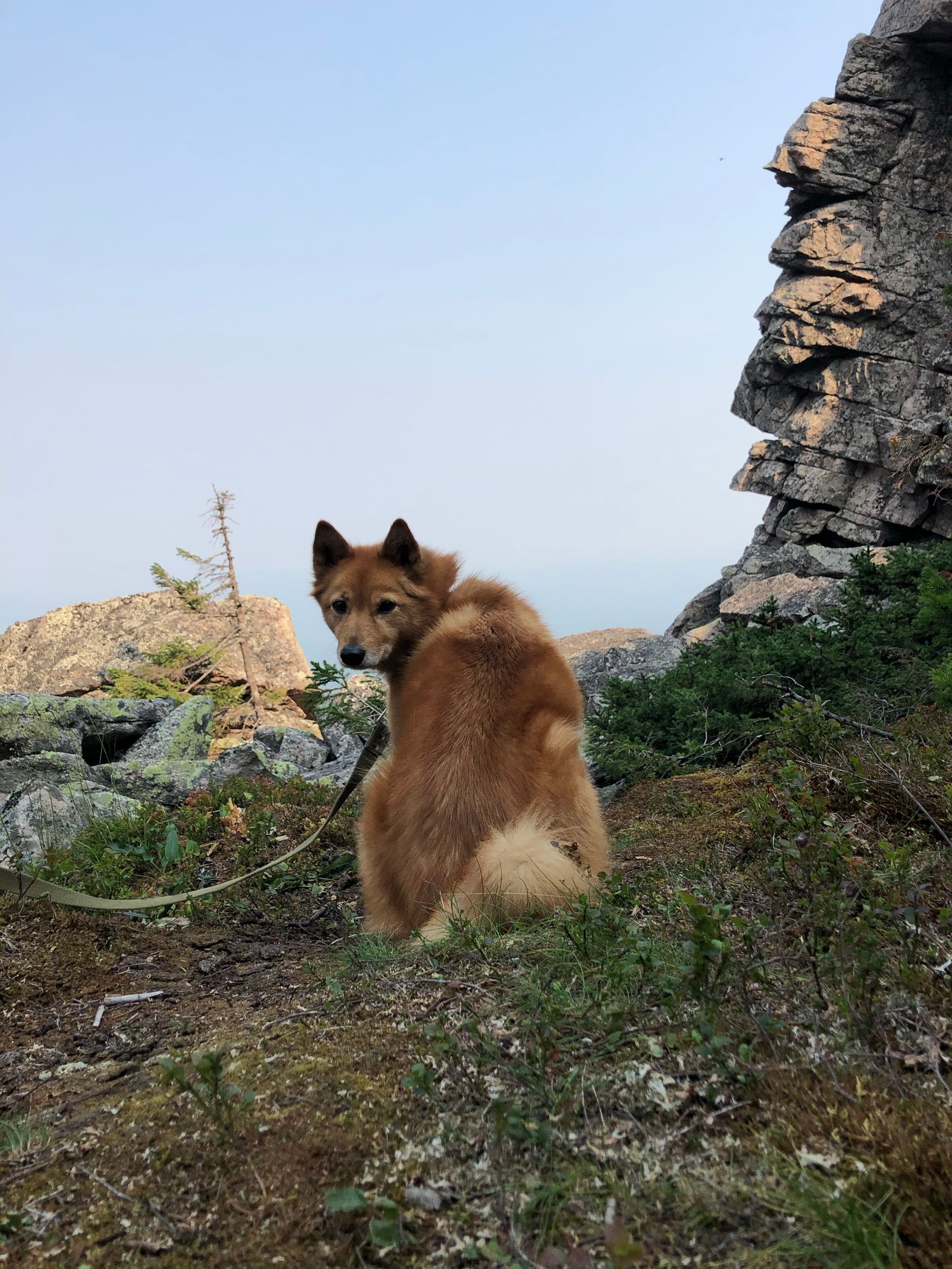
Finnish Spitz
Finland's national dog and the original "barking bird-dog", a fox-red spitz that hunts by voice and can fire off around 160 barks a minute on point. Quiet households need not apply.

Siberian Husky
Athletic Arctic sled dog with a thick double coat and a working brain. Friendly, vocal, escape-prone, and built for endurance rather than household lounging.

Alaskan Malamute
Heavy freight sled dog, larger and stronger than the Siberian Husky and built for power rather than speed. Affectionate with family, independent, vocal, and a serious commitment for first-time owners.
Last reviewed:
Sources for this pageInformation only. Breed traits and health notes on this page are aggregated from public registry and breed-authority sources. Individual animals vary; this page is general information, not veterinary, behavioural, or insurance advice. Always consult a registered NZ vet or breeder for guidance specific to your situation.