
Norwegian Lundehund Dog Breed Information
Also known as: Lundehund, Norwegian Puffin Dog, Lundehund
The most anatomically unusual dog breed in the world, bred to hunt puffins on Norwegian sea cliffs. Six toes on each foot, ears that fold closed, front legs that rotate 90 degrees, and a head that bends backward to touch the spine. Critically endangered worldwide and effectively unobtainable in NZ.

A highly affectionate, high energy, highly playful dog. On the practical side: low grooming demands and minimal drool. The trade-off is vocal.
About the Norwegian Lundehund.
The Norwegian Lundehund is the most anatomically unusual dog breed in the world. Bred over centuries on the Norwegian islands of Vaeroy and Rost to hunt puffins on near-vertical sea cliffs, the breed has six functional toes on each foot, ears that fold and close shut, front legs that rotate 90 degrees outward, and a flexible neck that lets the head bend backward to touch the spine. All four features served the puffin-hunting role: grip on slick wet rock, water-tight ears for diving into burrows, flexible shoulders for pulling sideways through narrow crevices, and a head that can turn around inside a tunnel where there is no room to back out. Effectively absent from NZ (likely fewer than five dogs nationally, all imports), the Lundehund is a curiosity rather than a practical NZ breed choice.
Adults stand 32 to 38 cm at the shoulder and weigh 6 to 9 kg, smaller than most NZ owners expect from photos. The double coat is short, dense and weather-resistant, in a fallow (light brown) base colour with black hair tips and white markings, or sometimes white with dark markings. Lifespan is 12 to 14 years where the breed’s serious gut-health issues are well managed; significantly less where they are not.
The breed nearly went extinct twice. By the early 20th century, when puffin hunting was banned in Norway, the Lundehund had no working purpose and numbers collapsed. A 1944 distemper outbreak on Vaeroy reduced the global population to six surviving dogs, only one of which was a fertile female. Every Norwegian Lundehund alive today descends from those six animals, and the breed-wide health issues (most importantly Lundehund gastroenteropathy, a chronic GI condition affecting nutrient absorption) reflect that bottleneck. Current global population is estimated at 1,500 to 2,000 dogs, almost all of them in Norway, Sweden, Finland, Denmark and the United States.
Personality and behaviour
Lundehunds are affectionate with family and reserved with strangers. They are bright, quirky, cunning and often described as cat-like in their independence. The breed retains strong working-dog instincts (climbing, exploring, escaping) despite no longer hunting puffins, and Lundehund owners worldwide report behaviours not seen in other small spitz breeds: scaling fences and decks, finding ways out of secure-looking enclosures, hoarding food and small objects in hidden caches, and refusing to be house-trained on conventional schedules.
The trait that surprises new owners (the very few there are) is the difficulty of house-training. The breed is famously slow to house-train, with many adult Lundehunds never reliably reaching full house-training and most needing several years of consistent work. Some Lundehund clubs recommend dog doors and outdoor access as a baseline rather than expecting traditional house-training; this is unusual advice for a small breed and is a real consideration for NZ households.
The second surprise is the climbing. The flexible shoulders and 90-degree leg rotation that helped Lundehunds traverse cliff faces also help them climb fences, garden walls, decks and even smooth surfaces other small dogs cannot manage. NZ-style timber paling fences (1.5 to 1.8 m) are not always Lundehund-proof; secure fencing means properly Lundehund-secure, including overhangs.
The breed is vocal. Alarm barks at strangers, deliveries and wildlife are frequent. Lundehunds are reserved with strangers but rarely aggressive; the wariness shows as avoidance and barking rather than reactivity.
Care and exercise
Plan on 60 minutes of daily exercise for an adult Lundehund. The breed is active for its size and needs real outlets, not just garden time. Walking, hiking, scent games and small-dog agility all work. The breed is not built for jogging or marathon work but covers ground efficiently and copes with NZ hill terrain well.
Grooming is straightforward. The double coat sheds moderately year-round and heavily through two seasonal coat blows (two to three weeks each). Brush weekly with a slicker brush, daily through the blows, and bath every two to three months. The coat is largely self-cleaning between baths and the breed has minimal odour.
The defining care consideration is diet. Lundehund gastroenteropathy is a chronic GI condition that affects a large proportion of the breed (estimates range from 50% to 90% of adult dogs depending on the source) and causes poor nutrient absorption, weight loss, chronic diarrhoea, vomiting and protein loss. Management requires:
- A specialist diet, often hydrolysed protein or novel-protein formulas. Royal Canin Hydrolyzed Protein and Hill’s z/d are commonly used; cost runs NZ$120 to NZ$200 a month for a small dog.
- Regular B12 (cobalamin) supplementation, often by injection every few weeks.
- Working with a vet familiar with the breed. Most NZ vets will not have seen a Lundehund before; expect to act as the informed party in the appointment and bring breed-specific health notes from the Norwegian or American Lundehund clubs.
- Lifetime monitoring of weight, blood albumin and B12 levels.
The cost of managing a healthy adult Lundehund through these issues runs NZ$2,000 to NZ$5,000 a year on top of normal care, and the bills are unlikely to be claimable on standard pet insurance because the condition is breed-wide and considered hereditary.
Climate fit across New Zealand
- Auckland and Northland. Manageable but not ideal. The dense double coat is built for cold wet Norwegian coast, not humid subtropical summers. Provide shade, water and ventilation; consider aircon.
- Wellington. Excellent fit. Wind, rain and cool temperatures suit the breed.
- Christchurch and Canterbury. Excellent fit. Cold winters are a non-issue. Summer heat is more manageable than the upper North Island.
- Central Otago and Southland. The natural climate range. Cold tolerance is exceptional.
Where to find a Norwegian Lundehund in New Zealand
Effectively only one path:
- Import from Norway, Sweden, Finland or the United States. Reputable breeders worldwide work through breed clubs (the Norsk Lundehund Klubb, the Swedish Lundehund Club, the Norwegian Lundehund Association of America) and prioritise placements that contribute to the breed’s tiny gene pool. Expect a multi-year planning horizon, conversations with the breed club, full health screening of the parents and a clear plan for managing breed-specific GI issues. Total cost (puppy plus shipping plus quarantine plus paperwork) typically runs NZ$8,000 to NZ$15,000.
NZ-bred Lundehunds are essentially nonexistent. The Dogs NZ breeders directory does not currently list active Lundehund breeders. Rescue and SPCA placements are extraordinarily rare; in practical terms, no NZ Lundehund has been available through rescue in living memory.
What surprises new owners
Three things consistently. First, the gut-health load. The Lundehund is not a healthy small spitz with a quirky look; it is a critically endangered breed with serious lifelong health issues that affect most adult dogs. Second, the climbing. Most NZ fencing is not Lundehund-proof and the breed will exploit any weakness. Third, how unusual the breed is to live with: the cat-like independence, the difficulty of house-training, the food-hoarding, the cunning escape attempts. The Norwegian Lundehund is a fascinating breed and a serious commitment, and the realistic NZ pathway is import, multi-year planning and a vet relationship that takes the breed seriously. For most NZ owners drawn to the look, an Icelandic Sheepdog or Finnish Spitz is a more practical Nordic choice.
The Norwegian Lundehund, by the numbers.
Each trait scored 1 to 5 on the AKC scale. The verdict synthesises the data; the panels below show the strengths, group averages, and the full trait table.
Top strengths
Family Life
avg 3.3Affectionate with Family
Good with Young Children
Good with Other Dogs
Physical
avg 2.0Shedding
Grooming Frequency
Drooling
Social
avg 2.8Openness to Strangers
Playfulness
Watchdog / Protective
Adaptability
Personality
avg 3.5Trainability
Energy Level
Barking Level
Mental Stimulation Needs
Living with a Norwegian Lundehund.
A 24-hour breakdown of how this breed's day typically goes, scaled to its energy, mental-stimulation, and grooming needs.
What a Norwegian Lundehund costs to own.
An indicative NZ lifetime cost: purchase, setup, then food, vet, insurance, grooming and other annual outgoings. Adjust the inputs to see how your choices change the total.
A Norwegian Lundehund costs about
$213per month
$49
$7
$39,980
Adjust the inputs:
Where the monthly cost goes
Food
$60 / mo
$725/yr · breed-appropriate dry & wet food
Insurance
$53 / mo
$635/yr · lifetime cover protects against breed-specific claims
Vet (avg)
$54 / mo
$650/yr · routine checks plus breed-specific risk
Grooming
$8 / mo
$100/yr · brushes, shampoo, professional clips
Other
$38 / mo
$450/yr · toys, treats, dental, boarding
Indicative NZ averages calculated from breed weight, grooming need and screened-condition count. One-off costs (purchase $6,250 + setup $450) are factored into the lifetime total but not the monthly figure.
How does the Norwegian Lundehund compare?
This breed
Norwegian Lundehund
$39,980
13-year lifetime cost
- Purchase + setup$6,700
- Food (lifetime)$9,425
- Vet (lifetime)$8,450
- Insurance (lifetime)$8,255
- Grooming (lifetime)$1,300
- Other (lifetime)$5,850
Reference
Average NZ medium dog
$38,920
12-year lifetime cost
- Purchase + setup$2,200
- Food (lifetime)$13,200
- Vet (lifetime)$6,000
- Insurance (lifetime)$11,400
- Grooming (lifetime)$2,400
- Other (lifetime)$3,720
A Norwegian Lundehund costs about $1,060 more over a lifetime than the average nz medium dog, mostly higherpurchase + setup and lowerfood.
What to ask the breeder.
Reputable NZKC breeders test for these conditions and share results without being prompted. If a breeder won't share screening results, that is itself an answer.
Common
3 conditionsLundehund gastroenteropathy
Chronic GI condition affecting nutrient absorption. The defining health issue of the breed; affects a large proportion of the global population and requires lifelong management.
Protein-losing enteropathy
Often co-occurs with Lundehund gastroenteropathy.
Genetic disorders from inbreeding
The entire global population descends from six surviving dogs after the 1944 distemper outbreak. Breed-wide health issues reflect this bottleneck.
Occasional
2 conditionsPatellar luxation
An occasional condition in the Norwegian Lundehund. Worth asking about and DNA testing where available.
Hip and elbow issues
An occasional condition in the Norwegian Lundehund. Worth asking about and DNA testing where available.
The Norwegian Lundehund in NZ.
- NZ popularity: ranked #200
- Popularity: Effectively absent from NZ. Likely fewer than five dogs in the country at any given time, all imports.
- Typical price: NZ$4500–8000 from registered breeders
- Rescue availability: rare
- NZ climate fit: Built for the cold wet Norwegian coast. Excellent in Wellington, Canterbury, Otago and Southland. Auckland and Northland summers need shade and ventilation; the dense double coat does not love high humidity.
- Living space: Best in a house with secure fencing. The breed is an exceptional climber and will scale fences, decks and rock walls that would defeat most small dogs. Lifestyle blocks with secure fencing also work.
Who the Norwegian Lundehund is for.
Suits
- Owners specifically seeking a rare, quirky, unusual breed and willing to manage gut-health issues
- Households with secure fencing (the breed is an exceptional climber)
- Active small-dog homes
Less suited to
- First-time owners
- Households expecting a biddable, easy-to-house-train dog
- Owners unwilling to manage chronic GI issues
- Apartments without committed exercise
Common questions.
Is the Norwegian Lundehund really that rare?
Why are the Lundehund's anatomical features so unusual?
Can a Lundehund live a normal pet life?
How would someone get a Lundehund in NZ?
If the Norwegian Lundehund appeals, also consider.
Breeds with a similar profile that might suit your household.
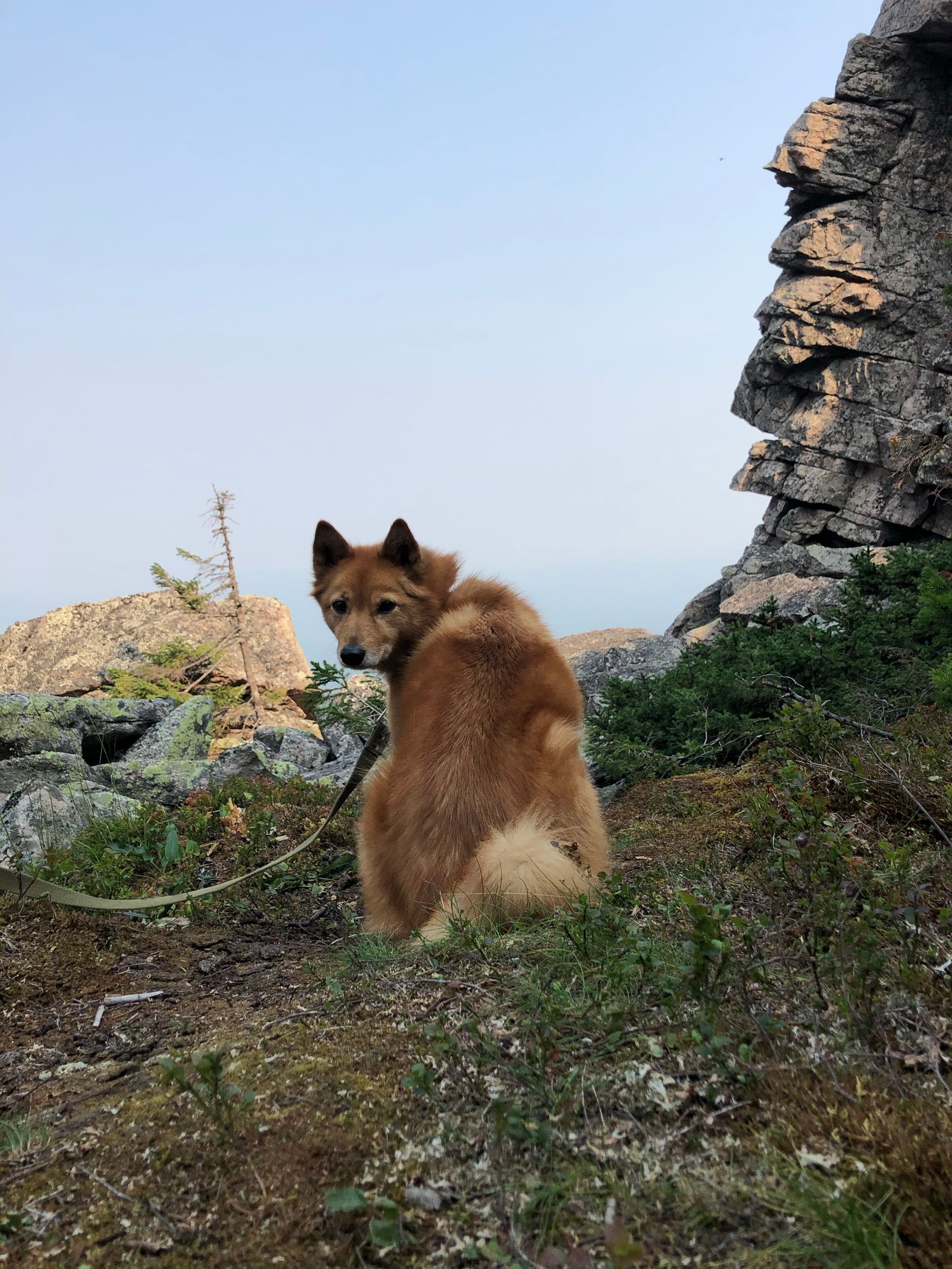
Finnish Spitz
Finland's national dog and the original "barking bird-dog", a fox-red spitz that hunts by voice and can fire off around 160 barks a minute on point. Quiet households need not apply.

Icelandic Sheepdog
Iceland's only native dog breed, a small spitz-type herder with a friendly, vocal temperament. Increasingly visible in NZ as a family dog for cooler regions, with a small but established Dogs NZ population.

Norwegian Buhund
A compact Viking-era spitz herder from Norway, used for centuries to herd sheep and guard farmsteads. Rare in NZ but suited to cool-region lifestyle blocks and active families wanting a smaller working spitz.

Shiba Inu
A small Japanese hunting spitz that became a global internet icon. Cat-clean, fox-faced, headstrong, and a poor match for many first-time NZ owners despite its viral popularity.
Last reviewed:
Sources for this pageInformation only. Breed traits and health notes on this page are aggregated from public registry and breed-authority sources. Individual animals vary; this page is general information, not veterinary, behavioural, or insurance advice. Always consult a registered NZ vet or breeder for guidance specific to your situation.