
Finnish Spitz Dog Breed Information
Also known as: Finkie, Suomenpystykorva, Finnish Barking Bird Dog
Finland's national dog and the original "barking bird-dog", a fox-red spitz that hunts by voice and can fire off around 160 barks a minute on point. Quiet households need not apply.

A highly affectionate, great with young children, high energy dog. On the practical side: low grooming demands and minimal drool. The trade-off is sheds plenty.
About the Finnish Spitz.
The Finnish Spitz is the national dog of Finland and one of the rarest hounds registered in New Zealand, with only a handful of NZKC litters in most years. The defining feature is the bark. The breed was developed to track forest birds, hold them in a tree and signal the hunter with a rapid, rhythmic vocalisation that can hit roughly 160 barks per minute on point. Even the pet version of this dog tells you about every passing courier, possum and morepork. NZ owners on a lifestyle block love them; the neighbours in a Wellington townhouse do not.
Adults stand 39 to 50 cm at the shoulder and weigh 11 to 16 kg, with males noticeably larger than females. The breed is fox-shaped: pricked ears, a curled tail over the back, a double coat in shades of golden red to honey, and a clean, low-odour build that grooms itself like a cat.
Personality and behaviour
Finnish Spitz are affectionate with family, polite with strangers, and reserved without being unfriendly. The breed bonds closely to its household, plays well with children it has grown up with, and tends to be selective about other dogs. Same-sex housemate friction is common in adulthood, more so than with the average gundog or retriever.
The breed thinks for itself. Centuries of decision-making in the Finnish forest produced a dog that observes, decides, then acts, often without consulting the handler. Finkies are not stubborn in the terrier sense; they simply hold their own opinion about whether your recall cue is more interesting than the rabbit on the other side of the paddock. Most of the time the rabbit wins.
The trait that surprises new owners is the volume. A Finkie does not bark like a Beagle bays or a German Shepherd alerts. It fires off a sharp, high-pitched, hammer-rhythm bark that is deliberately designed to carry across kilometres of forest. In a quiet NZ cul-de-sac the effect is dramatic. Owners who chose the breed for its looks and not the voice tend to surrender the dog within the first two years; the noise is structural, not a training failure.
Separation tolerance is moderate. The breed wants company and tends to vocalise heavily when bored or under-exercised. A second dog or a household where someone is home most of the day reduces the problem.
Care and exercise
Plan on around 60 minutes of varied exercise a day, plus mental work. A flat lead walk is not enough. The breed wants terrain, scent, and the chance to use its hunting instincts: bush tracks, riverbanks, lifestyle-block paddocks and forestry tracks all suit. Twenty minutes of scent work or tracking in the backyard tires a Finkie more than an hour on the leash.
Grooming is unusually low for a double-coated northern breed. The coat is largely self-cleaning; mud dries and falls out, and the dog rarely smells. A weekly brush handles year-round maintenance. The two seasonal sheds (spring and autumn) are a different story. The undercoat blows out in clumps for two to three weeks and the lounge floor turns into a fox-coloured carpet. Daily brushing with an undercoat rake during the shed periods is needed to keep on top of it.
Dietary care is straightforward. The breed is not a glutton in the Labrador or Beagle sense, holds condition well on measured meals, and tends to live 13 to 15 years on standard NZ premium dog food. Two measured meals a day is the typical routine.
The climate constraint is heat. The double coat is engineered for Finnish winter at minus 20 degrees, not Auckland summer at 28 with humidity. NZ Finkie owners in the upper North Island shift walks to dawn and dusk through December to February, ensure deep shade and a paddling option (river, paddock pool, hose-down) and accept that the dog will sleep on the coolest tile in the house through the heat of the day. Regions like Otago, Southland, Canterbury, Wellington and the Volcanic Plateau suit the breed naturally; the colder and drier the better.
The hunting drive is the other practical care issue. Possums, rabbits, hares, magpies and pukeko are all triggers. Most NZ Finkie owners walk on a long line in unfenced reserves for life and reserve true off-lead work for fully fenced sections or remote forestry tracks where the consequences of a chase are limited.
Where to find a Finnish Spitz in New Zealand
Three honest options.
- Registered NZKC breeders. The Dogs NZ breeds directory lists every active Finnish Spitz breeder in the country. Numbers are tiny: often only one or two breeders with active litters in any given year, and waitlists routinely run 12 to 24 months. Expect NZ$2,200 to NZ$3,500 per puppy. Reputable breeders hip score, eye test and openly discuss epilepsy lines.
- Australian imports. A small number of NZ Finkie owners have imported puppies or adolescents from Australian registered breeders. Import costs (transport, MPI requirements, quarantine where applicable) typically add NZ$3,000 to NZ$5,000 on top of the puppy price.
- Rare-breed and rescue networks. Pure Finkies very rarely appear in NZ rescue. Dogs NZ’s rare breed register and the SPCA occasionally have a Finkie cross. Adoption fees usually run NZ$300 to NZ$700.
Avoid any breeder who can’t show you both parents, won’t share health screening, or has multiple litters from the same dam in close succession. The breed’s small NZ population means responsible breeders know each other and can verify a line’s reputation; a quick email to the Dogs NZ Finnish Spitz contact filters out most issues.
The Finnish Spitz, by the numbers.
Each trait scored 1 to 5 on the AKC scale. The verdict synthesises the data; the panels below show the strengths, group averages, and the full trait table.
Top strengths
Family Life
avg 3.7Affectionate with Family
Good with Young Children
Good with Other Dogs
Physical
avg 2.7Shedding
Grooming Frequency
Drooling
Social
avg 3.3Openness to Strangers
Playfulness
Watchdog / Protective
Adaptability
Personality
avg 4.0Trainability
Energy Level
Barking Level
Mental Stimulation Needs
Living with a Finnish Spitz.
A 24-hour breakdown of how this breed's day typically goes, scaled to its energy, mental-stimulation, and grooming needs.
What a Finnish Spitz costs to own.
An indicative NZ lifetime cost: purchase, setup, then food, vet, insurance, grooming and other annual outgoings. Adjust the inputs to see how your choices change the total.
A Finnish Spitz costs about
$237per month
$55
$8
$43,172
Adjust the inputs:
Where the monthly cost goes
Food
$75 / mo
$905/yr · breed-appropriate dry & wet food
Insurance
$62 / mo
$743/yr · lifetime cover protects against breed-specific claims
Vet (avg)
$54 / mo
$650/yr · routine checks plus breed-specific risk
Grooming
$8 / mo
$100/yr · brushes, shampoo, professional clips
Other
$38 / mo
$450/yr · toys, treats, dental, boarding
Indicative NZ averages calculated from breed weight, grooming need and screened-condition count. One-off costs (purchase $2,850 + setup $450) are factored into the lifetime total but not the monthly figure.
How does the Finnish Spitz compare?
This breed
Finnish Spitz
$43,172
14-year lifetime cost
- Purchase + setup$3,300
- Food (lifetime)$12,670
- Vet (lifetime)$9,100
- Insurance (lifetime)$10,402
- Grooming (lifetime)$1,400
- Other (lifetime)$6,300
Reference
Average NZ medium dog
$38,920
12-year lifetime cost
- Purchase + setup$2,200
- Food (lifetime)$13,200
- Vet (lifetime)$6,000
- Insurance (lifetime)$11,400
- Grooming (lifetime)$2,400
- Other (lifetime)$3,720
A Finnish Spitz costs about $4,252 more over a lifetime than the average nz medium dog, mostly highervet and higherother.
What to ask the breeder.
Reputable NZKC breeders test for these conditions and share results without being prompted. If a breeder won't share screening results, that is itself an answer.
Occasional
3 conditionsHip dysplasia
Less common than in larger breeds but reputable breeders still hip score.
Patellar luxation
An occasional condition in the Finnish Spitz. Worth asking about and DNA testing where available.
Epilepsy
An occasional condition in the Finnish Spitz. Worth asking about and DNA testing where available.
Rare but urgent
2 conditionsPemphigus foliaceus (autoimmune skin condition)
Rare in the Finnish Spitz but worth knowing the warning signs.
Diabetes mellitus
Rare in the Finnish Spitz but worth knowing the warning signs.
The Finnish Spitz in NZ.
- NZ popularity: ranked #168
- Popularity: A genuinely rare breed in NZ. Fewer than a handful of registered litters in most years. Found mostly with hunting and rare-breed enthusiasts on rural sections and lifestyle blocks.
- Typical price: NZ$2200–3500 from registered breeders
- Rescue availability: rare
- NZ climate fit: Built for cold. Suits Otago, Southland, Canterbury, Wellington and the Central Plateau. Auckland and Northland summers need shade, water and shifted walk times.
- Living space: Best on a lifestyle block or rural section with neighbours far enough away that the bark is not a nuisance. Townhouse and apartment living is not a fit.
Who the Finnish Spitz is for.
Suits
- Households on a lifestyle block or rural section away from close neighbours
- Owners who want a clean, low-odour dog
- Cold-climate regions (Otago, Southland, Central North Island)
- Active families who can absorb the noise
Less suited to
- Apartments and townhouses with shared walls
- Quiet households or noise-sensitive neighbours
- Owners who want strong off-lead recall around birds and rabbits
- Hot, humid Auckland summers without serious shade and water
Common questions.
Is the Finnish Spitz really that loud?
How does a Finnish Spitz handle NZ summers?
Are Finnish Spitz good with cats and chickens?
Can a first-time owner manage a Finnish Spitz?
If the Finnish Spitz appeals, also consider.
Breeds with a similar profile that might suit your household.
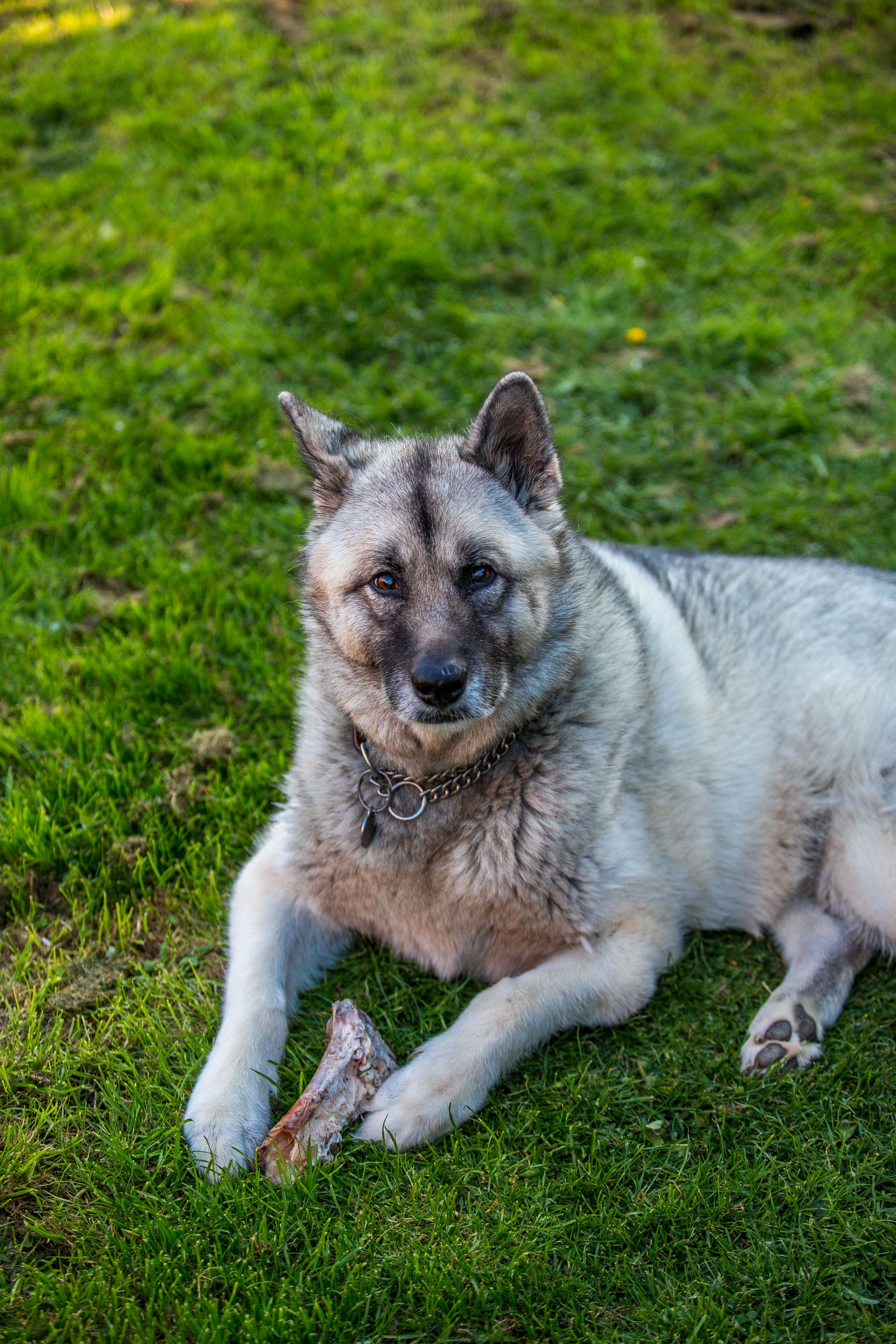
Norwegian Elkhound
A Nordic hunting spitz built for moose tracking in deep snow. Bold, vocal, heavy-shedding, and thoroughly at home in the cold of Otago, Southland and the Central Plateau.

Shiba Inu
A small Japanese hunting spitz that became a global internet icon. Cat-clean, fox-faced, headstrong, and a poor match for many first-time NZ owners despite its viral popularity.
Last reviewed:
Sources for this pageInformation only. Breed traits and health notes on this page are aggregated from public registry and breed-authority sources. Individual animals vary; this page is general information, not veterinary, behavioural, or insurance advice. Always consult a registered NZ vet or breeder for guidance specific to your situation.