
Hungarian Wirehaired Vizsla Dog Breed Information
Also known as: Wirehaired Vizsla, Drotszoru Magyar Vizsla, HWV
The wire-coated cousin of the smooth Hungarian Vizsla. Bred in 1930s Hungary as a tougher, more weather-resistant version of the breed for cold wet hunting work. Rarer than the smooth Vizsla in NZ and better suited to Wellington, Canterbury, Otago and Southland conditions.
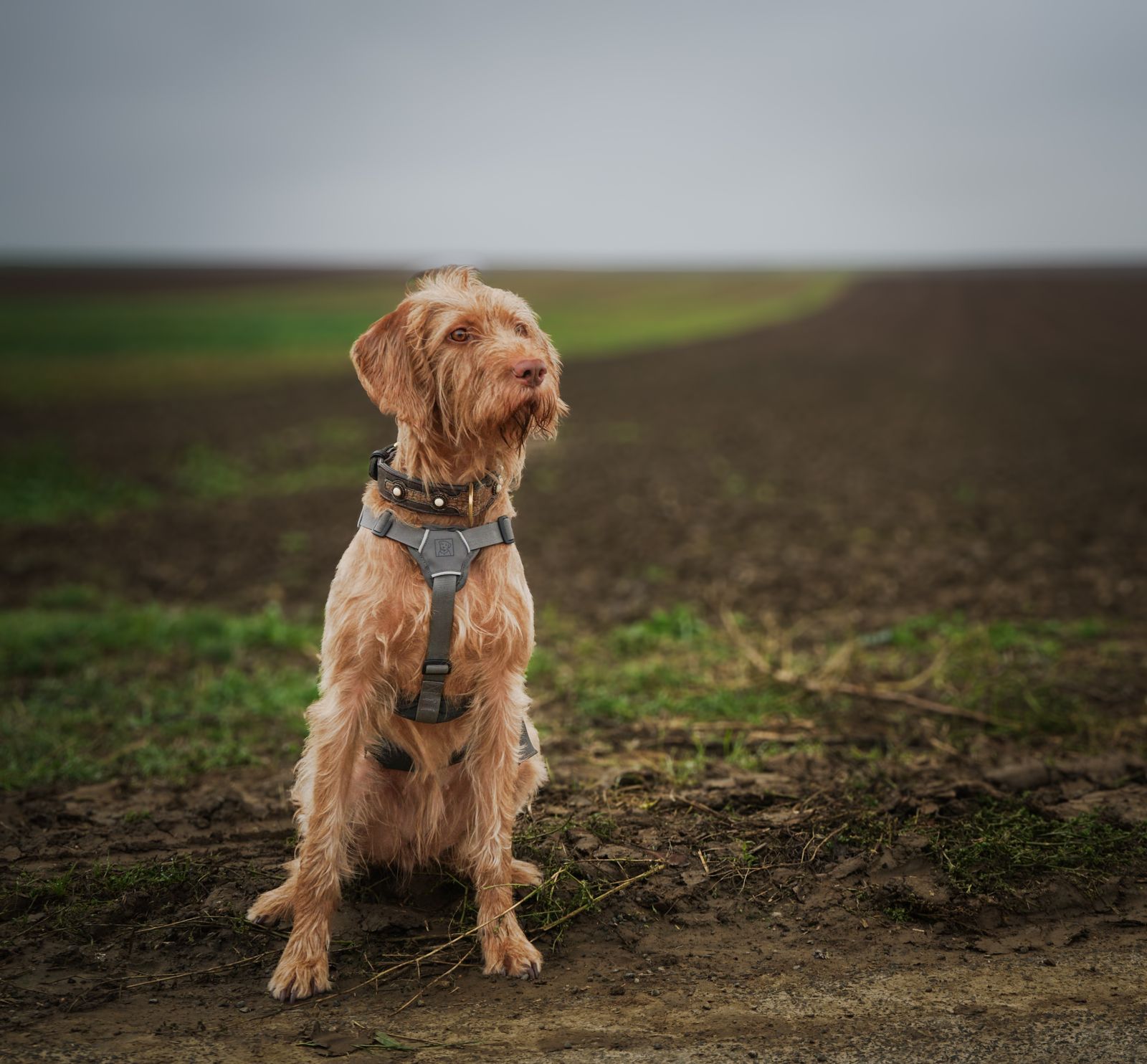
A highly affectionate, highly trainable, great with young children dog. On the practical side: low grooming demands and minimal drool.
About the Hungarian Wirehaired Vizsla.
The Hungarian Wirehaired Vizsla is the wire-coated cousin of the better-known smooth Vizsla, and is a rarer sight in NZ. Where the smooth Vizsla’s short coat handles upper North Island summer heat well but leaves the dog shivering in a Wellington southerly, the Wirehaired Vizsla was bred in 1930s Hungary specifically for cold wet hunting work. NZ pedigrees trace mainly to UK and Australian imports, and the breed is most visible on Canterbury, Otago and Southland lifestyle blocks where the climate fit beats the smooth original.
Adults stand 53 to 64 cm at the shoulder and weigh 20 to 30 kg, the same frame as the smooth Vizsla. The coat is the obvious difference: a 2 to 3 cm wire outer coat over a softer undercoat, in solid rust-gold, with the breed’s distinctive beard and eyebrows. Lifespan is 12 to 14 years.
The breed sits between the smooth Vizsla and the German Wirehaired Pointer in temperament. The wire variant retains the smooth Vizsla’s deep household attachment and biddability but carries a touch of the GWP’s slightly more reserved disposition with strangers and steadier adolescence.
Personality and behaviour
Hungarian Wirehaired Vizslas are deeply affectionate with the household, friendly with kids and other dogs, and biddable in training. The household-attachment trait that defines the smooth Vizsla (the “Velcro Vizsla” tendency to follow you room to room and lean on your legs) carries through. The breed does not handle long workdays alone. Many NZ HWV owners are self-employed, work from home, share the day with another household member, or run a second dog for company.
The trait that surprises new owners coming from a smooth Vizsla is the slightly more grounded disposition. The wire variant tends to settle a touch earlier in adolescence, is fractionally more reserved with strangers at first meeting, and reads as a steadier dog overall. This is breed temperament, not faulty individuals; reputable NZ breeders see it consistently across litters.
Around children the breed is patient and tolerant, particularly with primary-school-age kids and up. Around toddlers, supervise: an exuberant adolescent dog can knock small children over without meaning to.
The pointing and scenting drive is real. Off lead in paddocks or scrub, even pet-line dogs lock onto rabbit, hare or game-bird scent and stop hearing recall for a minute or two. Build recall properly from puppyhood and use a long line in unfenced country. Around chickens, cats and small pets the breed needs careful introduction; lifestyle-block owners with poultry should plan early.
Care and exercise
Plan on 90 minutes of structured daily exercise, more for working-line dogs in the gundog season. The breed needs off-lead running, scent work, retrieve games or gundog training. Two on-lead 30-minute walks will not satisfy the breed and will produce the chewing and digging the Vizsla type is known for in suburban homes.
Grooming is genuinely low-maintenance for a wire-coated breed but with a key technical detail. Brush weekly with a slicker to remove dead undercoat hair. Hand-strip or use a stripping comb every 4 to 6 months to maintain the harsh outer coat texture; clipping the coat softens it over time and degrades the weatherproof function. Trim the beard and eyebrows as needed but do not shave. Bath every 6 to 8 weeks or after a muddy run. Most NZ pet owners learn to hand-strip at home or pay NZ$80 to NZ$130 for a professional strip every 4 to 6 months.
The wire weatherproof coat is the breed’s selling point in NZ. Wellington, Canterbury, Otago and Southland winters are no issue, with no need for a fitted coat where the smooth Vizsla shivers visibly in a cold southerly. Upper North Island summer heat needs management with shade, earlier walks and swim access; the double coat insulates more than it looks.
The breed is deep-chested and at some lifetime bloat risk. Feed two smaller meals a day rather than one large meal, avoid hard exercise within an hour of feeding, and use a slow-feeder bowl if the dog eats fast.
Where to find a Hungarian Wirehaired Vizsla in New Zealand
Two reasonable paths.
- Registered NZKC breeders. The Dogs NZ breeders directory lists the small number of registered Wirehaired Vizsla breeders in NZ, alongside the smooth Vizsla kennels. Expect a 12 to 24 month waitlist, NZ$2,800 to NZ$4,800 per puppy, and full parent health screening (hip scores, eye certificates, thyroid panels, vWD DNA where relevant). Reputable breeders ask about your daily routine and time-alone arrangements; this is the right question for the breed.
- Australian and UK imports. A meaningful share of NZ HWV pedigrees trace to Australian breeders, and some NZ owners import directly. Quarantine and import logistics add cost but widen options for a breed with a small national gene pool.
Avoid unregistered “wirehaired Vizsla” puppies sold as a coat variety of the smooth Vizsla; the Wirehaired Vizsla is a separate registered breed. Ask which registry the parents are recorded in and which lines they trace back to.
The Hungarian Wirehaired Vizsla, by the numbers.
Each trait scored 1 to 5 on the AKC scale. The verdict synthesises the data; the panels below show the strengths, group averages, and the full trait table.
Top strengths
Family Life
avg 4.7Affectionate with Family
Good with Young Children
Good with Other Dogs
Physical
avg 1.7Shedding
Grooming Frequency
Drooling
Social
avg 3.8Openness to Strangers
Playfulness
Watchdog / Protective
Adaptability
Personality
avg 4.5Trainability
Energy Level
Barking Level
Mental Stimulation Needs
Living with a Hungarian Wirehaired Vizsla.
A 24-hour breakdown of how this breed's day typically goes, scaled to its energy, mental-stimulation, and grooming needs.
What a Hungarian Wirehaired Vizsla costs to own.
An indicative NZ lifetime cost: purchase, setup, then food, vet, insurance, grooming and other annual outgoings. Adjust the inputs to see how your choices change the total.
A Hungarian Wirehaired Vizsla costs about
$293per month
$68
$10
$50,010
Adjust the inputs:
Where the monthly cost goes
Food
$104 / mo
$1,250/yr · breed-appropriate dry & wet food
Insurance
$79 / mo
$950/yr · lifetime cover protects against breed-specific claims
Vet (avg)
$64 / mo
$770/yr · routine checks plus breed-specific risk
Grooming
$8 / mo
$100/yr · brushes, shampoo, professional clips
Other
$38 / mo
$450/yr · toys, treats, dental, boarding
Indicative NZ averages calculated from breed weight, grooming need and screened-condition count. One-off costs (purchase $3,800 + setup $450) are factored into the lifetime total but not the monthly figure.
How does the Hungarian Wirehaired Vizsla compare?
This breed
Hungarian Wirehaired Vizsla
$50,010
13-year lifetime cost
- Purchase + setup$4,250
- Food (lifetime)$16,250
- Vet (lifetime)$10,010
- Insurance (lifetime)$12,350
- Grooming (lifetime)$1,300
- Other (lifetime)$5,850
Reference
Average NZ medium dog
$38,920
12-year lifetime cost
- Purchase + setup$2,200
- Food (lifetime)$13,200
- Vet (lifetime)$6,000
- Insurance (lifetime)$11,400
- Grooming (lifetime)$2,400
- Other (lifetime)$3,720
A Hungarian Wirehaired Vizsla costs about $11,090 more over a lifetime than the average nz medium dog, mostly highervet and higherfood.
What to ask the breeder.
Reputable NZKC breeders test for these conditions and share results without being prompted. If a breeder won't share screening results, that is itself an answer.
Occasional
6 conditionsHip dysplasia
Ask breeders for hip scores from both parents.
Epilepsy
Idiopathic epilepsy is recognised in the smooth Vizsla and carries through to the wire variant.
Hypothyroidism
An occasional condition in the Hungarian Wirehaired Vizsla. Worth asking about and DNA testing where available.
Bloat (gastric dilatation-volvulus)
Deep-chested breed at some risk; feed two smaller meals and avoid hard exercise after eating.
Lymphoma and haemangiosarcoma
Cancer rates sit slightly above the canine average, similar to the smooth Vizsla.
Von Willebrand disease (vWD)
Inherited bleeding disorder carried through the German Wirehaired Pointer ancestry; DNA-testable.
Rare but urgent
1 conditionSebaceous adenitis
Inflammatory skin condition recognised in the breed.
The Hungarian Wirehaired Vizsla in NZ.
- Popularity: A rare gundog in NZ, well behind the smooth Vizsla in registrations. Most pedigrees trace to UK and Australian imports. Visible at NZ Gundog Trial Association events and on lifestyle blocks in Canterbury, Otago and Southland.
- Typical price: NZ$2800–4800 from registered breeders
- Rescue availability: rare
- NZ climate fit: The wire weatherproof double coat handles cold wet conditions far better than the smooth Vizsla's single coat. Suits Wellington, Canterbury, Otago and Southland winters without a coat. Manage upper North Island summer heat with shade, water and earlier walks.
- Living space: Needs space, a fenced yard and ideally paddock access. Best on lifestyle blocks or rural sections; suburban homes work if the daily exercise commitment is real and the dog is not alone for long workdays.
Who the Hungarian Wirehaired Vizsla is for.
Suits
- Active NZ hunting and gundog homes
- Lifestyle blocks and rural sections in cooler regions
- Households where someone is home most of the day
Less suited to
- Apartments without a serious daily exercise plan
- Long workdays with the dog left alone
- Households expecting the smooth Vizsla coat care
Common questions.
What is the difference between a Vizsla and a Hungarian Wirehaired Vizsla?
Is the Hungarian Wirehaired Vizsla a good NZ family dog?
How much does a Hungarian Wirehaired Vizsla cost in NZ?
If the Hungarian Wirehaired Vizsla appeals, also consider.
Breeds with a similar profile that might suit your household.

Vizsla
Athletic, affectionate Hungarian pointer with a short rust-gold coat, a strong working drive and very high attachment to its household. Suits active families that can build the day around a dog and dislike being away from home long.

German Wirehaired Pointer
The wirehaired version of the GSP. A versatile German hunting dog with a weather-resistant beard-and-eyebrow coat, popular in NZ rural and gamebird hunting circles. All-weather all-terrain working dog with serious daily exercise needs.

Wirehaired Pointing Griffon
The versatile Dutch-French wire pointer developed by Eduard Korthals in the late 19th century. Steady, biddable, all-weather all-terrain hunting dog with a steel-grey and brown wire coat. Increasingly visible in NZ rural hunting circles.

Weimaraner
Tall, athletic German pointing breed with a distinctive silver-grey coat and very high drive. Suits experienced active households and gundog homes; does not suit quiet apartment life or long workdays.
Last reviewed:
Sources for this pageInformation only. Breed traits and health notes on this page are aggregated from public registry and breed-authority sources. Individual animals vary; this page is general information, not veterinary, behavioural, or insurance advice. Always consult a registered NZ vet or breeder for guidance specific to your situation.