
Wirehaired Pointing Griffon Dog Breed Information
Also known as: Korthals Griffon, Griffon d'arret a poil dur Korthals, WPG
The versatile Dutch-French wire pointer developed by Eduard Korthals in the late 19th century. Steady, biddable, all-weather all-terrain hunting dog with a steel-grey and brown wire coat. Increasingly visible in NZ rural hunting circles.
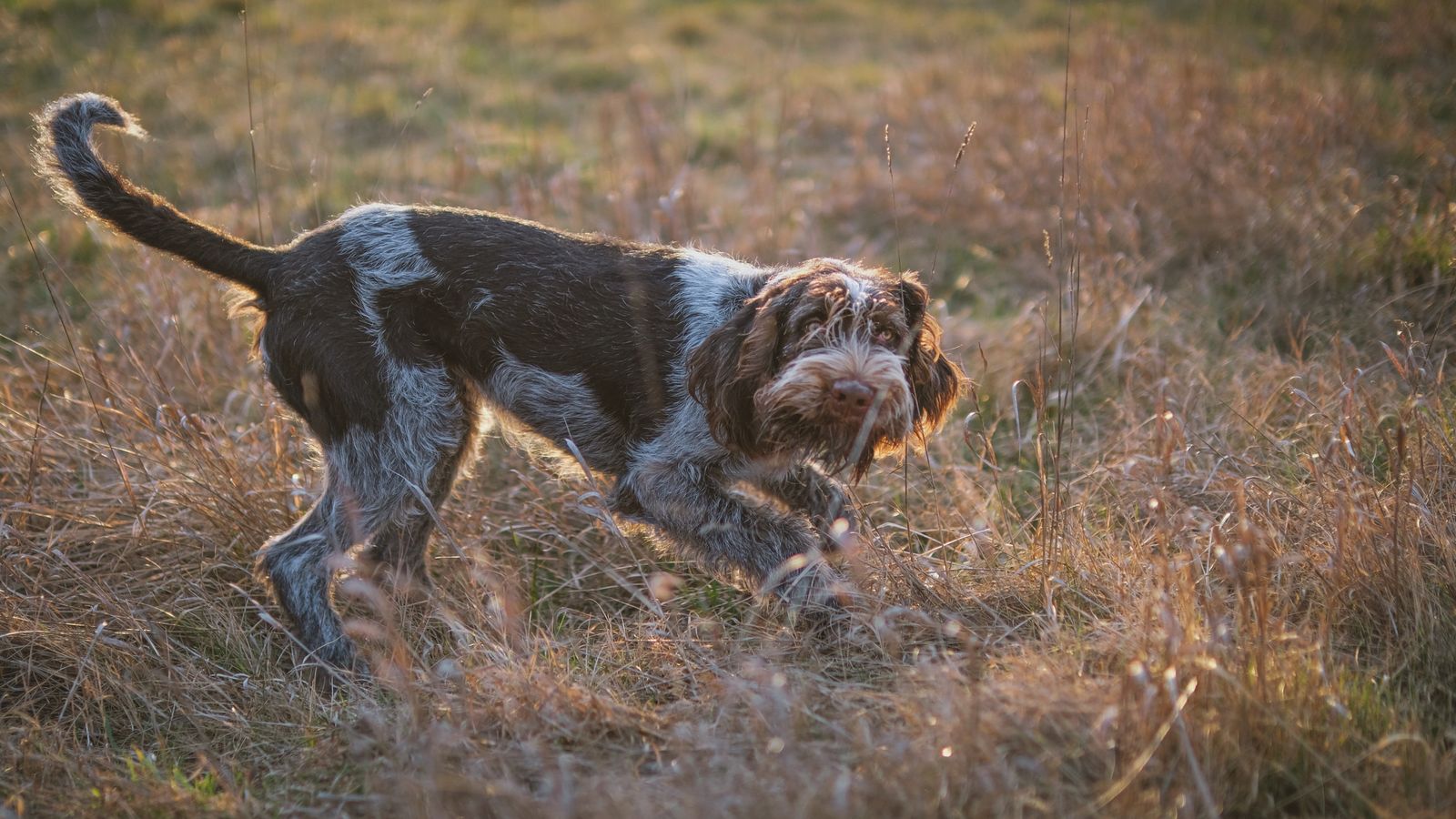
A highly affectionate, highly trainable, great with young children dog. On the practical side: low grooming demands and minimal drool.
About the Wirehaired Pointing Griffon.
The Wirehaired Pointing Griffon, often called the Korthals Griffon after its 19th-century Dutch developer Eduard Karel Korthals, is a versatile continental pointer that is increasingly visible in NZ rural hunting circles. The breed sits in the same broad space as the German Wirehaired Pointer (a wire-coated weatherproof continental gundog with a beard, eyebrows and serious working pedigree) but with a noticeably steadier temperament, better openness to strangers and a more relaxed adolescence. NZ owners coming from a GWP often describe the WPG as the gentler half of the wire-pointer pair.
Adults stand 50 to 60 cm at the shoulder and weigh 22 to 32 kg, smaller and lighter-built than a GWP. The wire coat is harsh, 5 to 6 cm long, with a softer undercoat, and presents the breed’s signature steel-grey base coat with brown markings, a brown beard and bushy eyebrows. Some lines run more brown roan or chestnut. Lifespan is 12 to 15 years, on the longer side for a sporting breed.
The breed is registered as the Griffon d’arret a poil dur Korthals in France (which considers itself the country of origin under FCI rules), and as the Wirehaired Pointing Griffon under NZKC, the AKC and the UK Kennel Club. Korthals himself was Dutch and developed the breed at kennels in Germany and later France, which is why the breed’s nationality is shared.
Personality and behaviour
WPGs are deeply affectionate with the household, friendly with strangers and good with kids and other dogs. The breed is one of the more biddable continental gundogs and tends to be easier to live with than a GWP through the first two years. Around children the breed is patient and tolerant; around toddlers, supervise the energy of an adolescent dog.
The trait that surprises new owners is the steady disposition. Where a GWP shows a noticeable territorial streak and reserved-with-strangers temperament, the WPG is generally more open at the gate, settles faster after greetings, and reads as a calmer dog overall. This is breed temperament, not faulty individuals; reputable NZ breeders see it consistently across litters.
Loneliness sits hard. The breed is bonded to the household and does not handle long workdays alone routinely. Daycare, a midday walker, working from home or a second dog for company is the realistic plan for most pet households.
The pointing and scenting drive is real. Off lead in paddocks or scrub, even pet-line dogs lock onto game scent, point and stop hearing recall for a stretch. The breed’s water-retrieving instinct is a touch stronger than the GWP and the breed enjoys swim work as part of the exercise routine. Around chickens, cats and small pets the breed needs careful introduction; lifestyle-block owners with poultry should plan early.
Care and exercise
Plan on 75 minutes of structured daily exercise, more for working dogs in roar season or duck season. The breed needs off-lead running, scent work, retrieve games, swim sessions or gundog training. Two on-lead 30-minute walks tire the body but not the brain. The breed is built for sustained pace and suits owners who tramp, hunt, run or bike with a dog.
Grooming is genuinely low-maintenance for a wire-coated breed but with one technical detail. Brush weekly with a slicker to remove dead undercoat hair. Hand-strip or use a stripping comb every 4 to 6 months to maintain the harsh outer coat texture; clipping the coat softens it over time and degrades the weatherproof function. Trim the beard, eyebrows and moustache as needed but do not shave. Bath every 6 to 8 weeks or after a muddy hunt. Most NZ pet owners learn to hand-strip at home or pay NZ$80 to NZ$130 for a professional strip every 4 to 6 months.
Check ears after every swim and rural walk. The dropped ear plus the beard combination traps moisture and grass seeds, and otitis is one of the more common claim types on NZ pet insurance for the breed.
The breed is moderately deep-chested. Bloat risk is lower than a GWP or a Vizsla but still meaningful; feed two smaller meals a day rather than one, avoid hard exercise within an hour of feeding, and use a slow-feeder bowl if the dog eats fast.
The wire weatherproof double coat is the breed’s selling point in NZ. Wellington wind and rain, Canterbury frosts, Otago and Southland winters are all comfortable for the breed without a coat. The breed performs particularly well in Southland and Otago hunting country, where NZ Deerstalkers Association and gamebird hunters work WPGs alongside GSPs and GWPs as primary dogs. Upper North Island summer heat needs management with shade, water and earlier walks; the double coat insulates more than it looks.
Where to find a Wirehaired Pointing Griffon in New Zealand
Three reasonable paths.
- Registered NZKC breeders. The Dogs NZ breeders directory lists the small but growing number of registered WPG breeders in NZ. Expect a 12 to 24 month waitlist, NZ$2,800 to NZ$4,800 per puppy, and parent health screening (hip and elbow scores, eye certificates, thyroid panels, PRA DNA where relevant). Working-line breeders may also offer trial and hunting pedigree information.
- Working-line and hunting networks. A meaningful share of NZ WPGs come through hunting and gundog networks (NZ Gundog Trial Association, regional gundog clubs, NZ Deerstalkers contacts) rather than general puppy advertising. Pedigrees emphasise hunting performance over conformation. Ask explicitly about parent temperament, hereditary issues and DNA testing the breeder has done.
- Australian, UK and continental imports. The breed’s small NZ gene pool means imported semen and adult-dog imports from Australia, the UK and Europe are common ways to widen options. NZKC will recognise FCI and AKC papers from imported lines.
Avoid Trade Me listings without parent health screening and any breeder who can’t show you the dam in person. The breed’s small numbers in NZ make breeder accountability central; a confident, calm parent dog with hip and elbow scores and current eye certificates is the strongest single signal you can take from a breeder visit.
The Wirehaired Pointing Griffon, by the numbers.
Each trait scored 1 to 5 on the AKC scale. The verdict synthesises the data; the panels below show the strengths, group averages, and the full trait table.
Top strengths
Family Life
avg 4.7Affectionate with Family
Good with Young Children
Good with Other Dogs
Physical
avg 1.7Shedding
Grooming Frequency
Drooling
Social
avg 3.5Openness to Strangers
Playfulness
Watchdog / Protective
Adaptability
Personality
avg 4.3Trainability
Energy Level
Barking Level
Mental Stimulation Needs
Living with a Wirehaired Pointing Griffon.
A 24-hour breakdown of how this breed's day typically goes, scaled to its energy, mental-stimulation, and grooming needs.
What a Wirehaired Pointing Griffon costs to own.
An indicative NZ lifetime cost: purchase, setup, then food, vet, insurance, grooming and other annual outgoings. Adjust the inputs to see how your choices change the total.
A Wirehaired Pointing Griffon costs about
$301per month
$70
$10
$54,874
Adjust the inputs:
Where the monthly cost goes
Food
$109 / mo
$1,310/yr · breed-appropriate dry & wet food
Insurance
$82 / mo
$986/yr · lifetime cover protects against breed-specific claims
Vet (avg)
$64 / mo
$770/yr · routine checks plus breed-specific risk
Grooming
$8 / mo
$100/yr · brushes, shampoo, professional clips
Other
$38 / mo
$450/yr · toys, treats, dental, boarding
Indicative NZ averages calculated from breed weight, grooming need and screened-condition count. One-off costs (purchase $3,800 + setup $450) are factored into the lifetime total but not the monthly figure.
How does the Wirehaired Pointing Griffon compare?
This breed
Wirehaired Pointing Griffon
$54,874
14-year lifetime cost
- Purchase + setup$4,250
- Food (lifetime)$18,340
- Vet (lifetime)$10,780
- Insurance (lifetime)$13,804
- Grooming (lifetime)$1,400
- Other (lifetime)$6,300
Reference
Average NZ medium dog
$38,920
12-year lifetime cost
- Purchase + setup$2,200
- Food (lifetime)$13,200
- Vet (lifetime)$6,000
- Insurance (lifetime)$11,400
- Grooming (lifetime)$2,400
- Other (lifetime)$3,720
A Wirehaired Pointing Griffon costs about $15,954 more over a lifetime than the average nz medium dog, mostly higherfood and highervet.
What to ask the breeder.
Reputable NZKC breeders test for these conditions and share results without being prompted. If a breeder won't share screening results, that is itself an answer.
Common
1 conditionHip dysplasia
Ask breeders for hip scores from both parents.
Occasional
5 conditionsElbow dysplasia
Ask breeders for elbow scores.
Hypothyroidism
An occasional condition in the Wirehaired Pointing Griffon. Worth asking about and DNA testing where available.
Bloat (gastric dilatation-volvulus)
Moderately deep-chested; feed two smaller meals and avoid hard exercise after eating.
Otitis externa (ear infections)
The dropped ear and beard combination traps moisture; check after every swim.
Entropion
Eyelid condition that can require surgical correction.
Rare but urgent
1 conditionProgressive retinal atrophy (PRA)
DNA-testable; reputable breeders screen before mating.
The Wirehaired Pointing Griffon in NZ.
- Popularity: A growing NZ hunting and gundog breed, increasingly visible in upland gamebird and small-game hunting communities, particularly through NZ Deerstalkers Association and NZ Gundog Trial Association networks. Less common than the GSP and GWP in NZ pet households but expanding among lifestyle-block owners.
- Typical price: NZ$2800–4800 from registered breeders
- Rescue availability: rare
- NZ climate fit: The wire weatherproof double coat is built for the NZ climate range, including cold wet winters in Otago, Southland and Wellington. Manage upper North Island summer heat with shade, water and earlier walks.
- Living space: Needs space, a fenced yard and ideally paddock access. Best on lifestyle blocks or rural sections; suburban homes work if the daily exercise commitment is real and the dog is not alone for long workdays.
Who the Wirehaired Pointing Griffon is for.
Suits
- NZ hunting and gundog homes
- Lifestyle-block and rural households with paddock access
- Active families with older kids
Less suited to
- Apartments
- First-time owners without an exercise plan
- Long workdays with the dog left alone
Common questions.
How is the Wirehaired Pointing Griffon different from a German Wirehaired Pointer?
Is the Wirehaired Pointing Griffon a good NZ family dog?
How much does a Wirehaired Pointing Griffon cost in NZ?
If the Wirehaired Pointing Griffon appeals, also consider.
Breeds with a similar profile that might suit your household.

German Wirehaired Pointer
The wirehaired version of the GSP. A versatile German hunting dog with a weather-resistant beard-and-eyebrow coat, popular in NZ rural and gamebird hunting circles. All-weather all-terrain working dog with serious daily exercise needs.

Vizsla
Athletic, affectionate Hungarian pointer with a short rust-gold coat, a strong working drive and very high attachment to its household. Suits active families that can build the day around a dog and dislike being away from home long.

Weimaraner
Tall, athletic German pointing breed with a distinctive silver-grey coat and very high drive. Suits experienced active households and gundog homes; does not suit quiet apartment life or long workdays.
Last reviewed:
Sources for this pageInformation only. Breed traits and health notes on this page are aggregated from public registry and breed-authority sources. Individual animals vary; this page is general information, not veterinary, behavioural, or insurance advice. Always consult a registered NZ vet or breeder for guidance specific to your situation.