
Hungarian Mudi Dog Breed Information
Also known as: Mudi, Hungarian Sheepdog
A rare athletic medium-sized Hungarian herder, suited to NZ farms and lifestyle blocks. Smarter and faster than most NZ owners expect, the Mudi is one of the world's least common pure breeds and one of Hungary's most genuinely useful working dogs.

A highly affectionate, highly trainable, great with young children dog. On the practical side: low grooming demands and minimal drool. The trade-off is vocal.
About the Hungarian Mudi.
The Hungarian Mudi is one of the rarest pure breeds in the world (estimated global population of 8,000 to 11,000 dogs) and a genuinely versatile medium-sized Hungarian herder. Very rare in NZ, with likely under 50 dogs nationally and most placements going to dog-sport competitors and lifestyle-block owners willing to commit to a busy working breed. The signal that defines daily life with a Mudi is athleticism with off-switch: the breed has the speed, intelligence and stamina of a Border Collie, plus the rare ability to lie down and rest when the work stops, which most NZ working herders cannot.
Adults stand 38 to 47 cm at the shoulder and weigh 8 to 13 kg, smaller than NZ owners often expect from photos. The double coat is wavy (not curly like the Pumi, not corded like the Puli), medium length on the body and shorter on the head and legs. Colours include black (the most common), brown, fawn, ash, white and merle. The merle pattern is recognised in the breed but carries the usual cautions around merle-to-merle breeding. Lifespan is 12 to 14 years.
The Mudi is one of seven distinctly Hungarian breeds, alongside the Hungarian Puli, Hungarian Komondor, Hungarian Kuvasz, Hungarian Pumi, Vizsla, and the Wirehaired Vizsla. Of these, the Mudi, Pumi and Puli are the medium herders. The Mudi was the last of the three to be recognised as a separate breed (1936) after centuries of being grouped with the Puli and Pumi on Hungarian farms.
Personality and behaviour
Mudis are affectionate with family and watchful of strangers. With family children they are patient and playful; with visitors they are reserved at first, friendly once introduced. With other dogs the breed is sociable when well-socialised but not naturally diplomatic with rough or unfamiliar dogs. Same-sex dog conflicts are not unusual.
The trait that surprises new owners is the off-switch. Most highly-intelligent herding breeds (Border Collies, Pumis, Australian Shepherds) struggle to settle in the household between work sessions. The Mudi is unusual in that it can switch off cleanly: an adult Mudi that has been exercised and trained for the day will lie down on the couch and stay there. This makes the breed easier to live with than most herders of comparable intelligence, and is the single biggest reason NZ Mudi owners give for choosing the breed.
The second surprise is the speed. Mudis cover ground fast and react fast, which makes them outstanding at agility and small-stock herding but means recall in unfenced country needs to be built carefully from puppyhood. The breed has moderate prey drive (more than a Pumi, less than a Border Collie) and will chase small wildlife, livestock or moving vehicles unless trained out.
Like the Pumi, the Mudi is an alarm-barker. The barking is less constant than a Pumi’s but still significant, and the breed barks at strangers, deliveries, wildlife and unfamiliar movement. Lifestyle blocks with tolerant neighbours suit the breed; close-built suburban sections need management.
Care and exercise
Plan on 90 minutes of daily exercise for an adult Mudi, more for working-line dogs. Combine structured walking with cognitive work: agility, herding, obedience, frisbee, scent games or food puzzles. The breed is genuinely athletic and benefits from real outlets, not just garden time. Two on-lead 30-minute walks will not satisfy the breed.
Grooming is straightforward. Realistic routine:
- Brush weekly with a slicker brush and undercoat rake. The wavy coat does not mat easily.
- Daily brushing through the spring and autumn coat blows (two weeks each). Expect a manageable amount of shed undercoat, less than a Border Collie or Australian Shepherd.
- Bath every two to three months. The coat dries quickly and is largely self-cleaning between baths.
- Trim nails every three to four weeks for household dogs; working dogs typically wear nails naturally.
Heat tolerance is moderate. The double coat handles NZ winters comfortably and copes with most NZ summers with shaded indoor space and early or late walks. Upper-North-Island summer humidity above 70% needs management.
Training and household life
Mudis are among the most trainable medium breeds in the world. Reward-based training works exceptionally well. The breed is biddable, fast to read intent, and unusually willing to settle when the work is done. NZ Mudi owners report that the breed picks up new behaviours in single-digit repetitions and retains them across long gaps without retraining.
The breed excels at:
- Agility, where small NZ Mudis routinely outrun Border Collies on a tight course thanks to faster turning radius.
- Herding, with real working drive at small scale.
- Obedience and rally, where the biddability shows.
- Search and rescue, the role the Mudi is most commonly used for in continental Europe.
- Frisbee and disc-dog sports.
Adolescence runs from about 8 to 18 months. Early socialisation across the first 18 months is essential to manage the natural wariness with strangers; an under-socialised adult Mudi becomes a sharp alarm-barker that does not settle around visitors.
For NZ lifestyle blocks with sheep, goats, ducks or chickens, the Mudi can do real stock work. The breed is not a Huntaway and is not built for full-scale NZ station work, but for small flocks on a few hectares the Mudi is one of the most useful breeds available. NZKC herding-club instructors in Canterbury, Waikato and the Manawatu have worked with NZ Mudis successfully.
Where to find a Mudi in New Zealand
Two realistic paths, both slow:
- Registered NZKC breeders. The Dogs NZ breeders directory lists a very small number of registered Mudi breeders. Litters are infrequent (often only one a year nationally, sometimes zero). Expect an 18 to 36 month waitlist, NZ$2,500 to NZ$4,500 per puppy, with hip scores and eye certificates from both parents.
- Imports from Hungary, Finland, the UK or Australia. Most NZ Mudis arrive this way. Add NZ$3,000 to NZ$6,000 for shipping, quarantine and import paperwork on top of the puppy price. Total cost can reach NZ$6,000 to NZ$10,000. Owners typically work with established Mudi breeders overseas (Hungary and Finland are the strongest gene pools) and plan months ahead.
Rescue Mudis are essentially unavailable in NZ. The breed is too rare for SPCA or general rescue placement, and breed-specific rescue does not exist here.
What surprises new owners
Three things consistently. First, how good the off-switch is. Most NZ herding-breed owners (especially those coming from Border Collies or Australian Shepherds) describe the Mudi as the easiest highly-intelligent dog they have lived with at home. Second, how fast the breed moves; agility times are competitive with the best Border Collies. Third, how rare the breed actually is. NZ owners often go years without meeting another Mudi outside their own breeding lines, and the international Mudi community is small enough that most owners know each other through Facebook groups and dog-sport networks. For active NZ households or lifestyle-block owners willing to wait and pay, the Mudi is one of the highest-functioning rare breeds available.
The Hungarian Mudi, by the numbers.
Each trait scored 1 to 5 on the AKC scale. The verdict synthesises the data; the panels below show the strengths, group averages, and the full trait table.
Top strengths
Family Life
avg 3.7Affectionate with Family
Good with Young Children
Good with Other Dogs
Physical
avg 2.0Shedding
Grooming Frequency
Drooling
Social
avg 3.3Openness to Strangers
Playfulness
Watchdog / Protective
Adaptability
Personality
avg 4.8Trainability
Energy Level
Barking Level
Mental Stimulation Needs
Living with a Hungarian Mudi.
A 24-hour breakdown of how this breed's day typically goes, scaled to its energy, mental-stimulation, and grooming needs.
What a Hungarian Mudi costs to own.
An indicative NZ lifetime cost: purchase, setup, then food, vet, insurance, grooming and other annual outgoings. Adjust the inputs to see how your choices change the total.
A Hungarian Mudi costs about
$225per month
$52
$7
$39,102
Adjust the inputs:
Where the monthly cost goes
Food
$68 / mo
$815/yr · breed-appropriate dry & wet food
Insurance
$57 / mo
$689/yr · lifetime cover protects against breed-specific claims
Vet (avg)
$54 / mo
$650/yr · routine checks plus breed-specific risk
Grooming
$8 / mo
$100/yr · brushes, shampoo, professional clips
Other
$38 / mo
$450/yr · toys, treats, dental, boarding
Indicative NZ averages calculated from breed weight, grooming need and screened-condition count. One-off costs (purchase $3,500 + setup $450) are factored into the lifetime total but not the monthly figure.
How does the Hungarian Mudi compare?
This breed
Hungarian Mudi
$39,102
13-year lifetime cost
- Purchase + setup$3,950
- Food (lifetime)$10,595
- Vet (lifetime)$8,450
- Insurance (lifetime)$8,957
- Grooming (lifetime)$1,300
- Other (lifetime)$5,850
Reference
Average NZ medium dog
$38,920
12-year lifetime cost
- Purchase + setup$2,200
- Food (lifetime)$13,200
- Vet (lifetime)$6,000
- Insurance (lifetime)$11,400
- Grooming (lifetime)$2,400
- Other (lifetime)$3,720
A Hungarian Mudi costs about the same as the average nz medium dog over a lifetime in NZ.
What to ask the breeder.
Reputable NZKC breeders test for these conditions and share results without being prompted. If a breeder won't share screening results, that is itself an answer.
Occasional
3 conditionsHip dysplasia
Ask breeders for hip scores from both parents.
Patellar luxation
An occasional condition in the Hungarian Mudi. Worth asking about and DNA testing where available.
Cataracts
Annual eye exams are standard from middle age.
Rare but urgent
2 conditionsEpilepsy
Rare in the Hungarian Mudi but worth knowing the warning signs.
Elbow dysplasia
Rare in the Hungarian Mudi but worth knowing the warning signs.
The Hungarian Mudi in NZ.
- NZ popularity: ranked #195
- Popularity: One of the rarest registered breeds in NZ. A handful of dedicated owners, with most NZ Mudis traceable to UK, Australian or European imports.
- Typical price: NZ$2500–4500 from registered breeders
- Rescue availability: rare
- NZ climate fit: The wavy double coat handles cold and damp well; the breed is built for Hungarian winters and copes with NZ ones. Heat tolerance is moderate; manage upper-North-Island summers with early or late walks and shaded indoor space.
- Living space: Best in a house with a fenced yard, on a lifestyle block, or on a farm with stock to work. Apartments are not realistic given energy and alarm-barking.
Who the Hungarian Mudi is for.
Suits
- Active NZ households committed to daily training and exercise
- Lifestyle blocks and small farms with sheep, goats or poultry
- Dog-sport homes (agility, herding, obedience, frisbee)
- Owners wanting a rare working breed without livestock-guardian intensity
Less suited to
- Apartments and homes with close neighbours (alarm barking)
- Long workdays with the dog left alone
- First-time owners seeking a quiet, easy dog
Common questions.
How is a Mudi different from a Pumi?
Are Mudis used as working dogs in NZ?
How rare is the Mudi worldwide?
How much does a Mudi cost in NZ?
If the Hungarian Mudi appeals, also consider.
Breeds with a similar profile that might suit your household.

Hungarian Pumi
A lively curly-coated Hungarian herder with corkscrew curls and distinctive half-erect ears. Lighter on its feet and friendlier than the corded Puli, the Pumi suits active NZ households and lifestyle blocks willing to commit to a busy, vocal, very smart medium-sized working dog.
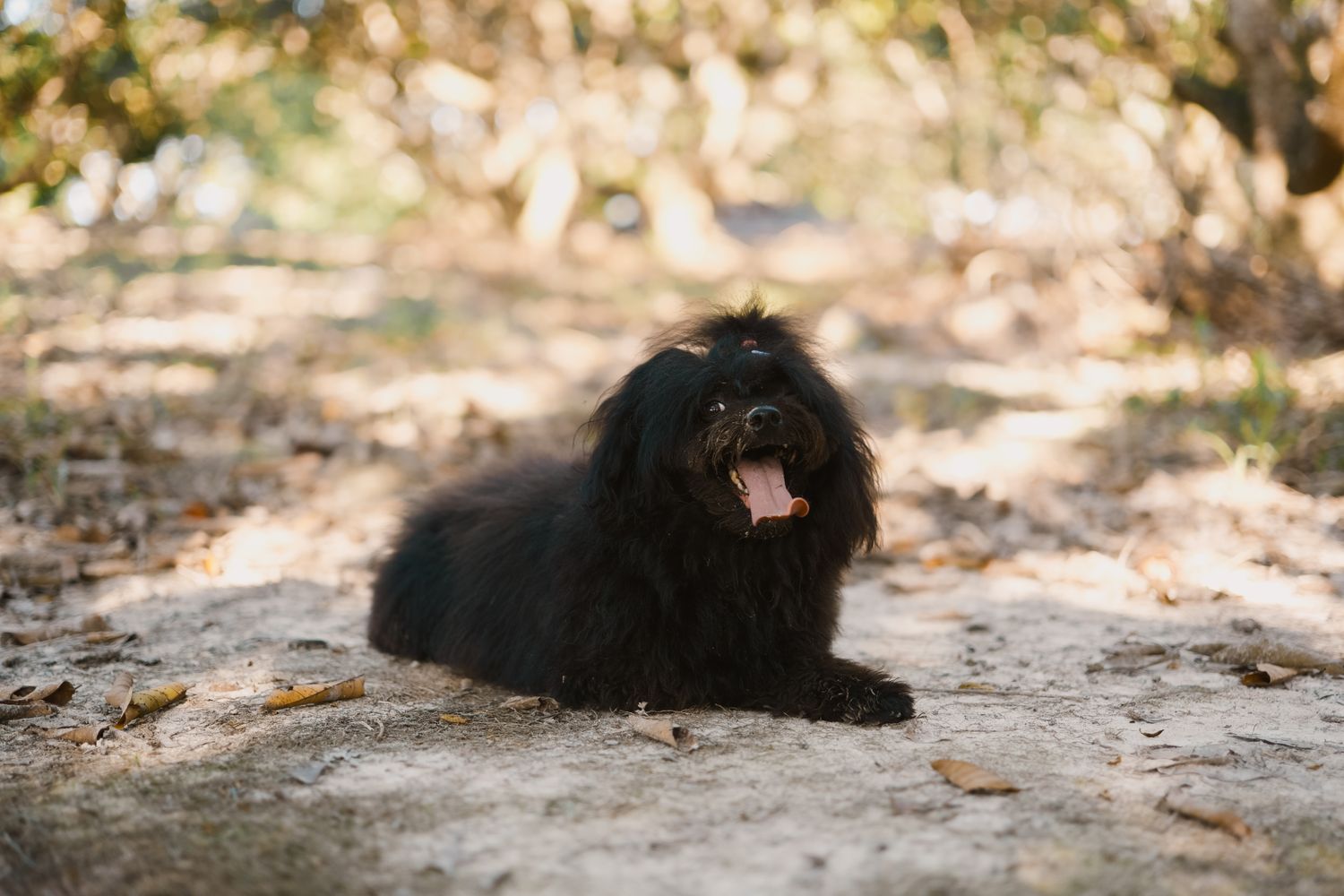
Hungarian Puli
The corded Hungarian sheep-driving dog, instantly recognisable as the "mop dog" with cords reaching the ground. Surprisingly athletic, vocal, sharp-witted, and a niche but committed presence in NZ.

Australian Kelpie
An Australian sheepdog used widely on NZ farms for sheep and cattle work. Lean, athletic, eye-driven, biddable to a handler and notoriously hard to outwit.

Border Collie
Widely considered the most intelligent dog breed. Tireless, focused, and demanding to live with unless you give the brain a job.
Last reviewed:
Sources for this pageInformation only. Breed traits and health notes on this page are aggregated from public registry and breed-authority sources. Individual animals vary; this page is general information, not veterinary, behavioural, or insurance advice. Always consult a registered NZ vet or breeder for guidance specific to your situation.