
Hungarian Kuvasz Dog Breed Information
Also known as: Kuvasz, Hungarian Sheepdog
The smooth-coat white Hungarian livestock guardian, larger and more athletic than the corded Komondor. A royal hunting and guard dog of medieval Hungarian kings, now rare in NZ but with a small footprint on lifestyle blocks alongside Maremmas and Pyrs.

A highly affectionate dog. On the practical side: minimal drool. The trade-off is sheds plenty.
About the Hungarian Kuvasz.
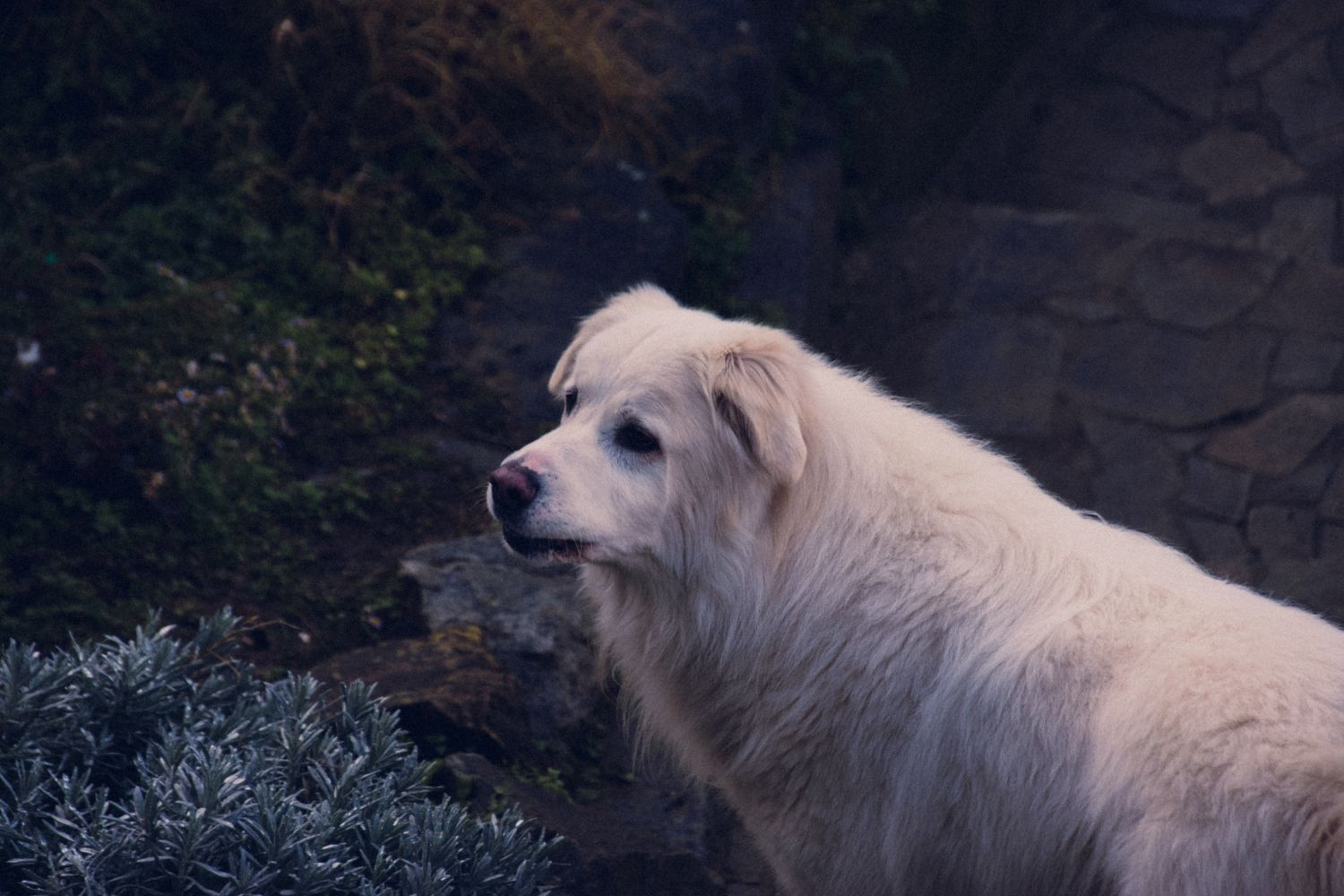
The Hungarian Kuvasz is the smooth-coat white Hungarian livestock guardian, the larger and more athletic cousin of the corded Komondor. Genuinely rare in NZ, it occupies a small niche on lifestyle blocks and a few sheep, goat and alpaca operations alongside the more common Maremma Sheepdog and Pyrenean Mountain Dog. The signal that defines the breed is the combination of guardian temperament with athletic build: the Kuvasz is faster, sharper and more reactive than most livestock guardian breeds, with a working history that includes guarding cattle on the Hungarian plains and serving as a personal guard for Hungarian nobility.
Adults stand 65 to 76 cm at the shoulder and weigh 32 to 52 kg, with males notably heavier than females. The colour is white only, sometimes with a faint ivory cast around the ears. The double coat is medium length, slightly wavy on the body and shorter on the head and legs. Lifespan is 10 to 12 years, normal for working livestock guardians.
The Kuvasz is one of seven distinctly Hungarian breeds, alongside the Hungarian Puli, Hungarian Komondor, Hungarian Pumi, Hungarian Mudi, Vizsla, and the Wirehaired Vizsla. Of these, the Kuvasz, Komondor and Puli all worked the same Hungarian flocks. The Komondor and Puli wear cords; the Kuvasz does not. The Kuvasz is the largest of the three.
Personality and behaviour
Kuvasz dogs are calm with family and serious with everyone else. With family they are affectionate and bonded but the affection is reserved rather than effusive; they are more emotionally serious than a Labrador or Golden Retriever and not interested in entertaining strangers. With visitors and strangers the breed is wary at best and actively territorial at worst. Many adult Kuvasz dogs will not greet visitors who walk past them in the hallway and will instead position themselves between the visitor and the family.
The trait that surprises new owners is the speed. Most livestock guardians are slow and deliberate. The Kuvasz is athletic and reactive, capable of covering ground fast and reading situations quickly. That makes the breed effective as a guardian (it can intercept threats rather than just block them) and difficult in households unprepared for the reactivity. A Kuvasz that has not been thoroughly socialised in puppyhood becomes an over-territorial adult that does not easily settle.
Like other guardian breeds, the Kuvasz barks through the night by design. This is the single most common reason NZ Kuvasz dogs end up rehomed from suburban placements; the night-barking does not turn off in close-built suburbs and the council noise complaints arrive within a week.
With other dogs, same-sex aggression is common. Multi-dog Kuvasz households generally pair a male with a female. With cats, lifestyle-block livestock and chickens, the Kuvasz can be socialised to coexist if introduced young; the breed has no significant prey drive but does have territorial impulses around small movement.
Care and exercise
Plan on 75 minutes of daily exercise for a household Kuvasz, more than a Komondor or Maremma but less than a working herder. A long calm walk plus free patrol time in a secure yard or paddock works well. Working livestock guardians self-regulate their activity. The Kuvasz can manage moderate hiking and lifestyle-block work; it is not a sport dog or a jogging companion.
Grooming is straightforward by livestock-guardian standards. The double coat is largely self-cleaning between baths and the breed has a faint to non-existent dog odour. Realistic routine:
- Brush twice a week year-round with a slicker brush or undercoat rake.
- Daily brushing through the spring and autumn coat blows (two to three weeks each). Expect rubbish-bag quantities of white undercoat in each blow.
- Bath every two to three months only. Over-bathing strips the weatherproof outer coat.
- Check ears weekly, especially after wet paddock work; the thick coat traps moisture.
- Trim nails every three to four weeks for household dogs; working dogs typically wear nails naturally on hard ground.
Heat is the NZ challenge. The double coat insulates against both heat and cold, but the breed was built for cold winters and dry summers, and humid Auckland or Northland summers are well outside the comfort range. Walk early or late, provide deep shade, ensure water access at all times. Lifestyle-block dogs with shaded paddocks cope well; suburban dogs in the upper North Island need aircon as a baseline.
Bloat risk is real. Feed twice daily, avoid hard exercise within an hour of meals, and treat as an emergency.
Climate fit across New Zealand
- Auckland and Northland. The hardest fit. Practical only with shade, ventilation and aircon. As a working dog on a goat or alpaca lifestyle operation, manageable with shade structures.
- Wellington. Wind is irrelevant. Cool damp winters suit the breed.
- Christchurch and Canterbury. Excellent fit. Cold winters are a non-issue. Most NZ working Kuvasz placements cluster in the South Island.
- Central Otago and Southland. The breed’s natural climate range. Exceptional cold tolerance.
Where to find a Kuvasz in New Zealand
Three paths, all slow:
- Registered NZKC breeders. The Dogs NZ breeders directory lists a very small number of registered Kuvasz breeders, often only one or two active in any given year. Litters are infrequent. Expect an 18 to 36 month waitlist, NZ$2,500 to NZ$4,500 per puppy, with full parent health screening.
- Australian or US imports. A small number of NZ enthusiasts import working-line or show-line Kuvasz from Australia, the United States or Hungary. Add NZ$3,000 to NZ$6,000 for shipping, quarantine and import paperwork.
- Rescue. Extremely rare. Kuvasz dogs very seldom appear in SPCA or general rescue in NZ. When they do, rehoming is rural by necessity.
Reputable breeders will ask probing questions about handler experience, daily routine, fenced section, neighbours and tolerance of nightly barking before they accept a deposit. The Kuvasz is a serious breed and not for first-time large-dog owners.
What surprises new owners
Three things consistently. First, the wariness with strangers. The breed does not become friendlier with age and most adult Kuvasz dogs never warm to visitors. Second, the speed and athleticism; the Kuvasz can sprint and turn in ways most guardian breeds cannot, which makes recall in unfenced country unreliable. Third, the seriousness. This is not a playful or goofy dog. The Kuvasz takes itself and its household seriously, and the household needs to take the breed seriously back. For NZ farms and lifestyle blocks willing to commit to the breed, the Kuvasz delivers a faster, sharper guardian than the more common Maremma or Pyr; for everyone else, one of the more biddable guardian breeds is a better fit.
The Hungarian Kuvasz, by the numbers.
Each trait scored 1 to 5 on the AKC scale. The verdict synthesises the data; the panels below show the strengths, group averages, and the full trait table.
Top strengths
Family Life
avg 3.0Affectionate with Family
Good with Young Children
Good with Other Dogs
Physical
avg 3.0Shedding
Grooming Frequency
Drooling
Social
avg 2.5Openness to Strangers
Playfulness
Watchdog / Protective
Adaptability
Personality
avg 3.3Trainability
Energy Level
Barking Level
Mental Stimulation Needs
Living with a Hungarian Kuvasz.
A 24-hour breakdown of how this breed's day typically goes, scaled to its energy, mental-stimulation, and grooming needs.
What a Hungarian Kuvasz costs to own.
An indicative NZ lifetime cost: purchase, setup, then food, vet, insurance, grooming and other annual outgoings. Adjust the inputs to see how your choices change the total.
A Hungarian Kuvasz costs about
$366per month
$85
$12
$52,306
Adjust the inputs:
Where the monthly cost goes
Food
$147 / mo
$1,760/yr · breed-appropriate dry & wet food
Insurance
$105 / mo
$1,256/yr · lifetime cover protects against breed-specific claims
Vet (avg)
$54 / mo
$650/yr · routine checks plus breed-specific risk
Grooming
$23 / mo
$280/yr · brushes, shampoo, professional clips
Other
$38 / mo
$450/yr · toys, treats, dental, boarding
Indicative NZ averages calculated from breed weight, grooming need and screened-condition count. One-off costs (purchase $3,500 + setup $450) are factored into the lifetime total but not the monthly figure.
How does the Hungarian Kuvasz compare?
This breed
Hungarian Kuvasz
$52,306
11-year lifetime cost
- Purchase + setup$3,950
- Food (lifetime)$19,360
- Vet (lifetime)$7,150
- Insurance (lifetime)$13,816
- Grooming (lifetime)$3,080
- Other (lifetime)$4,950
Reference
Average NZ medium dog
$38,920
12-year lifetime cost
- Purchase + setup$2,200
- Food (lifetime)$13,200
- Vet (lifetime)$6,000
- Insurance (lifetime)$11,400
- Grooming (lifetime)$2,400
- Other (lifetime)$3,720
A Hungarian Kuvasz costs about $13,386 more over a lifetime than the average nz medium dog, mostly higherfood and higherinsurance.
What to ask the breeder.
Reputable NZKC breeders test for these conditions and share results without being prompted. If a breeder won't share screening results, that is itself an answer.
Common
1 conditionHeat intolerance
The double coat is built for the Hungarian plains. Upper-North-Island summer humidity needs shade and ventilation.
Occasional
4 conditionsHip and elbow dysplasia
Giant breed, ask for hip and elbow scores from both parents.
Bloat (gastric dilatation-volvulus)
Deep-chested giant breed at higher risk. Feed twice daily, avoid hard exercise around meals.
Osteochondritis dissecans (OCD)
Joint cartilage condition seen in fast-growing giant breeds. Controlled growth diet matters.
Hypothyroidism
An occasional condition in the Hungarian Kuvasz. Worth asking about and DNA testing where available.
The Hungarian Kuvasz in NZ.
- NZ popularity: ranked #180
- Popularity: Genuinely rare in NZ. A handful of registered breeders, with most NZ Kuvasz traceable to Australian and US imports. Working placements on NZ farms are uncommon compared with Maremmas and Pyrs.
- Typical price: NZ$2500–4500 from registered breeders
- Rescue availability: rare
- NZ climate fit: Built for the Hungarian plains with cold winters and hot dry summers. Cold tolerance is exceptional. Upper-North-Island summer humidity above 70% needs management; shade, water and ventilation are not optional.
- Living space: Not a suburban breed. Best on lifestyle blocks of half a hectare or more with secure deer fencing (1.8 m), or as a working livestock guardian on a sheep, goat or alpaca operation.
Who the Hungarian Kuvasz is for.
Suits
- NZ lifestyle blocks of half a hectare or more
- Sheep, goat or alpaca operations wanting a livestock guardian
- Experienced large-breed owners with secure fencing
Less suited to
- Suburban houses with close neighbours
- First-time owners
- Apartments and small yards
- Households with frequent visitors and unfamiliar children
Common questions.
How is a Kuvasz different from a Komondor?
Are Kuvasz used as working livestock guardians in NZ?
How much does a Kuvasz cost in NZ?
Will a Kuvasz settle in suburbia?
If the Hungarian Kuvasz appeals, also consider.
Breeds with a similar profile that might suit your household.

Hungarian Komondor
The giant white corded Hungarian livestock guardian. Built to live with sheep flocks on the Hungarian plains and to confront wolves single-handed, the Komondor is rare in NZ but has a small working role on lifestyle blocks and conservation projects alongside the more common Maremma.
Maremma Sheepdog
The white Italian livestock guardian. A genuine NZ working dog used to protect sheep from feral dogs and pigs on Hawke's Bay, Marlborough and Otago farms, and famously deployed to guard little blue penguin colonies.

Pyrenean Mountain Dog
A giant white livestock guardian bred to live with sheep in the Pyrenees. Independent, nocturnal, and seriously territorial, working in NZ high country flocks rather than household life.

Anatolian Shepherd Dog
A 40 to 65 kg Turkish livestock guardian, bred for thousands of years on the Anatolian plateau to live with the flock and see off wolves and bears. In NZ a niche but growing pick on lifestyle blocks and farms running a Maremma-style guardian programme against feral predators.
Last reviewed:
Sources for this pageInformation only. Breed traits and health notes on this page are aggregated from public registry and breed-authority sources. Individual animals vary; this page is general information, not veterinary, behavioural, or insurance advice. Always consult a registered NZ vet or breeder for guidance specific to your situation.