
Hovawart Dog Breed Information
Also known as: Hofewart, Hovie
A medium-large German estate guardian rebuilt from old farm-dog stock in the early 20th century. Watchful, slow to mature, and deeply bonded to its handler. Not a beginner breed.
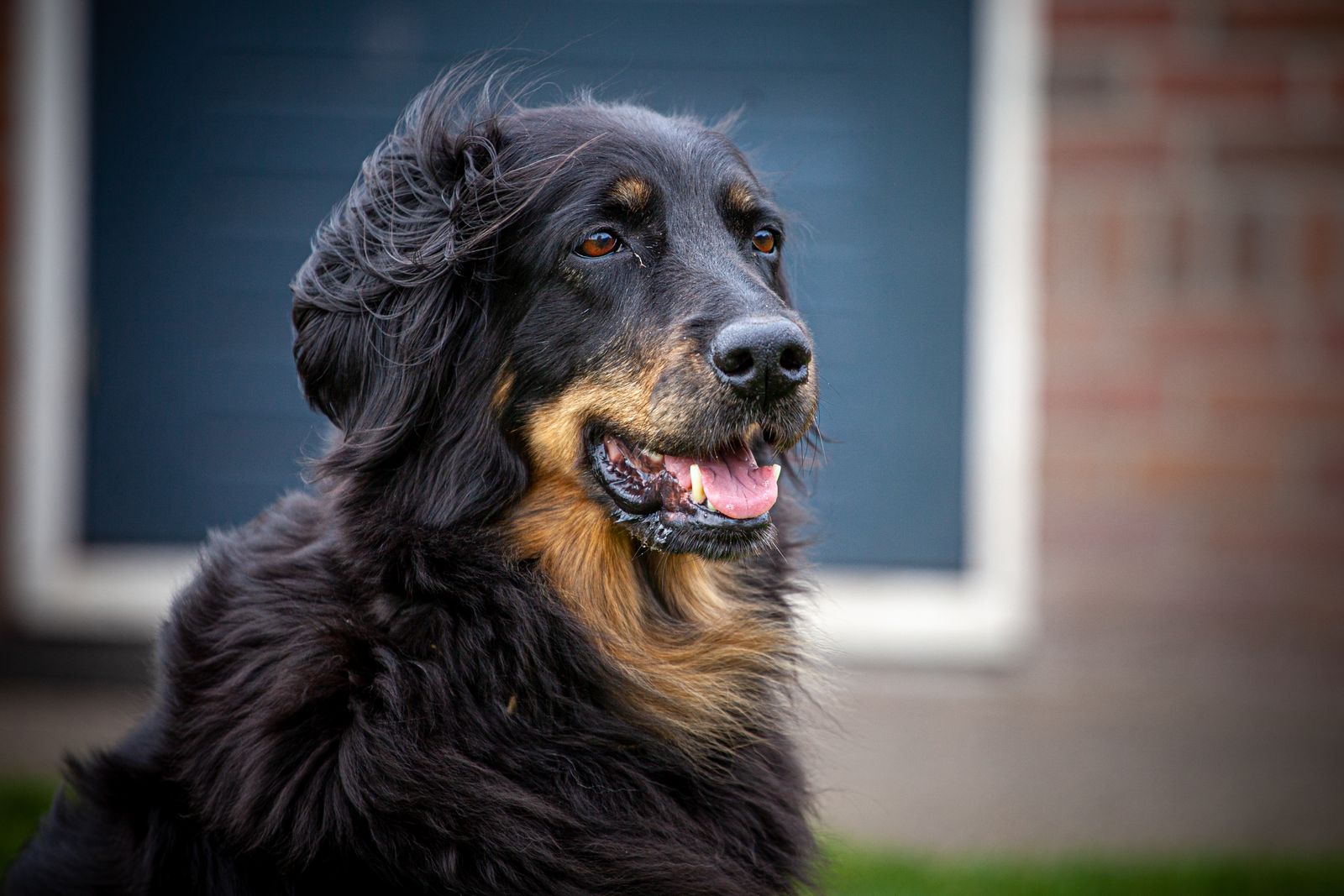
A highly affectionate, highly trainable, great with young children dog. On the practical side: low grooming demands and minimal drool.
About the Hovawart.
The Hovawart is a German estate-guarding breed rebuilt in the 1920s from surviving farm dogs in the Harz, Odenwald and Black Forest regions. NZ numbers are very small, with only a handful of registered breeders nationally and most Hovawarts on lifestyle blocks or large suburban sections in the central North Island, Wellington, Canterbury and Otago. The breed is a niche choice for experienced working-dog owners who want a watchful, slow-maturing guardian that lives indoors with the family.
Adults stand 58 to 70 cm at the shoulder and weigh 25 to 40 kg, with the breed sitting between a German Shepherd and a Bernese in build but lighter and more athletic than either. The medium-long wavy coat appears in three colours under the breed standard: black, black and gold (the most recognisable pattern), and blonde. Lifespan sits at 10 to 14 years, longer than most large working breeds.
Personality and behaviour
Hovawarts are deeply bonded to their household and watchful with everyone else. The breed default is calm and observant indoors, alert and physical at the perimeter. A well-raised adult lies in the room tracking the family, gets up to investigate noise, and settles again. The protective instinct is real but not hair-trigger; the breed thinks before acting, which is part of why early socialisation matters so much.
The defining trait is the slow maturation. A Hovawart reaches mental adulthood at around three years, not 18 months. Adolescence runs long and tests handlers. Training mistakes during that window (allowing pulling on lead, letting territorial barking go unchecked, missing socialisation) settle into adult habits that are hard to reverse. The breed is intelligent and willing but not biddable in the gundog sense; it weighs handler requests and decides whether to comply. Reward-based training in short, varied sessions works far better than repetition drilling.
Around strangers the Hovawart is reserved, not friendly. A familiar visitor introduced at the gate will be accepted; an unfamiliar visitor walking up the drive without escort will be challenged. The breed is well-suited to a quiet rural home and poorly suited to a household with constant unfamiliar visitors, frequent contractors, or open suburban traffic past the property line.
Around other dogs the breed is variable. Hovawarts raised with house companions from puppyhood usually live well alongside other dogs; same-sex aggression in adult pairs is recognised. Dog parks rarely work for adults; lead walks in quieter areas are the norm.
The trait that surprises new owners is sensitivity. The Hovawart reads household tone closely, sulks under harsh corrections, and bonds intensely with one or two handlers. Long workdays alone are hard on the breed; separation-related destruction and territorial overreach are common surrender reasons in the few NZ rehomes that come up.
Care and exercise
Plan on around 75 minutes of structured exercise a day for an adult, split between a lead walk, off-lead time in a secure paddock, and short training sessions. The breed thrives on having a job: tracking, scent work, obedience, agility once growth plates close, or simply patrolling a lifestyle-block boundary. Underexercised and unengaged Hovawarts become noisy and territorial.
Grooming is moderate. The medium-long wavy coat needs a thorough brush twice a week with a slicker and wide-tooth comb, daily during the spring and autumn coat blow. The coat is largely self-cleaning and resists matting better than most long coats. Bath every eight to twelve weeks. Feathering on the legs, chest and tail picks up burrs and grass seeds on rural walks; check those areas weekly.
The dietary priority is controlled growth in puppyhood. Use a large-breed puppy formula until 18 months. Adults eat 3 to 5 cups of food a day split into two meals to reduce bloat risk. The breed is not a heavy eater for its size and maintains weight well on appropriate portions.
Climate fit across NZ is broad. The double coat handles cold winters in Otago and Southland with no issue, and the wavy outer coat sheds rain cleanly through Wellington and Canterbury weather. Auckland and Northland summers above 26 degrees with overnight humidity require shade, water and timed walks; the breed copes better than the heavier-coated Bernese but is not a hot-climate dog.
Containment matters. Hovawarts are perimeter-driven and need secure fencing on every boundary. Lifestyle-block paddocks with stock fencing alone are not enough; six-foot dog-rated fencing or comparable stockproof boundary is the standard.
Where to find a Hovawart in New Zealand
Litters are very infrequent. The Dogs NZ breeders directory lists the small group of registered NZKC Hovawart breeders, often only one or two with active breeding plans in any given year. Expect 12 to 24 month waitlists, NZ$2,500 to NZ$5,000 per puppy, and a careful breeder interview about your home, work hours, prior working-breed experience and fencing. Most NZ Hovawarts come from imported European lines or Australian co-ordinated breeding programmes; the small NZ gene pool makes informed breeder choice especially important.
Hovawart rescue is essentially absent in NZ. The occasional adult comes through breed contacts after a life change. SPCA centres rarely see pure Hovawarts; what occasionally appears as “Hovawart cross” is more often a black-and-tan Shepherd cross or a Leonberger cross.
Avoid Trade Me listings claiming Hovawart heritage without NZKC registration, and any breeder who cannot show you hip, elbow and thyroid screening on both parents. The breed’s small global gene pool makes health screening the single biggest predictor of lifetime cost.
The Hovawart, by the numbers.
Each trait scored 1 to 5 on the AKC scale. The verdict synthesises the data; the panels below show the strengths, group averages, and the full trait table.
Top strengths
Family Life
avg 4.0Affectionate with Family
Good with Young Children
Good with Other Dogs
Physical
avg 2.0Shedding
Grooming Frequency
Drooling
Social
avg 3.3Openness to Strangers
Playfulness
Watchdog / Protective
Adaptability
Personality
avg 3.8Trainability
Energy Level
Barking Level
Mental Stimulation Needs
Living with a Hovawart.
A 24-hour breakdown of how this breed's day typically goes, scaled to its energy, mental-stimulation, and grooming needs.
What a Hovawart costs to own.
An indicative NZ lifetime cost: purchase, setup, then food, vet, insurance, grooming and other annual outgoings. Adjust the inputs to see how your choices change the total.
A Hovawart costs about
$313per month
$72
$10
$49,320
Adjust the inputs:
Where the monthly cost goes
Food
$123 / mo
$1,475/yr · breed-appropriate dry & wet food
Insurance
$90 / mo
$1,085/yr · lifetime cover protects against breed-specific claims
Vet (avg)
$54 / mo
$650/yr · routine checks plus breed-specific risk
Grooming
$8 / mo
$100/yr · brushes, shampoo, professional clips
Other
$38 / mo
$450/yr · toys, treats, dental, boarding
Indicative NZ averages calculated from breed weight, grooming need and screened-condition count. One-off costs (purchase $3,750 + setup $450) are factored into the lifetime total but not the monthly figure.
How does the Hovawart compare?
This breed
Hovawart
$49,320
12-year lifetime cost
- Purchase + setup$4,200
- Food (lifetime)$17,700
- Vet (lifetime)$7,800
- Insurance (lifetime)$13,020
- Grooming (lifetime)$1,200
- Other (lifetime)$5,400
Reference
Average NZ medium dog
$38,920
12-year lifetime cost
- Purchase + setup$2,200
- Food (lifetime)$13,200
- Vet (lifetime)$6,000
- Insurance (lifetime)$11,400
- Grooming (lifetime)$2,400
- Other (lifetime)$3,720
A Hovawart costs about $10,400 more over a lifetime than the average nz medium dog, mostly higherfood and higherpurchase + setup.
What to ask the breeder.
Reputable NZKC breeders test for these conditions and share results without being prompted. If a breeder won't share screening results, that is itself an answer.
Common
1 conditionHip and elbow dysplasia
Ask breeders for hip and elbow scores on both parents.
Occasional
4 conditionsHypothyroidism
An occasional condition in the Hovawart. Worth asking about and DNA testing where available.
Bloat (gastric dilatation-volvulus)
Deep-chested breed; feed twice daily and avoid hard exercise around meals.
Heart disease
An occasional condition in the Hovawart. Worth asking about and DNA testing where available.
Osteochondrosis (OCD)
Linked to fast growth in large-breed puppies; feed a large-breed puppy formula and avoid forced jumping under 18 months.
The Hovawart in NZ.
- Popularity: A very rare breed in NZKC Utility registrations, with only a handful of registered breeders and most NZ Hovawarts on lifestyle blocks or rural sections in the central North Island, Wellington, Canterbury and Otago.
- Typical price: NZ$2500–5000 from registered breeders
- Rescue availability: rare
- NZ climate fit: The medium-long double coat handles the full NZ climate range. Cold tolerance is excellent and winter rain runs off the wavy outer coat cleanly. Heat above 26 degrees in upper North Island summers requires shade, water and timed walks; the breed copes better than the heavier Bernese but is not a hot-climate dog.
- Living space: Suits a lifestyle block or large suburban section with secure fencing. The breed does not cope being left alone in the back yard for long workdays and develops territorial overreach without daily structured engagement.
Who the Hovawart is for.
Suits
- Experienced owners ready for a watchful working breed
- Lifestyle-block and rural homes with secure fencing
- Households committed to early socialisation and ongoing training
Less suited to
- First-time dog owners
- Apartments and small townhouses
- Households with constant unfamiliar visitors
- Owners expecting a friendly, sociable breed
Common questions.
Is the Hovawart a good first dog?
How much does a Hovawart cost in New Zealand?
How does a Hovawart compare with a German Shepherd?
Are Hovawarts good with children?
If the Hovawart appeals, also consider.
Breeds with a similar profile that might suit your household.

Leonberger
A genuinely giant tricolour breed with a famously calm temperament and one of the shortest lifespans of any popular dog. Loved on NZ lifestyle blocks where there's room, budget and emotional readiness for 7 to 9 great years.

Newfoundland
Massive water-rescue dog with a thick oily double coat, webbed feet, and one of the gentlest temperaments of any working breed. Drools, sheds, and lives a relatively short life, but devoted to family.

Bernese Mountain Dog
Big, calm, tricolour Swiss working dog with a thick double coat. Affectionate at home, slow to mature, and noticeably short-lived for the cost and commitment.

German Shepherd Dog
Athletic, sharp-minded working dog with strong protective instincts. Bonds tightly to its handler and needs a real job to be a good house dog.
Last reviewed:
Sources for this pageInformation only. Breed traits and health notes on this page are aggregated from public registry and breed-authority sources. Individual animals vary; this page is general information, not veterinary, behavioural, or insurance advice. Always consult a registered NZ vet or breeder for guidance specific to your situation.