
Leonberger Dog Breed Information
Also known as: Leo, Gentle Lion
A genuinely giant tricolour breed with a famously calm temperament and one of the shortest lifespans of any popular dog. Loved on NZ lifestyle blocks where there's room, budget and emotional readiness for 7 to 9 great years.
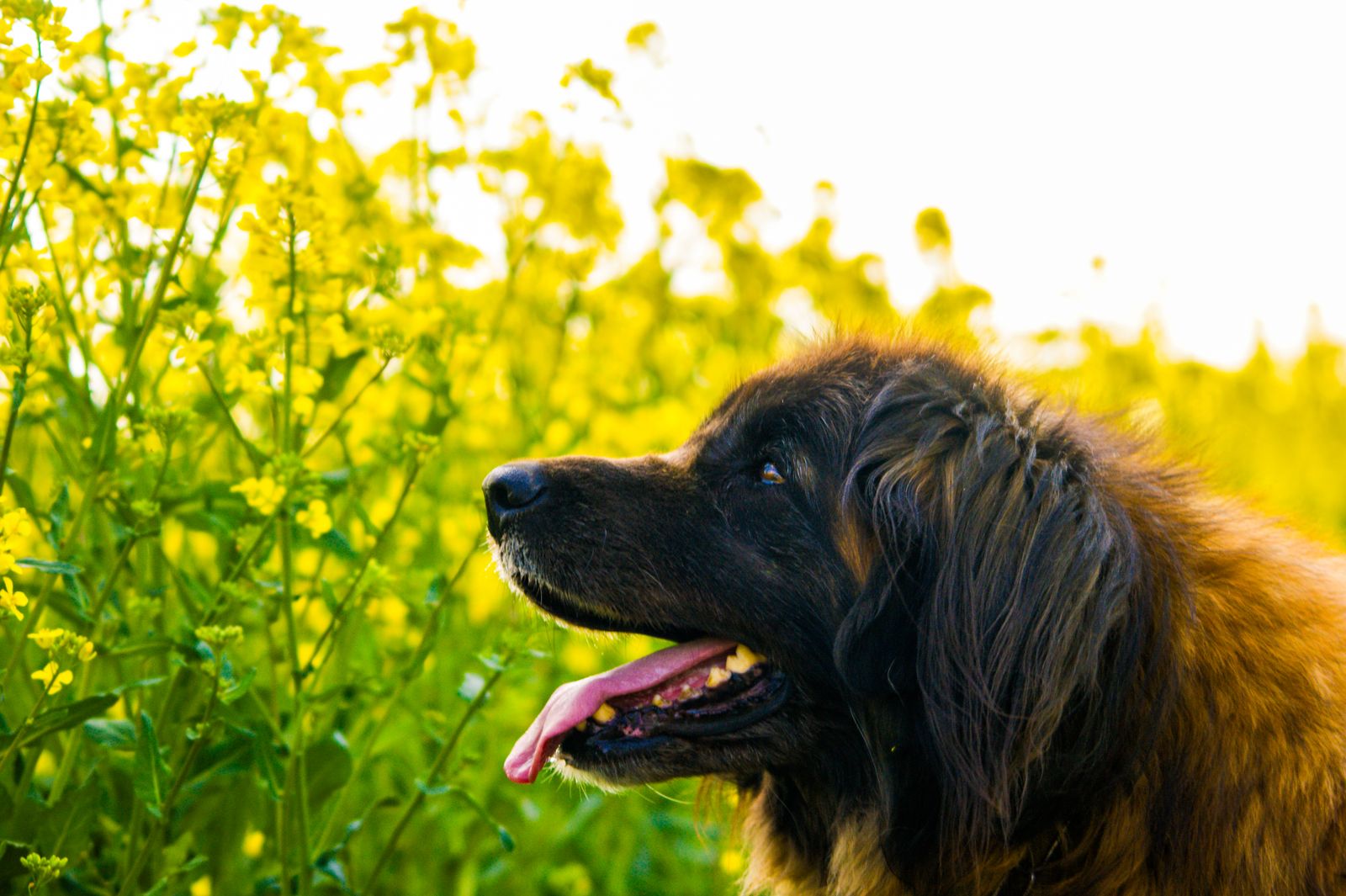
A highly affectionate, highly trainable, great with young children dog. The trade-off is sheds plenty.
About the Leonberger.
The Leonberger is rare in New Zealand, with a small but devoted lifestyle-block following across Waikato, Canterbury and Otago. The breed combines a genuinely giant frame, a calm family-dog temperament, and one of the shortest lifespans of any common dog at 7 to 9 years. NZ owners who choose the breed know what they are signing up for; this is not an accidental purchase.
Adults stand 65 to 80 cm at the shoulder and weigh 41 to 77 kg, with males commonly above 65 kg. The long water-resistant double coat sits in lion-yellow, golden, red, red-brown or sandy shades, always with a black mask on the muzzle and dark ears. Lifespan, the hard fact, runs 7 to 9 years. A small fraction reach 10 or 11. Cancer dominates end-of-life statistics in the breed.
The trade-off worth naming up front is the lifespan plus the cost. Food, beds, vet visits and end-of-life care run higher than for any non-giant breed, and the spend compresses into fewer years rather than spreading. The reward is a calm, watchful housemate who is genuinely good with children, gentle with strangers, and one of the most photogenic giants on a NZ paddock.
Personality and behaviour
Leonbergers are deeply affectionate with their household and friendly with introduced visitors. The default temperament is calm and watchful rather than active or driven; the breed earned its “gentle giant” reputation honestly. Adults spend most of the day asleep on the largest dog bed in the house, get up for a walk, and return to the bed.
In the home they are soft, leaning, contact-seeking dogs. The breed’s habit of pressing the full body against a sitting human is a daily ritual. Most NZ Leonbergers are easy with children, gentle around small dogs, and unbothered by visitors after the first introduction. The trait that surprises new owners is the lower-than-expected energy: a Leonberger needs less daily exercise than a Border Collie or a Labrador, often 45 to 75 minutes of moderate walking is enough for an adult, with longer rest blocks in between.
The other surprise is the water love. The breed inherited Newfoundland water-rescue ability and most adult Leonbergers swim eagerly, often straight off the deep end of a pier or jetty. Owners on NZ lakes and harbours report that the breed will swim for an hour given the chance.
Vocalising is moderate. The breed alert-barks on real triggers, the bark is genuinely intimidating, and most NZ Leonbergers are quiet around the house. The watchful guarding instinct shows up as physical positioning between owner and stranger rather than as active aggression in well-raised dogs. This is not a Doberman or a Cane Corso; size and presence are the deterrent, not drive.
Drool is moderate. Less than a Mastiff or a Saint Bernard, more than a Lab. Owners learn to keep a face cloth handy.
Care and exercise
Plan on 45 to 75 minutes of moderate exercise per day for an adult, split across two short walks plus calm off-lead time in a secure paddock or yard. Long forced runs, hard fetch and stair sprinting are wrong for the breed at any age and dangerous in puppies. Growth plates of the long bones don’t fully close until 18 to 24 months, and over-exercise in that window shows up later as elbow dysplasia, OCD lesions and joint pain. Swimming is the ideal low-impact exercise; Leonbergers love it and the joints thank you.
Grooming is the input most non-giant-breed owners underestimate. The long double coat sheds year-round and blows out heavily for two to three weeks in spring and autumn. Realistic effort:
- Brushing three to four times a week with a slicker and an undercoat rake. Daily during seasonal blow.
- Bath every 6 to 8 weeks.
- Drying after a wet walk takes 30 to 60 minutes; the dog will track water through the house otherwise.
- Three or four professional groom visits a year at NZ$100 to NZ$200 each for nail trims, sanitary tidy and full deshed.
The dietary priority is controlled growth and bloat management. Leonberger puppies grow fast on regular puppy food, which drives developmental orthopaedic disease. Use a giant-breed puppy formula until 18 to 24 months. Adults eat 5 to 8 cups of giant-breed dry food a day, split into two or three meals. Single large meals raise bloat risk dramatically. Many NZ Leonberger owners arrange a prophylactic gastropexy at the desexing visit.
Beds, cars and gear are real budget lines. Adult Leonbergers need orthopaedic beds 100 cm or more on the longest side at NZ$200 to NZ$500 each. Cars need to be wagons, vans or large SUVs; a sedan does not fit. Crates if used are giant XXL at NZ$300 to NZ$600.
Finding a Leonberger in NZ takes patience. The Dogs NZ breeders directory lists the small group of registered NZKC Leonberger breeders, mostly in Waikato and Canterbury. Expect 12 to 24 month waitlists for puppies and NZ$3,000 to NZ$5,500 per puppy from health-tested parents. Ask for hip and elbow scores under 10 each, LPN1 and LPN2 polyneuropathy DNA results, cardiac evaluations on both parents, and parent temperament you can meet in person.
Leonberger rescue is rare. Adults occasionally surrender through breed-club networks after life changes (divorce, downsizing, the cost shock around year three). The SPCA places giant breeds conservatively and will ask serious questions about your space and budget.
The breed is too uncommon for backyard breeding in NZ at any meaningful scale, but watch for breeders charging premiums for “rare” colours outside the lion-yellow standard, and any breeder who can’t provide LPN DNA results in writing. The small NZ gene pool makes informed breeder choice especially important.
For a typical NZ Leonberger on a mid-range lifetime policy, lifetime cost (purchase plus 7 to 9 years of food, vet, insurance, registration, beds, gear and end-of-life care) lands around NZ$40,000 to NZ$60,000. Cancer treatment, if pursued, can shift the total by NZ$10,000 to NZ$18,000.
The Leonberger, by the numbers.
Each trait scored 1 to 5 on the AKC scale. The verdict synthesises the data; the panels below show the strengths, group averages, and the full trait table.
Top strengths
Family Life
avg 4.7Affectionate with Family
Good with Young Children
Good with Other Dogs
Physical
avg 4.3Shedding
Grooming Frequency
Drooling
Social
avg 3.5Openness to Strangers
Playfulness
Watchdog / Protective
Adaptability
Personality
avg 3.0Trainability
Energy Level
Barking Level
Mental Stimulation Needs
Living with a Leonberger.
A 24-hour breakdown of how this breed's day typically goes, scaled to its energy, mental-stimulation, and grooming needs.
What a Leonberger costs to own.
An indicative NZ lifetime cost: purchase, setup, then food, vet, insurance, grooming and other annual outgoings. Adjust the inputs to see how your choices change the total.
A Leonberger costs about
$461per month
$106
$15
$48,956
Adjust the inputs:
Where the monthly cost goes
Food
$189 / mo
$2,270/yr · breed-appropriate dry & wet food
Insurance
$130 / mo
$1,562/yr · lifetime cover protects against breed-specific claims
Vet (avg)
$64 / mo
$770/yr · routine checks plus breed-specific risk
Grooming
$40 / mo
$480/yr · brushes, shampoo, professional clips
Other
$38 / mo
$450/yr · toys, treats, dental, boarding
Indicative NZ averages calculated from breed weight, grooming need and screened-condition count. One-off costs (purchase $4,250 + setup $450) are factored into the lifetime total but not the monthly figure.
How does the Leonberger compare?
This breed
Leonberger
$48,956
8-year lifetime cost
- Purchase + setup$4,700
- Food (lifetime)$18,160
- Vet (lifetime)$6,160
- Insurance (lifetime)$12,496
- Grooming (lifetime)$3,840
- Other (lifetime)$3,600
Reference
Average NZ medium dog
$38,920
12-year lifetime cost
- Purchase + setup$2,200
- Food (lifetime)$13,200
- Vet (lifetime)$6,000
- Insurance (lifetime)$11,400
- Grooming (lifetime)$2,400
- Other (lifetime)$3,720
A Leonberger costs about $10,036 more over a lifetime than the average nz medium dog, mostly higherfood and higherpurchase + setup.
What to ask the breeder.
Reputable NZKC breeders test for these conditions and share results without being prompted. If a breeder won't share screening results, that is itself an answer.
Common
4 conditionsHip and elbow dysplasia
Ask breeders for hip and elbow scores on both parents.
Bloat (gastric dilatation-volvulus)
Deep-chested giant. Many NZ Leonberger owners arrange prophylactic gastropexy at desexing.
Osteosarcoma (bone cancer)
One of the most common causes of death in the breed, often presenting between 5 and 8 years.
Cruciate ligament rupture
The breed's weight loads cruciate ligaments heavily; rupture is a frequent NZ insurance claim.
Occasional
2 conditionsLeonberger polyneuropathy (LPN1, LPN2)
Breed-specific neurological disorder with progressive limb weakness. DNA tests available; reputable NZ breeders screen routinely.
Cardiac disease
An occasional condition in the Leonberger. Worth asking about and DNA testing where available.
Rare but urgent
1 conditionInherited Leonberger and Saint Bernard polyneuropathy (LEMP)
DNA-testable adult-onset condition.
The Leonberger in NZ.
- NZ popularity: ranked #90
- Popularity: Rare nationally but loved on NZ lifestyle blocks, especially in Waikato, Canterbury and Otago. Numbers are small, perhaps a hundred or two registered nationally, with most puppies going to repeat owners or experienced giant-breed homes.
- Typical price: NZ$3000–5500 from registered breeders
- Rescue availability: rare
- NZ climate fit: Long double coat handles cold brilliantly; the breed thrives in NZ winters from Wellington south. Heat is the harder challenge; in upper North Island summers, indoor air conditioning and dawn or evening walks are standard.
- Living space: Lifestyle-block or large suburban section is the natural fit. Securely fenced ground-floor space is essential, with plenty of indoor room for a 70 kg dog to lie out flat. Stairs are wrong daily for any giant breed. The breed loves water and benefits from lake or beach access.
Who the Leonberger is for.
Suits
- Lifestyle-block owners with paddock space and indoor room
- Households with budget for giant-breed food and vet bills
- Families wanting a calm, watchful indoor giant
- Owners emotionally ready for a 7 to 9 year lifespan
Less suited to
- Apartments and townhouses
- Tight budgets
- Long workdays with the dog left alone
- Anyone hoping for a 12 to 14 year companion
Common questions.
How long do Leonbergers live in New Zealand?
How much does a Leonberger cost to feed in NZ?
Are Leonbergers good with children?
Do Leonbergers shed a lot?
If the Leonberger appeals, also consider.
Breeds with a similar profile that might suit your household.

Bernese Mountain Dog
Big, calm, tricolour Swiss working dog with a thick double coat. Affectionate at home, slow to mature, and noticeably short-lived for the cost and commitment.

Newfoundland
Massive water-rescue dog with a thick oily double coat, webbed feet, and one of the gentlest temperaments of any working breed. Drools, sheds, and lives a relatively short life, but devoted to family.

Saint Bernard
Giant Alpine rescue and farm dog, calm, affectionate, and famous for the brandy-barrel myth that turns out not to be true. Drools heavily, sheds heavily, and lives a short life for the cost.

Great Dane
A genuinely giant breed with a famously gentle temperament. Great Danes are loving, lower-energy than their size suggests, and one of the most expensive dogs in NZ to feed, vet and bury.
Last reviewed:
Sources for this pageInformation only. Breed traits and health notes on this page are aggregated from public registry and breed-authority sources. Individual animals vary; this page is general information, not veterinary, behavioural, or insurance advice. Always consult a registered NZ vet or breeder for guidance specific to your situation.