
Briard Dog Breed Information
Also known as: Berger de Brie, Chien Berger de Brie
A large French shaggy herder, often described as a "heart wrapped in fur". Affectionate to family, watchful of strangers, and one of the heaviest grooming commitments of any working breed kept in NZ.

A highly affectionate, highly trainable, great with young children dog. On the practical side: minimal drool. The trade-off is high grooming needs.
About the Briard.
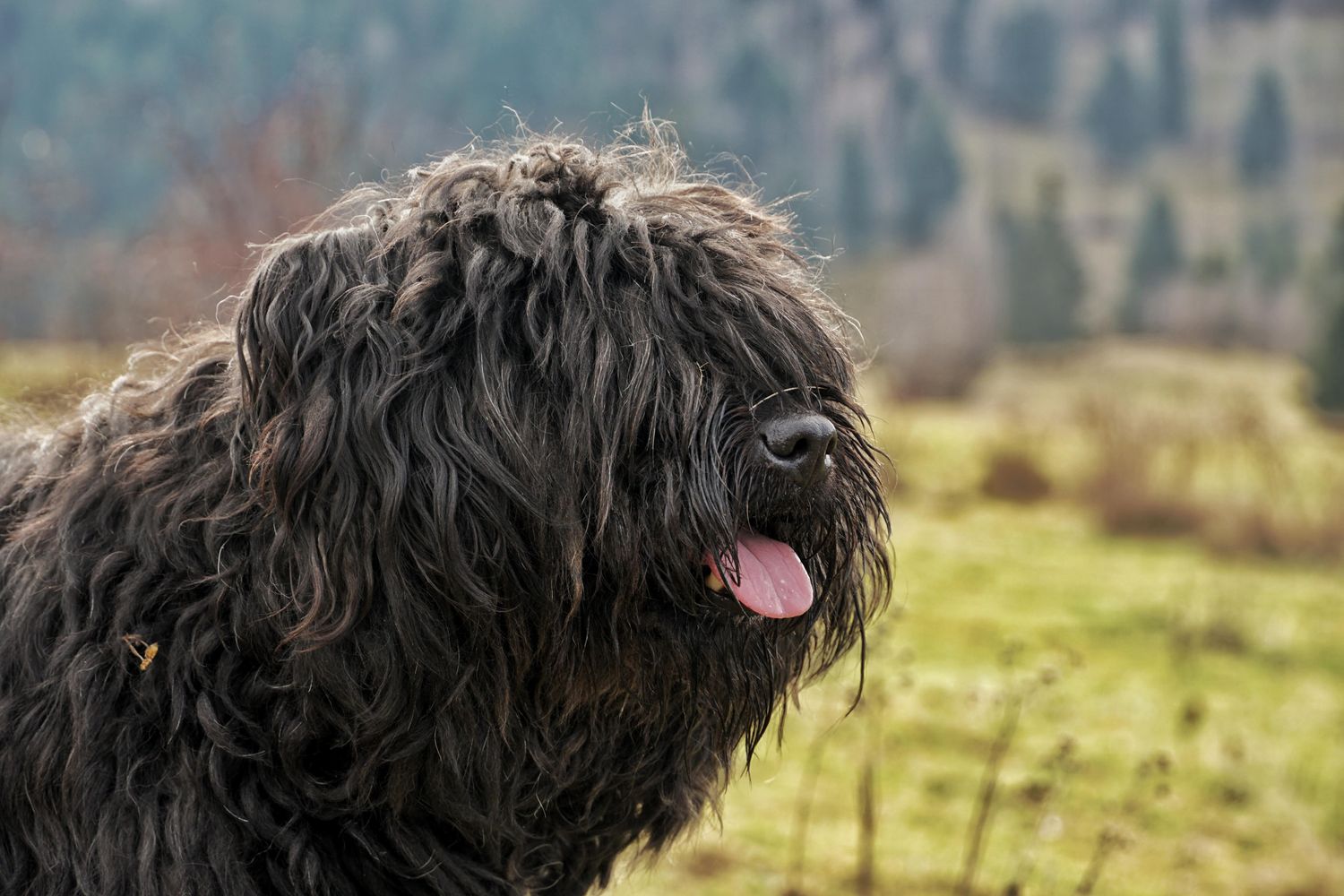
The Briard is the French shaggy herder, a tall, long-coated working dog with a beard, eyebrows over the eyes, and a serious history of moving sheep and guarding flocks across the pastures east of Paris. The French phrase often used for the breed is “un coeur enveloppé de poil”, a heart wrapped in fur, and that captures the household reality: bonded, affectionate, and watchful, hidden behind one of the heaviest grooming commitments of any working breed kept in NZ. The breed is genuinely rare here, with very few Dogs NZ breeders nationwide and most litters placed to lifestyle blocks rather than first-time pet homes.
Adults stand 56 to 69 cm at the shoulder and weigh 25 to 45 kg, with males notably taller and heavier than females. The long double coat sits in slight waves along the body, with feathering on the legs and the famous beard and eyebrows. Colours include black, fawn, tawny and various greys, often with darker shading at the ears and muzzle. The breed standard requires double dewclaws on the rear legs, a feature unique to the Briard and the Beauceron among modern French herders.
Personality and behaviour
Briards are affectionate to family, sociable with people they have grown up with, and naturally watchful of strangers. The default with an unfamiliar visitor is reserved assessment, not friendliness, and that protective instinct is real, not theatrical. With family children, the breed is patient and steady. With unfamiliar children, dogs and visitors, the breed needs introduction and time.
The trait that surprises new owners is the emotional sensitivity. Briards are not stoic working dogs in the Australian Cattle Dog mould. They notice household tension, react to harsh handling by switching off, and bond intensely to one or two people in the household. Long absences are not the breed’s preferred life. A Briard left in a back yard for ten hours a day becomes anxious and destructive.
Energy is moderate-to-high through the first three years and settles into a calmer adult pattern. Working-line dogs (still bred for sheep work in France and used by some lifestyle-block owners in NZ) carry more drive than show-line dogs. The breed enjoys agility, rally, herding and tracking at club level.
Adolescence is long. Briards do not fully settle until two to three years, and the period from 10 to 24 months is the hardest, with handler-testing, reactivity flares, and the watchful instinct showing up at full strength for the first time. Owners who hold the routine through this phase end up with calm, loyal adults. Owners who don’t, don’t.
Care and exercise
Plan on 90 minutes of daily exercise. A long off-lead walk plus a structured training session covers most adult Briards. The breed enjoys hill walks, swimming and farm work, and is not built for jogging on hot days.
The coat is the largest single commitment of the breed. The realistic options for NZ owners are:
- Show coat (full length). Two to three hours of line-brushing a week, plus a full bath and blow-dry every three to four weeks. The coat is rarely manageable for working pet households and is mostly seen on dogs heading to the show ring.
- Pet trim (5-7 cm all over). Brush twice a week, bath monthly, professional clip every eight to ten weeks at NZ$140-220 per visit. This is what most NZ pet Briards are kept in.
The double coat traps grass seeds, burrs, mud and water at a high rate. Weekly seed checks, especially on lifestyle blocks in summer, are essential. Foot hair needs regular trimming or paws collect everything the paddock has to offer. The beard collects water and food and needs daily wiping. Hairy ear canals trap moisture, so weekly ear checks are not optional.
Heat tolerance is real but limited. The dense double coat insulates well, but Auckland and Northland summers regularly push past the breed’s comfort zone. Walk early or late, provide shaded indoor space, and keep pet trims at 5-7 cm rather than full show length through summer. Counter-intuitive but true: full shaving makes things worse, removing the insulating layer and exposing pale skin to sunburn.
Bloat risk applies as it does to other deep-chested working breeds. Feed twice daily, avoid hard exercise within an hour of meals, and learn the early signs.
Training and household life
Briards are intelligent and trainable to a clear, consistent handler. Reward-based methods work well. The breed is sensitive enough that harsh corrections backfire, and confident enough that a household without leadership ends up with a dog setting its own rules.
Early socialisation across the first 18 months is the single most important investment in a Briard puppy. The protective instinct is real, and a Briard that has not met enough strangers, dogs, vehicles and household visitors as a puppy becomes a wary adult that does not greet anyone calmly. NZKC obedience clubs and group puppy classes in Auckland, Wellington, Christchurch and Dunedin run six to eight week courses (NZ$150-280) which set the foundation.
Where to find one in NZ is the practical limit. Dogs NZ lists very few registered Briard breeders, and litters are infrequent. Realistic options:
- Registered NZKC breeder. 12 to 24 month waitlist, NZ$2,800 to NZ$4,500 per puppy, hip scores and CSNB DNA results available on request.
- Working-line import. A handful of dedicated handlers import working-line Briards from France for herding work and lifestyle-block placement. Significantly higher cost, experienced-handler placement only.
- Rescue. Extremely rare. Briards very seldom appear in SPCA or general rescue in NZ.
The breed’s natural filter is the grooming load and the socialisation commitment. Reputable breeders ask probing questions before they accept a deposit, and the questions are worth answering honestly.
What surprises new owners
The grooming hours, the length of adolescence, and how strongly the breed bonds to specific people in the household. A Briard does not treat strangers and family the same, ever. Owners who get the socialisation right end up with one of the more loyal and emotionally engaged dogs they will ever own. Owners who skip it find out the hard way why French stockmen called the breed a guardian as much as a herder.
The Briard, by the numbers.
Each trait scored 1 to 5 on the AKC scale. The verdict synthesises the data; the panels below show the strengths, group averages, and the full trait table.
Top strengths
Family Life
avg 4.0Affectionate with Family
Good with Young Children
Good with Other Dogs
Physical
avg 3.3Shedding
Grooming Frequency
Drooling
Social
avg 3.3Openness to Strangers
Playfulness
Watchdog / Protective
Adaptability
Personality
avg 3.8Trainability
Energy Level
Barking Level
Mental Stimulation Needs
Living with a Briard.
A 24-hour breakdown of how this breed's day typically goes, scaled to its energy, mental-stimulation, and grooming needs.
What a Briard costs to own.
An indicative NZ lifetime cost: purchase, setup, then food, vet, insurance, grooming and other annual outgoings. Adjust the inputs to see how your choices change the total.
A Briard costs about
$382per month
$88
$13
$54,480
Adjust the inputs:
Where the monthly cost goes
Food
$129 / mo
$1,550/yr · breed-appropriate dry & wet food
Insurance
$94 / mo
$1,130/yr · lifetime cover protects against breed-specific claims
Vet (avg)
$54 / mo
$650/yr · routine checks plus breed-specific risk
Grooming
$67 / mo
$800/yr · brushes, shampoo, professional clips
Other
$38 / mo
$450/yr · toys, treats, dental, boarding
Indicative NZ averages calculated from breed weight, grooming need and screened-condition count. One-off costs (purchase $3,650 + setup $450) are factored into the lifetime total but not the monthly figure.
How does the Briard compare?
This breed
Briard
$54,480
11-year lifetime cost
- Purchase + setup$4,100
- Food (lifetime)$17,050
- Vet (lifetime)$7,150
- Insurance (lifetime)$12,430
- Grooming (lifetime)$8,800
- Other (lifetime)$4,950
Reference
Average NZ medium dog
$38,920
12-year lifetime cost
- Purchase + setup$2,200
- Food (lifetime)$13,200
- Vet (lifetime)$6,000
- Insurance (lifetime)$11,400
- Grooming (lifetime)$2,400
- Other (lifetime)$3,720
A Briard costs about $15,560 more over a lifetime than the average nz medium dog, mostly highergrooming and higherfood.
What to ask the breeder.
Reputable NZKC breeders test for these conditions and share results without being prompted. If a breeder won't share screening results, that is itself an answer.
Common
1 conditionHip dysplasia
Ask breeders for hip scores from both parents.
Occasional
4 conditionsBloat (gastric dilatation-volvulus)
Deep-chested breeds carry elevated risk. Feed twice daily and avoid hard exercise within an hour of meals.
Congenital stationary night blindness (CSNB)
DNA-testable. Reputable NZ breeders test breeding stock and provide results.
Hypothyroidism
An occasional condition in the Briard. Worth asking about and DNA testing where available.
Cancer (lymphoma, haemangiosarcoma)
As with most large breeds, cancer is among the more common late-life causes of death.
The Briard in NZ.
- NZ popularity: ranked #140
- Popularity: Genuinely rare as an NZ household breed. A small dedicated breeder community, with most puppies placed to experienced lifestyle-block owners.
- Typical price: NZ$2800–4500 from registered breeders
- Rescue availability: rare
- NZ climate fit: Built for cool, damp French pastoral country. Excellent in Wellington, Canterbury, Otago and Southland. Auckland and Northland summers need active management: shade, indoor cool, and a shorter pet clip help.
- Living space: Best with a lifestyle block or fenced suburban section. Apartments are not realistic given size, coat and exercise needs.
Who the Briard is for.
Suits
- Experienced households on lifestyle blocks
- Owners committed to weekly grooming
- Active families willing to socialise extensively
Less suited to
- First-time owners
- Apartments and small townhouses
- Households out of the home all day
Common questions.
What is a Briard like to live with?
How much grooming does a Briard need?
Are Briards easy to find in New Zealand?
If the Briard appeals, also consider.
Breeds with a similar profile that might suit your household.
Bouvier des Flandres
A heavy, tousled Belgian cattle drover with a big beard, a calm head and a serious working past. Strong, watchful, and an unusually demanding grooming proposition for NZ households.

Old English Sheepdog
The shaggy grey-and-white drover from English pasture country. Iconic, gentle, and one of the highest-maintenance coats in the working group.

Polish Lowland Sheepdog
A medium shaggy Polish herder, often shortened to "PON" in NZ working-dog circles. Built on roughly the same template as the Bearded Collie and Old English Sheepdog, with a shorter back and a sharper protective edge.
Last reviewed:
Sources for this pageInformation only. Breed traits and health notes on this page are aggregated from public registry and breed-authority sources. Individual animals vary; this page is general information, not veterinary, behavioural, or insurance advice. Always consult a registered NZ vet or breeder for guidance specific to your situation.