
Bouvier des Flandres Dog Breed Information
Also known as: Bouvier, Vlaamse Koehond, Belgian Cattle Dog
A heavy, tousled Belgian cattle drover with a big beard, a calm head and a serious working past. Strong, watchful, and an unusually demanding grooming proposition for NZ households.

A highly affectionate, highly trainable, great with young children dog. On the practical side: low shedding. The trade-off is high grooming needs.
About the Bouvier des Flandres.
The Bouvier des Flandres is a Belgian cattle drover with a tousled fawn-to-black coat, a square head buried under a heavy beard, and a working past that runs from the cattle country of Flanders through both world wars to modern Belgian and French police service. The breed is genuinely rare in NZ, with a small handful of registered Dogs NZ breeders and most puppies placed to lifestyle blocks, working farms or experienced protection-sport homes rather than first-time pet households.
Adults stand 59 to 68 cm at the shoulder and weigh 27 to 45 kg, with males consistently larger than females. The harsh, weather-resistant double coat sits flat to the body, longer on the legs, chest and head, with the famous beard and eyebrows giving the breed its distinctive square-jawed expression. Colours run black, brindle, fawn, salt-and-pepper and various greys, almost always with a darker face mask.
Personality and behaviour
Bouviers are calm-headed, watchful and bonded closely to the family. They greet visitors with reserve rather than enthusiasm, and the natural inclination is to assess a stranger before deciding what to do. With family they are affectionate and steady, and with children they have grown up alongside they are notably patient. With unfamiliar children, dogs and adults, the default is alert observation, not friendliness.
The trait that surprises new owners is how little the breed barks. A well-bred Bouvier is quiet by working-group standards and uses voice deliberately, alerting once to something unusual rather than barking at every passing car. Owners trading down from a Beardie or a Huntaway are usually struck by the silence.
Energy is moderate. Working-line dogs (the lines used by Belgian police and KNPV protection sport) carry significantly more drive and need real outlets. Show-line and pet-line Bouviers are calmer in the house and content with a structured daily walk and a job to do.
The breed is a natural guardian without being aggressive by default. Early and consistent socialisation across the first 18 months is essential. A Bouvier that has not met enough strangers, dogs, vehicles and household visitors as a puppy will be wary as an adult, and that wariness in a 40 kg dog is a serious management problem.
Care and exercise
Plan on 75 minutes of daily exercise. Two reasonable walks plus garden time covers most adult Bouviers, with structured training filling the mental side. Working-line dogs benefit from weekly tracking, scent work or protection-sport training at club level. The breed is not built for jogging in summer heat.
The coat is the second-largest commitment of the breed after socialisation. The harsh outer coat does not shed heavily (a real plus for some households), but it does mat at the skin if neglected, and the beard collects water, mud and food at every meal. Realistic expectations:
- Two to three brushing sessions a week, focusing on the legs, beard and rear.
- A professional clip or hand-strip every eight to ten weeks (NZ$130-200 per visit). Most NZ pet owners clip rather than hand-strip.
- Daily beard wiping after meals and water bowls.
- Regular trimming of foot hair, ears and rear hygiene area.
Bloat risk applies as it does to other deep-chested working breeds. Feed twice daily, avoid hard exercise within an hour of meals, and learn the early signs (unproductive retching, restlessness, distended abdomen). Hip and elbow dysplasia rates make hip and elbow scoring of breeding parents a non-negotiable conversation with a breeder.
Training and household life
Bouviers are intelligent and bonded to a clear handler. Training works best with consistent, reward-based methods and clear structure. The breed is not soft and will switch off under harsh handling, but it is also not a Labrador, and food alone rarely produces the same fast obedience.
NZKC obedience and tracking clubs run group classes in main centres (NZ$120-280 for a six to eight week course) which suit the breed well. Working-line Bouviers in NZ are a small community, with a handful of handlers active in IGP and ringsport.
Where to find one is the practical limiting factor. Dogs NZ lists very few registered Bouvier breeders, and most run a litter every two to three years. Realistic options:
- Registered NZKC breeder. 12 to 24 month waitlist, NZ$2,800 to NZ$4,500 per puppy, hip and elbow scores plus cardiac clearance available on request.
- Working-line import. A small number of NZ handlers import working-line Bouviers from Europe for police and protection sport. Cost is significantly higher (NZ$6,000+ landed) and the placement is to experienced handlers only.
- Rescue. Extremely rare. Bouviers very rarely appear in the SPCA or general rescue system in NZ.
The breed’s natural filter is its grooming and socialisation load. Reputable breeders ask probing questions about handler experience, fenced section, work hours and willingness to commit to twelve to fifteen years of structured ownership before they accept a deposit.
What surprises new owners
The grooming reality, the size in adulthood (Bouviers grow slowly and look medium until they suddenly aren’t), and how watchful the breed is by default. The Bouvier is not a casual companion dog. Owners who give it the structure and the work it was bred for get a calm, loyal, surprisingly easy household dog. Owners who skip the socialisation and the routine get a wary 40 kg adult that nobody can manage.
The Bouvier des Flandres, by the numbers.
Each trait scored 1 to 5 on the AKC scale. The verdict synthesises the data; the panels below show the strengths, group averages, and the full trait table.
Top strengths
Family Life
avg 3.7Affectionate with Family
Good with Young Children
Good with Other Dogs
Physical
avg 3.3Shedding
Grooming Frequency
Drooling
Social
avg 3.3Openness to Strangers
Playfulness
Watchdog / Protective
Adaptability
Personality
avg 3.3Trainability
Energy Level
Barking Level
Mental Stimulation Needs
Living with a Bouvier des Flandres.
A 24-hour breakdown of how this breed's day typically goes, scaled to its energy, mental-stimulation, and grooming needs.
What a Bouvier des Flandres costs to own.
An indicative NZ lifetime cost: purchase, setup, then food, vet, insurance, grooming and other annual outgoings. Adjust the inputs to see how your choices change the total.
A Bouvier des Flandres costs about
$386per month
$89
$13
$55,008
Adjust the inputs:
Where the monthly cost goes
Food
$132 / mo
$1,580/yr · breed-appropriate dry & wet food
Insurance
$96 / mo
$1,148/yr · lifetime cover protects against breed-specific claims
Vet (avg)
$54 / mo
$650/yr · routine checks plus breed-specific risk
Grooming
$67 / mo
$800/yr · brushes, shampoo, professional clips
Other
$38 / mo
$450/yr · toys, treats, dental, boarding
Indicative NZ averages calculated from breed weight, grooming need and screened-condition count. One-off costs (purchase $3,650 + setup $450) are factored into the lifetime total but not the monthly figure.
How does the Bouvier des Flandres compare?
This breed
Bouvier des Flandres
$55,008
11-year lifetime cost
- Purchase + setup$4,100
- Food (lifetime)$17,380
- Vet (lifetime)$7,150
- Insurance (lifetime)$12,628
- Grooming (lifetime)$8,800
- Other (lifetime)$4,950
Reference
Average NZ medium dog
$38,920
12-year lifetime cost
- Purchase + setup$2,200
- Food (lifetime)$13,200
- Vet (lifetime)$6,000
- Insurance (lifetime)$11,400
- Grooming (lifetime)$2,400
- Other (lifetime)$3,720
A Bouvier des Flandres costs about $16,088 more over a lifetime than the average nz medium dog, mostly highergrooming and higherfood.
What to ask the breeder.
Reputable NZKC breeders test for these conditions and share results without being prompted. If a breeder won't share screening results, that is itself an answer.
Common
1 conditionHip and elbow dysplasia
Ask breeders for hip and elbow scores from both parents.
Occasional
4 conditionsBloat (gastric dilatation-volvulus)
Deep-chested breeds carry elevated risk. Feed twice daily and avoid hard exercise within an hour of meals.
Subaortic stenosis
Cardiac condition occasionally seen in the breed. Reputable breeders cardiac-clear breeding stock.
Hypothyroidism
An occasional condition in the Bouvier des Flandres. Worth asking about and DNA testing where available.
Glaucoma
An occasional condition in the Bouvier des Flandres. Worth asking about and DNA testing where available.
The Bouvier des Flandres in NZ.
- NZ popularity: ranked #130
- Popularity: Genuinely rare in NZ as a household breed. A small number of dedicated breeders, with most placements going to lifestyle blocks, farms, or working-line homes.
- Typical price: NZ$2800–4500 from registered breeders
- Rescue availability: rare
- NZ climate fit: Built for the cold, wet pasture country of Flanders. Excellent in Wellington, Canterbury, Otago and Southland. The dense double coat makes Auckland and Northland summers genuinely difficult without shade and aircon.
- Living space: Best with land. Lifestyle blocks and farms suit the breed. Apartments and small urban townhouses are not realistic given size, coat and exercise needs.
Who the Bouvier des Flandres is for.
Suits
- Experienced owners on lifestyle blocks or farms
- Households wanting a watchful, calm-headed working dog
- Owners committed to professional grooming every two months
Less suited to
- First-time owners
- Apartments and small townhouses
- Households unwilling to socialise a confident, watchful breed
Common questions.
Is a Bouvier des Flandres a good NZ family dog?
How much grooming does a Bouvier need?
Are Bouviers easy to find in New Zealand?
If the Bouvier des Flandres appeals, also consider.
Breeds with a similar profile that might suit your household.

Russian Black Terrier
A Soviet-bred giant working dog with a black weather-resistant coat and a strong protective drive. Despite the name, the breed is a working guardian, not a true terrier. Very rare in NZ and best suited to experienced owners with serious training commitment.
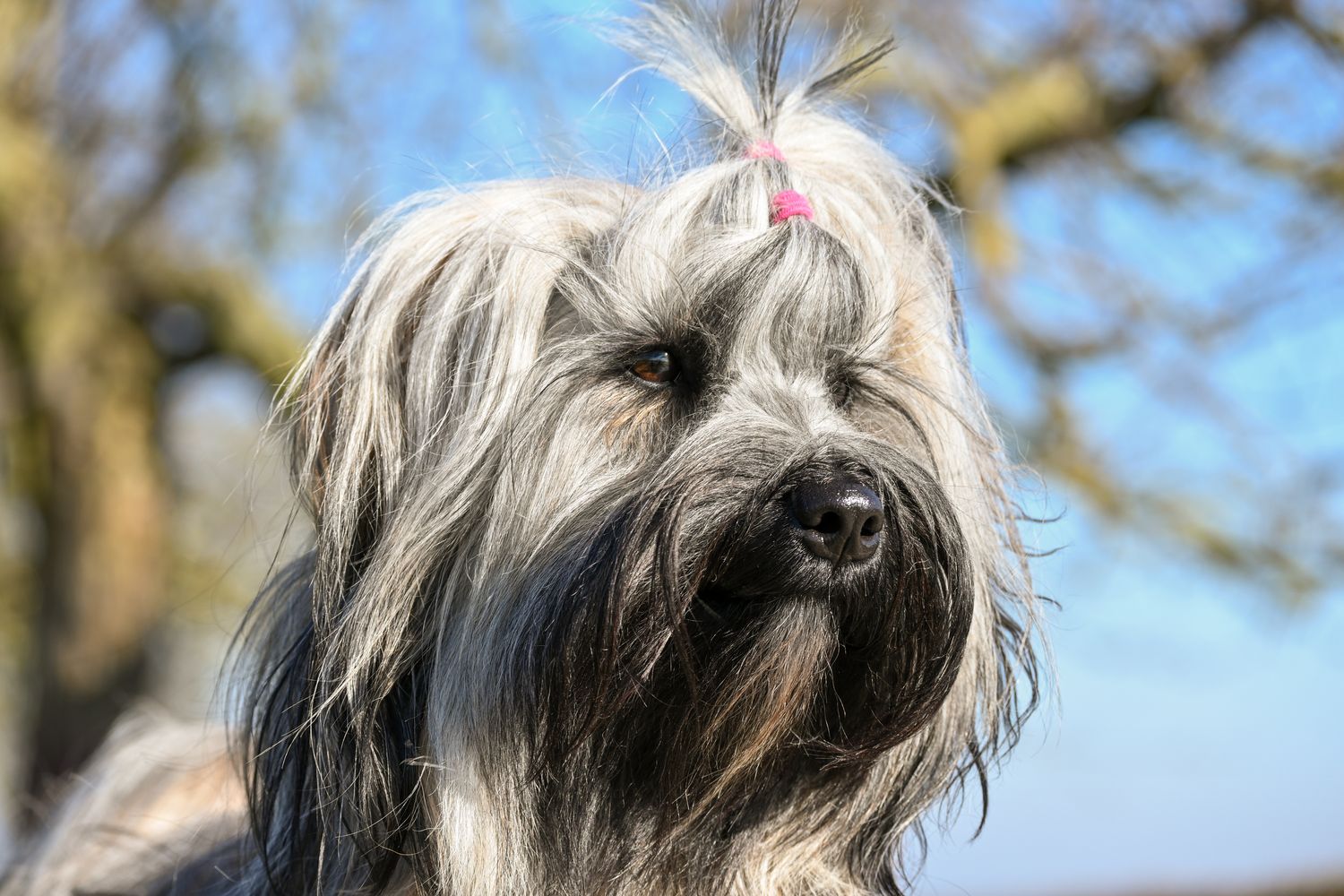
Briard
A large French shaggy herder, often described as a "heart wrapped in fur". Affectionate to family, watchful of strangers, and one of the heaviest grooming commitments of any working breed kept in NZ.
Last reviewed:
Sources for this pageInformation only. Breed traits and health notes on this page are aggregated from public registry and breed-authority sources. Individual animals vary; this page is general information, not veterinary, behavioural, or insurance advice. Always consult a registered NZ vet or breeder for guidance specific to your situation.