
Bedlington Terrier Dog Breed Information
Also known as: Bedlington, Rothbury Terrier
The terrier that looks like a lamb but runs like a whippet. Bred in 19th century Northumberland for ratting and poaching, the Bedlington is a curly-coated, low-shedding small terrier with one specific health risk every NZ buyer needs to test for before paying.
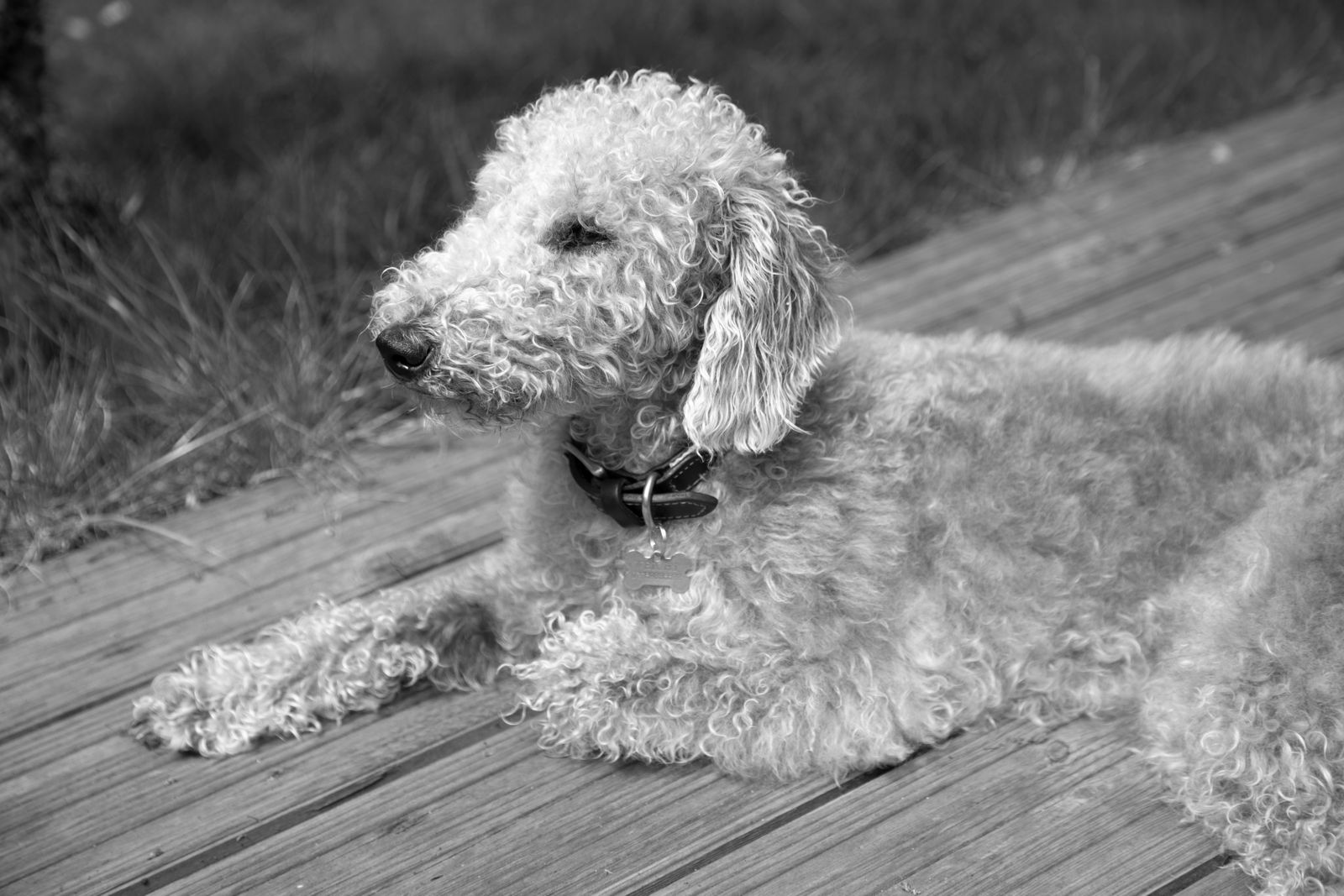
A highly affectionate, highly trainable, great with young children dog. On the practical side: minimal drool and low shedding. The trade-off is high grooming needs.
About the Bedlington Terrier.
The Bedlington Terrier is the small breed that NZ first-time buyers spot at a dog show, fall for instantly, and almost always underestimate the cost of. The lamb-like silhouette is unmistakable, the coat does not shed, and the breed is genuinely well-suited to apartment life in Wellington and inner-city Auckland. The catch is a hereditary liver disease that affects this breed and no other, and a DNA test that any reputable NZ breeder will already have in the puppy pack.
Adults stand 38 to 44 cm at the shoulder and weigh 8 to 10 kg. The coat is a curly mix of soft and crisp hairs, comes in blue, liver and sandy (often with tan points), and lightens with age. Lifespan is 12 to 14 years, longer for DNA-clear lines on appropriate diets.
The trade-off most buyers underrate is the grooming bill. The coat does not shed but never stops growing, and a Bedlington that has not been clipped in eight weeks looks nothing like the breed in the show ring. NZ pet owners typically budget NZ$70 to NZ$130 every six to eight weeks for clipping, plus twice-weekly home brushing.
Personality and behaviour
Bedlingtons are affectionate, alert and notably softer-tempered than the working terriers they share a group with. They bond closely to family, settle quickly indoors, and are quieter at home than a Westie or a Jack Russell. Outdoors, the Whippet ancestry shows: the breed runs faster than its size suggests and will give chase with real focus.
The trait that surprises new owners is how different the breed feels indoors versus outdoors. A sleeping Bedlington on the couch looks like a passive lap dog. The same dog at the park, having spotted a rabbit, accelerates from standstill to full sprint in three strides. Households with cats need careful introduction; households with rabbits, guinea pigs or outdoor aviary birds should think hard before adding a Bedlington.
Same-sex dog tolerance is the other watch-point. Adult Bedlingtons can be assertive with unfamiliar same-sex dogs, particularly other terriers. Early socialisation and neutral introductions help, and most adult Bedlingtons live happily alongside dogs of the opposite sex.
Care and exercise
Plan on 60 minutes of real exercise per day, with at least two off-lead runs per week at a fenced park, beach or rural block. Bedlingtons are happy with shorter weekday walks if weekend exercise is generous, but a chronically under-exercised Bedlington gets noisy and chewy.
Grooming is the part most buyers underestimate. The mixed coat traps shed hair, which keeps fur off the floor but means matting is the lifetime watch-point. Brush twice weekly with a slicker brush, paying attention to the topknot, behind the ears and the leg furnishings. Clipping every six to eight weeks (NZ$70 to NZ$130) maintains the lamb outline; many NZ owners learn to do basic tidy-up work between visits.
Diet matters more than for most small breeds. DNA-clear Bedlingtons can eat any quality complete food. Carrier or affected dogs benefit from low-copper diets that avoid lamb liver, beef heart, shellfish and copper-rich supplements. If your dog tests as affected, your vet can prescribe a hepatic diet and (where appropriate) chelating medication that managed correctly gives the dog a normal lifespan.
Dental disease is the other lifetime watch-point. Small jaws crowd teeth, plaque builds, and by age six many Bedlingtons need a full scale-and-polish under general anaesthetic (NZ$400 to NZ$900). Daily tooth brushing from puppyhood pushes that out by years.
The copper toxicosis test
This is the single most important thing for any NZ buyer to understand about the breed.
Bedlington Terriers carry a hereditary defect in the COMMD1 gene that prevents the liver from excreting dietary copper. Affected dogs accumulate copper in liver tissue from puppyhood; without intervention, liver failure can occur in middle age. The good news is that a simple DNA cheek-swab test (around NZ$120 through NZ vet labs) classifies any dog as clear, carrier or affected, and reputable NZKC breeders have been testing for two decades. Two clear parents produce only clear puppies; carrier-to-clear pairings produce no affected puppies.
Practical buyer steps:
- Ask the breeder for written COMMD1 DNA test results for both parents.
- A puppy from two clear parents needs no further testing.
- A puppy from any pairing involving a carrier should also be DNA-tested before purchase.
- Avoid sellers who cannot or will not provide DNA results. The test has been routine since 2002; absence of results is a red flag.
Where to find a Bedlington Terrier in New Zealand
Active NZ Bedlington breeders are very few, typically two or three at any one time. The Dogs NZ breed directory lists current breeders by region. Expect a 6 to 18 month waitlist, NZ$2,500 to NZ$4,500 per puppy with full health screening (DNA, eyes, patellas), and the realistic possibility that the next available litter is on the South Island when you are in Auckland.
The breed almost never appears in SPCA or general rescue. A handful of adolescent or adult Bedlingtons surface through enthusiast networks each year; Dogs NZ club secretaries are the best contact point. Avoid Trade Me listings without DNA test results; the breed’s small NZ population means most untested dogs trace back to a small number of unscreened lines.
Insurance and lifetime cost
Bedlington insurance claims in NZ skew toward dermatology, dentistry and (in unscreened dogs) liver disease. For a DNA-clear Bedlington on a mid-range lifetime policy, lifetime cost (purchase, setup, plus 12 to 14 years of food, vet, grooming, insurance and other) lands around NZ$25,000 to NZ$35,000. Grooming runs higher than for short-coated small breeds; vet cost is typical for a small dog in good lines.
The Bedlington Terrier, by the numbers.
Each trait scored 1 to 5 on the AKC scale. The verdict synthesises the data; the panels below show the strengths, group averages, and the full trait table.
Top strengths
Family Life
avg 3.7Affectionate with Family
Good with Young Children
Good with Other Dogs
Physical
avg 2.3Shedding
Grooming Frequency
Drooling
Social
avg 3.5Openness to Strangers
Playfulness
Watchdog / Protective
Adaptability
Personality
avg 3.8Trainability
Energy Level
Barking Level
Mental Stimulation Needs
Living with a Bedlington Terrier.
A 24-hour breakdown of how this breed's day typically goes, scaled to its energy, mental-stimulation, and grooming needs.
What a Bedlington Terrier costs to own.
An indicative NZ lifetime cost: purchase, setup, then food, vet, insurance, grooming and other annual outgoings. Adjust the inputs to see how your choices change the total.
A Bedlington Terrier costs about
$278per month
$64
$9
$47,266
Adjust the inputs:
Where the monthly cost goes
Food
$64 / mo
$770/yr · breed-appropriate dry & wet food
Insurance
$55 / mo
$662/yr · lifetime cover protects against breed-specific claims
Vet (avg)
$54 / mo
$650/yr · routine checks plus breed-specific risk
Grooming
$67 / mo
$800/yr · brushes, shampoo, professional clips
Other
$38 / mo
$450/yr · toys, treats, dental, boarding
Indicative NZ averages calculated from breed weight, grooming need and screened-condition count. One-off costs (purchase $3,500 + setup $450) are factored into the lifetime total but not the monthly figure.
How does the Bedlington Terrier compare?
This breed
Bedlington Terrier
$47,266
13-year lifetime cost
- Purchase + setup$3,950
- Food (lifetime)$10,010
- Vet (lifetime)$8,450
- Insurance (lifetime)$8,606
- Grooming (lifetime)$10,400
- Other (lifetime)$5,850
Reference
Average NZ medium dog
$38,920
12-year lifetime cost
- Purchase + setup$2,200
- Food (lifetime)$13,200
- Vet (lifetime)$6,000
- Insurance (lifetime)$11,400
- Grooming (lifetime)$2,400
- Other (lifetime)$3,720
A Bedlington Terrier costs about $8,346 more over a lifetime than the average nz medium dog, mostly highergrooming and lowerfood.
What to ask the breeder.
Reputable NZKC breeders test for these conditions and share results without being prompted. If a breeder won't share screening results, that is itself an answer.
Common
2 conditionsCopper toxicosis (copper storage hepatopathy)
Hereditary defect specific to the breed. DNA test (COMMD1 gene) is essential before purchase. Affected dogs need lifelong dietary management.
Dental disease
Small jaw, crowded teeth. Daily brushing and an annual scale-and-polish are standard.
Occasional
2 conditionsPatellar luxation
Slipping kneecap; surgical correction NZ$3,500 to NZ$6,500 per knee.
Distichiasis and other eye conditions
Extra eyelashes that rub the cornea. Reputable breeders offer eye certificates from a veterinary ophthalmologist.
Rare but urgent
1 conditionRenal cortical hypoplasia
Rare in the Bedlington Terrier but worth knowing the warning signs.
The Bedlington Terrier in NZ.
- NZ popularity: ranked #110
- Popularity: A genuinely rare breed in New Zealand. Council registrations sit in low double digits nationally and active NZKC breeders are typically two or three at any one time. The breed has a small but committed enthusiast base in Auckland and Wellington.
- Typical price: NZ$2500–4500 from registered breeders
- Rescue availability: rare
- NZ climate fit: Comfortable across the full NZ climate range. The dense curly coat handles wind, rain and cold well. Manage upper North Island summer heat with shade, water and avoiding midday walks; the dog tolerates heat better than thick-coated breeds but still overheats on a 28-plus degree afternoon.
- Living space: One of the better small breeds for terraced houses and apartments in Wellington, Christchurch and inner Auckland. The size, low shedding and moderate activity level suit dense urban living provided the dog gets a real off-lead run several times a week.
Who the Bedlington Terrier is for.
Suits
- Apartment dwellers in Wellington, Auckland and Christchurch terraces
- Allergy-sensitive households (low-shed coat)
- Active owners who can commit to off-lead exercise
- Owners willing to budget for grooming and DNA-screened parents
Less suited to
- First-time owners who skip the copper toxicosis DNA test
- Households with rabbits, guinea pigs or aviary birds
- Owners wanting a low-grooming small dog
- Multi-dog homes with reactive same-sex dogs
Common questions.
Do Bedlington Terriers really not shed?
How much does a Bedlington Terrier cost in NZ?
Are Bedlingtons aggressive with other dogs?
If the Bedlington Terrier appeals, also consider.
Breeds with a similar profile that might suit your household.

Dandie Dinmont Terrier
The unusual long-bodied terrier with a silky topknot, named after a Walter Scott character. Pepper or Mustard colour, 8 to 11 kg, listed as a vulnerable native breed in the UK and very rare in NZ. The most distinctive silhouette in the terrier group.

Kerry Blue Terrier
The national terrier of Ireland. Born black, fading to a slate-blue adult coat between 18 months and three years. A medium-sized single-coat working terrier with a small but loyal NZ following.

Soft Coated Wheaten Terrier
Medium-sized Irish farm terrier with a single, silky, low-shedding coat. A sociable family terrier popular with NZ households that want terrier character without the wire-coat shedding of an Airedale or Welsh.
Last reviewed:
Sources for this pageInformation only. Breed traits and health notes on this page are aggregated from public registry and breed-authority sources. Individual animals vary; this page is general information, not veterinary, behavioural, or insurance advice. Always consult a registered NZ vet or breeder for guidance specific to your situation.