
American Cocker Spaniel Dog Breed Information
Also known as: American Cocker, Cocker Spaniel (American), Show Cocker (US type)
The smaller, longer-coated, show-line cocker recognised by the AKC in 1946 as a separate breed from the English Cocker. Distinct from the NZ "Cocker Spaniel", which is the English type. The Disney Lady is an American Cocker.
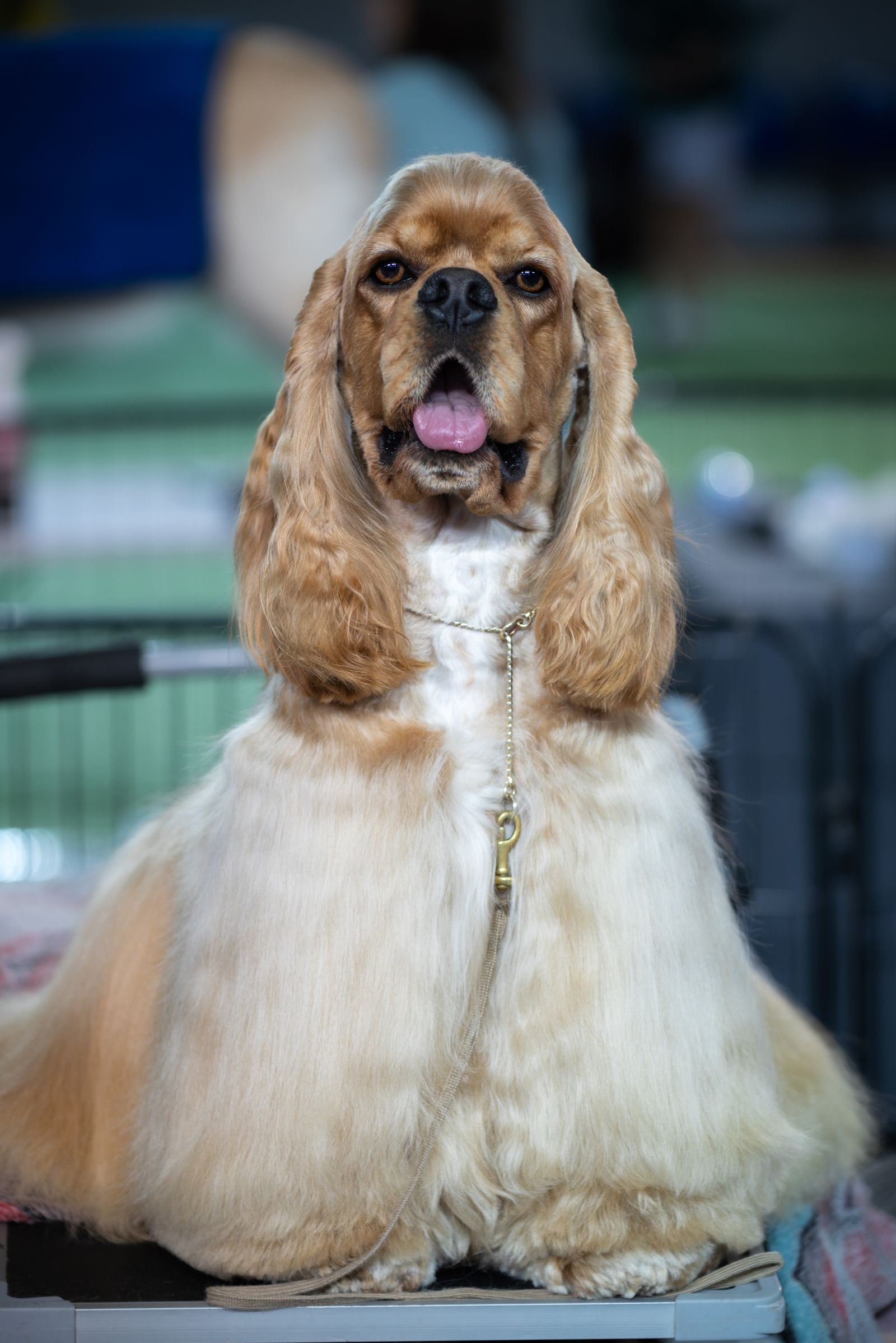
A highly affectionate, highly trainable, great with young children dog. On the practical side: minimal drool. The trade-off is high grooming needs.
About the American Cocker Spaniel.
The American Cocker Spaniel is the smaller, longer-coated, show-line cocker that the American Kennel Club split from the English Cocker in 1946. In New Zealand the breed is uncommon and easy to confuse with the English Cocker, which is the dog most NZ owners mean when they say “Cocker Spaniel”. The two are formally separate breeds in the NZKC standard. The American is the dog in the Disney film Lady and the Tramp; the English is the dog in most NZ pet households.
Adults stand 34 to 39 cm at the shoulder and weigh 9 to 13 kg, making this the smallest registered breed in the gundog group. The long silky coat is heavily feathered on legs, ears, belly and chest and comes in solid colours (black, buff, red, brown), parti-colours, tricolour, and black and tan. Lifespan is 12 to 15 years.
The signal that defines daily life with an American Cocker is the grooming. No other gundog spaniel needs as much daily coat work, and households who underestimate this end up with a matted, uncomfortable dog and a steep clip-and-strip vet bill.
Personality and behaviour
American Cockers are affectionate, gentle and sociable with family, friendly with strangers and good with other dogs. The breed is one of the easiest spaniels to live with as a small companion: lower drive than the English Cocker, lower exercise need, and a calmer reception of unfamiliar visitors than a working cocker.
Around children the breed is gentle and patient, but the small size and the long ears, eyes and feathering make rough handling a genuine welfare issue. A toddler grabbing a Cocker’s ear can pull a tuft of hair, cause a wince, and teach the dog that small humans are unpredictable. Supervise and teach gentle handling.
The trait that surprises new owners is the sensitivity. The breed is more emotionally reactive than the English Cocker and shuts down faster under harsh handling, raised voices or punitive training. Reward-based methods are essential. Some NZ vet behaviourists note the breed’s history of “cocker rage” episodes (sudden, unprovoked aggression in certain solid-colour show lines), although this is rare and historically associated with specific kennels rather than the breed at large. Reputable NZKC breeders screen lines for it.
Loneliness is a real issue. The breed bonds tightly to one or two people and does not handle full workdays alone well. Daycare, a midday walker, or a working-from-home household is the realistic plan.
Care and exercise
Plan on 30 to 60 minutes of structured exercise per day. The breed is happy with two short walks plus garden play, and does not need the running and scent-work outlets of the English Cocker or the Springer. Swimming is enjoyed; rinse and dry the feathering thoroughly afterwards.
Grooming is the lifetime commitment of this breed.
- Daily brushing through legs, ears, chest and belly to prevent matting. Skip a few days and the feathering felts together.
- Daily ear checks. The long heavy feathered ears trap moisture and warmth and grow yeast and bacterial infections fast.
- Daily eye wipe in many individuals. The prominent eyes drain tears that stain and irritate the surrounding feathering.
- Professional clip every 4 to 6 weeks, NZ$80 to NZ$130. Most NZ pet owners opt for a shorter “puppy clip” rather than a full show coat.
- Bath every 2 to 3 weeks with a quality conditioner to keep the silky coat manageable.
Households who can’t or won’t put in the daily time should consider a different breed. The cumulative cost of professional grooming alone runs NZ$1,000 to NZ$1,800 per year, before any home brushing time.
The breed is prone to obesity given the small frame and food motivation. Measure every meal, weigh every two months, and treat feeding as a serious ongoing job.
Eye and ear care are the two highest-frequency claim types on NZ pet insurance for the breed. Cherry eye, eyelid conditions, recurring ear infections and skin conditions in the feathering all appear regularly. Annual vet eye and ear checks are a sensible baseline.
Working line vs English Cocker
The American Cocker effectively has no working line in NZ. The breed was selectively bred away from gundog work over the 20th century, and the working spaniel role is filled by the English Cocker, the English Springer, and the Welsh Springer in NZ shooting and trial communities. If you want a small spaniel for gundog or trial work, choose an English Cocker (working line); if you want a small companion spaniel for home life and don’t mind the grooming, the American Cocker fits.
The most common confusion at NZ point of sale is between American and English Cockers. Three quick checks: NZKC paperwork specifies the breed; the parent dogs visibly differ (American is smaller, longer-coated, more domed head); and registered American Cocker breeders are far fewer in number. Ask explicitly which breed the parents are registered as, and ask to see both parents.
Where to find an American Cocker in New Zealand
Three reasonable paths, with honest waitlist expectations.
- Registered NZKC breeders. The Dogs NZ breeders directory lists the small handful of registered American Cocker breeders. Expect a 6 to 12 month waitlist, NZ$2,500 to NZ$4,500 per puppy, and parent health screening (hip scores, eye certificates, PRA DNA results). Imported semen from US and Australian lines is common to widen the NZ gene pool.
- Australian imports. Some NZ buyers source puppies or adult dogs from Australian breeders. This route adds import logistics and quarantine cost but widens options.
- Rescue and rehoming. Pure American Cockers are rare in NZ rescue. SPCA NZ occasionally has cocker-cross dogs that may include American Cocker ancestry; ask for breed verification before assuming type.
Avoid sellers who can’t show you the parents and don’t have NZKC papers naming “American Cocker Spaniel” specifically. The price premium some breeders charge for “rare” colours (chocolate parti, sable) is not supported by the NZKC standard and adds nothing to the dog.
Insurance and lifetime cost
American Cocker insurance claims in NZ are concentrated in ear conditions, eye conditions, skin conditions and joint issues. Three things shape the premium.
- Lifetime cover vs accident-only. Recurring ear infections, chronic skin conditions and progressive eye conditions all benefit from lifetime cover. Annual difference: roughly NZ$300 to NZ$500.
- Per-condition sub-limits. Read the small print on chronic ear and skin conditions; an annual cap can be exhausted by repeat treatments alone.
- Hereditary condition exclusions. Some insurers exclude breed-specific hereditary conditions if not declared at policy start. Ask whether PRA, cherry eye and eyelid conditions are covered if the dog tests positive after policy start.
For a typical NZ American Cocker on a mid-range lifetime policy, lifetime cost (purchase, setup, plus 13 to 15 years of food, vet, insurance, grooming and other) lands around NZ$30,000 to NZ$45,000. Grooming pushes the upper end of small-breed averages because of the daily brushing and frequent professional clips.
The American Cocker Spaniel, by the numbers.
Each trait scored 1 to 5 on the AKC scale. The verdict synthesises the data; the panels below show the strengths, group averages, and the full trait table.
Top strengths
Family Life
avg 4.3Affectionate with Family
Good with Young Children
Good with Other Dogs
Physical
avg 3.0Shedding
Grooming Frequency
Drooling
Social
avg 3.5Openness to Strangers
Playfulness
Watchdog / Protective
Adaptability
Personality
avg 3.3Trainability
Energy Level
Barking Level
Mental Stimulation Needs
Living with a American Cocker Spaniel.
A 24-hour breakdown of how this breed's day typically goes, scaled to its energy, mental-stimulation, and grooming needs.
What a American Cocker Spaniel costs to own.
An indicative NZ lifetime cost: purchase, setup, then food, vet, insurance, grooming and other annual outgoings. Adjust the inputs to see how your choices change the total.
A American Cocker Spaniel costs about
$296per month
$68
$10
$53,622
Adjust the inputs:
Where the monthly cost goes
Food
$69 / mo
$830/yr · breed-appropriate dry & wet food
Insurance
$58 / mo
$698/yr · lifetime cover protects against breed-specific claims
Vet (avg)
$64 / mo
$770/yr · routine checks plus breed-specific risk
Grooming
$67 / mo
$800/yr · brushes, shampoo, professional clips
Other
$38 / mo
$450/yr · toys, treats, dental, boarding
Indicative NZ averages calculated from breed weight, grooming need and screened-condition count. One-off costs (purchase $3,500 + setup $450) are factored into the lifetime total but not the monthly figure.
How does the American Cocker Spaniel compare?
This breed
American Cocker Spaniel
$53,622
14-year lifetime cost
- Purchase + setup$3,950
- Food (lifetime)$11,620
- Vet (lifetime)$10,780
- Insurance (lifetime)$9,772
- Grooming (lifetime)$11,200
- Other (lifetime)$6,300
Reference
Average NZ medium dog
$38,920
12-year lifetime cost
- Purchase + setup$2,200
- Food (lifetime)$13,200
- Vet (lifetime)$6,000
- Insurance (lifetime)$11,400
- Grooming (lifetime)$2,400
- Other (lifetime)$3,720
A American Cocker Spaniel costs about $14,702 more over a lifetime than the average nz medium dog, mostly highergrooming and highervet.
What to ask the breeder.
Reputable NZKC breeders test for these conditions and share results without being prompted. If a breeder won't share screening results, that is itself an answer.
Common
3 conditionsEar infections
Long heavy feathered ears are the highest-risk ear anatomy of any cocker breed. Daily checks, drying after swims, and prompt vet treatment at the first head shake.
Cherry eye and other eyelid conditions
The prominent eyes of the breed are at meaningful risk. Surgical correction is common and covered under most pet insurance lifetime policies.
Skin and coat conditions
The long silky coat is prone to seborrhoea, ear and lip-fold dermatitis, and yeast infections in feathered areas.
Occasional
4 conditionsProgressive retinal atrophy (PRA)
DNA-testable; reputable breeders test before mating.
Hip dysplasia
Less common than in larger breeds but still recognised; ask for parent hip scores.
Patellar luxation
Common in small spaniel breeds; veterinary check from puppyhood.
Intervertebral disc disease (IVDD)
Long-backed body shape carries some lifetime disc risk.
The American Cocker Spaniel in NZ.
- Popularity: A low-volume breed in NZ, well behind the English Cocker in registrations. Most NZ American Cockers come from a small handful of NZKC breeders or are imported from Australia. The breed is often confused with the English Cocker in general advertising; check NZKC papers and parent type before purchase.
- Typical price: NZ$2500–4500 from registered breeders
- Rescue availability: rare
- NZ climate fit: Suits all NZ climates with management. The long silky coat insulates well in winter and needs serious shade and water management in upper North Island summer heat. The thick feathering picks up burrs, sand and grass seeds quickly.
- Living space: Apartments and townhouses work well given the lower exercise need. A fenced yard helps but is not essential.
Who the American Cocker Spaniel is for.
Suits
- Households wanting a smaller spaniel with lower exercise needs than the English Cocker
- Owners who genuinely enjoy or can pay for serious grooming
- Apartment and townhouse households with a daily walk
Less suited to
- Households unwilling to brush daily or pay for regular clips
- Owners expecting a working gundog
- Rough-handling toddlers without supervision
Common questions.
What is the difference between an American Cocker and an English Cocker?
Are American Cockers good with children?
How much does an American Cocker cost in NZ?
If the American Cocker Spaniel appeals, also consider.
Breeds with a similar profile that might suit your household.

Cocker Spaniel
Mid-sized gundog spaniel with a strong working drive and an active, busy temperament. Known for the silky feathered coat, the merry tail and a deep need for daily structured exercise.

Cavalier King Charles Spaniel
Affectionate small spaniel with a strong velcro instinct. Easy temperament, manageable size, and a heavy hereditary health load that asks more of owners than the easy nature suggests.

English Springer Spaniel
Athletic, busy gundog spaniel with a strong working drive. The most-used flushing spaniel in NZ rural and gamebird country, with a wide working-line vs show-line split that shapes daily life.
Last reviewed:
Sources for this pageInformation only. Breed traits and health notes on this page are aggregated from public registry and breed-authority sources. Individual animals vary; this page is general information, not veterinary, behavioural, or insurance advice. Always consult a registered NZ vet or breeder for guidance specific to your situation.