
Tibetan Spaniel Dog Breed Information
Also known as: Tibbie, Simkhyi
A small Tibetan monastery breed despite the "Spaniel" name, with a silky medium coat, a plumed tail and a watchdog's eye for anything unfamiliar. Confident, family-bonded and quietly observant, well suited to apartments and family households alike. Less coated than the Lhasa Apso and more biddable.
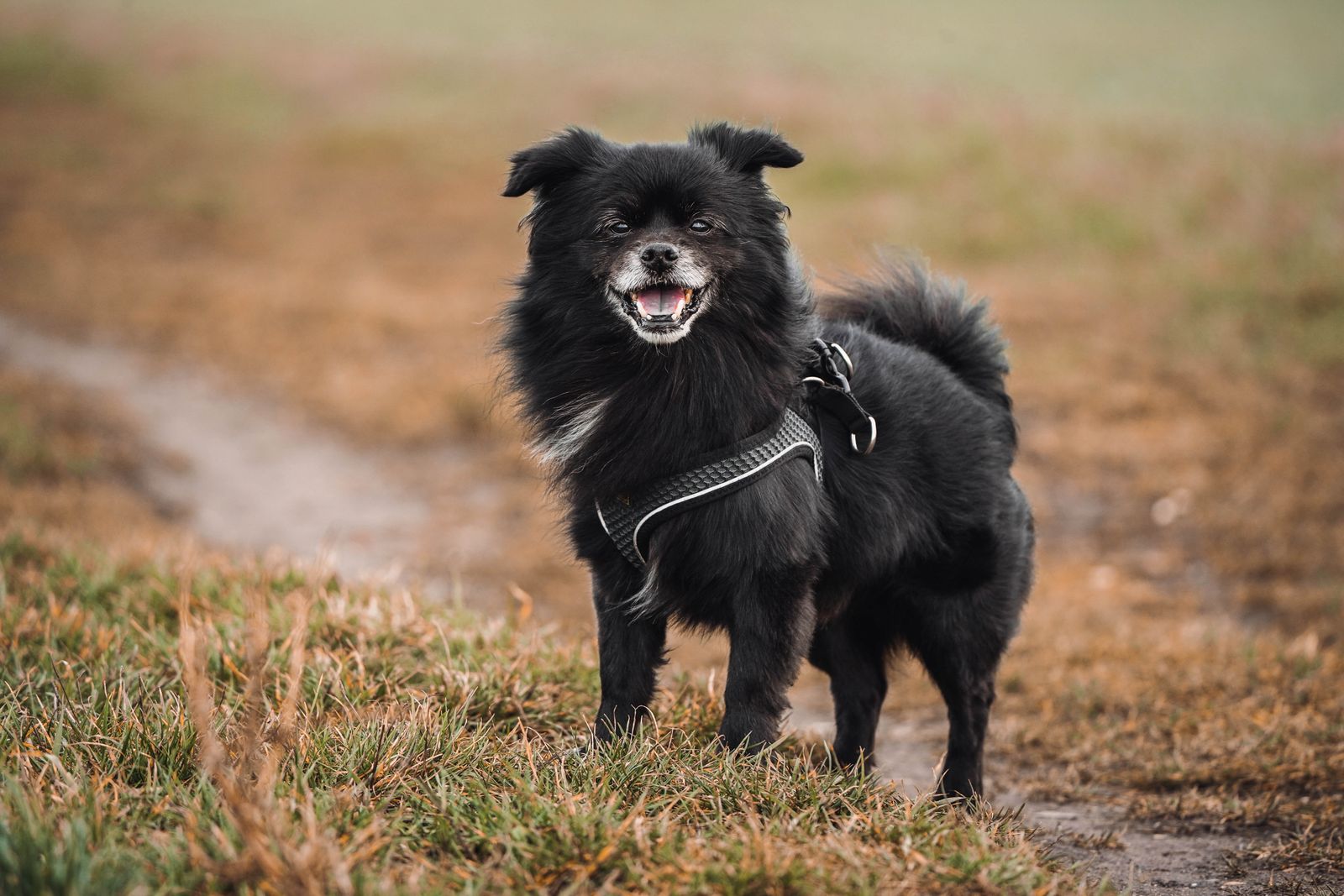
A highly affectionate, highly trainable, great with young children dog. On the practical side: minimal drool and low shedding. The trade-off is vocal.
About the Tibetan Spaniel.
The Tibetan Spaniel is the small monastery watchdog of the Himalayan plateau, kept for centuries inside Tibetan Buddhist temples as an indoor sentinel and companion. NZ’s Tibbie population is small (well outside the council registration top 50), but the breed has a tight, loyal NZ following clustered around a handful of NZKC breeders in Canterbury, Wellington and Auckland. The personality is one of the more rewarding among small NZ companion breeds: family-bonded without being needy, alert without being yappy, and biddable without losing the independent intelligence the breed is known for.
Adults stand 24 to 27 cm at the shoulder and weigh 4 to 7 kg. The coat is double, silky and of moderate length, with feathering on the ears, tail and legs and a plumed tail carried over the back, in colours from gold and cream through sable, red, black-and-tan and particolour. Lifespan sits at 13 to 16 years, one of the longer ranges among NZ small breeds.
Personality and behaviour
Tibetan Spaniels are warmly bonded to family and quietly reserved with strangers. The breed bonds across the household rather than to a single person, and most adult Tibbies follow whichever family member is moving around, settle in lap range, and treat the family circle as the working unit. The default reaction to visitors is observation rather than enthusiasm; the dog watches, decides, and warms to a stranger at its own pace.
The breed has a working watchdog history, and the alert-bark trait is real, although less intense than in the Lhasa Apso. A Tibbie alerts on visitors, on noises in the night, and on anything unfamiliar in the yard, but the bark tends to be situation-specific rather than constant. Consistent training in the first year sets up a manageable adult.
With other dogs the Tibbie is generally social, more so than the Lhasa Apso. Most NZ Tibbies are happy at the dog park and tolerate visiting dogs at home. Cats raised with the breed are usually fine. The prey drive is moderate.
The trait that surprises new owners is the cleverness. Tibbies are problem-solvers, watch the household carefully, and learn routines fast. The breed climbs to high vantage points (the back of the couch, the windowsill, the back of the armchair) to watch the world, and most NZ Tibbie owners describe the dog as “always knowing what’s going on”. The other surprise is the bonding intensity: the breed is not happy alone for long workdays and benefits from working-from-home arrangements, doggy daycare or a midday walker.
Energy is moderate, not high. A Tibbie plays in 10 to 15 minute bursts, then settles. The breed is happy to be a house dog rather than a hiking partner.
Care and exercise
Plan on around 45 minutes of structured exercise a day, split between two walks plus indoor play. Tibbies enjoy off-lead time in fenced parks, scent games, food puzzles and short training sessions. The breed handles light hill walking and long lead-on neighbourhood walks well; sustained running is not its thing.
Grooming is moderate, well below the Lhasa Apso or the Shih Tzu. Brush twice a week with a pin brush and metal comb, paying attention to the feathering on the ears, tail and legs and the trousers on the back legs where mats form first. Heavier seasonal shed in spring and autumn means daily brushing for two to three weeks. Bath every 6 to 8 weeks. The breed does not need professional clipping in the way the Lhasa or Shih Tzu does, which is one of the practical reasons NZ owners often choose the Tibbie over the Lhasa once they have lived with both.
Eye care is a small daily item. The breed has slightly prominent eyes that catch dust and tear staining; a daily wipe with a soft cloth keeps the corners clean. Watch for cherry eye and dry eye, both occasional in the breed.
Dental disease is the more pressing ongoing care item. The crowded small jaw retains food and plaque, and most NZ Tibbies need daily tooth brushing or weekly dental chews from a young age, plus annual professional descale from around age 5 at NZ$400 to NZ$800 per cleaning under anaesthetic.
Diet is uncomplicated. A 6 kg adult eats 90 to 140 g of quality dry food a day, split into two meals. The breed gains weight slowly on free-feeding; portion-measuring keeps a clear waist and protects the long-term joint and cardiac health.
The breed-specific health item to ask any NZKC breeder about is PRA3, a Tibetan-Spaniel-specific progressive retinal atrophy variant with a DNA test available. Reputable breeders test both parents and disclose results in writing; two carriers should not be bred together. A puppy from cleared or carrier-cleared lines is essentially safe from the disease.
NZKC-registered Tibetan Spaniel puppies typically run NZ$2,000 to NZ$3,500 from the small group of NZ breeders, with a 6 to 18 month waitlist common for a litter. The Dogs NZ breeders directory lists current Tibetan Spaniel breeders. Adoption through small-breed rescue is occasional rather than common; the SPCA recommends contacting a breed-specific rescue network for any small Tibetan breed because surrender rates are low.
Council registration is required by 12 weeks under the Dog Control Act. The DIA national dog database holds the record; your local council issues the tag and the annual fee.
The Tibetan Spaniel, by the numbers.
Each trait scored 1 to 5 on the AKC scale. The verdict synthesises the data; the panels below show the strengths, group averages, and the full trait table.
Top strengths
Family Life
avg 4.3Affectionate with Family
Good with Young Children
Good with Other Dogs
Physical
avg 2.0Shedding
Grooming Frequency
Drooling
Social
avg 4.0Openness to Strangers
Playfulness
Watchdog / Protective
Adaptability
Personality
avg 3.8Trainability
Energy Level
Barking Level
Mental Stimulation Needs
Living with a Tibetan Spaniel.
A 24-hour breakdown of how this breed's day typically goes, scaled to its energy, mental-stimulation, and grooming needs.
What a Tibetan Spaniel costs to own.
An indicative NZ lifetime cost: purchase, setup, then food, vet, insurance, grooming and other annual outgoings. Adjust the inputs to see how your choices change the total.
A Tibetan Spaniel costs about
$230per month
$53
$8
$44,660
Adjust the inputs:
Where the monthly cost goes
Food
$55 / mo
$665/yr · breed-appropriate dry & wet food
Insurance
$50 / mo
$599/yr · lifetime cover protects against breed-specific claims
Vet (avg)
$64 / mo
$770/yr · routine checks plus breed-specific risk
Grooming
$23 / mo
$280/yr · brushes, shampoo, professional clips
Other
$38 / mo
$450/yr · toys, treats, dental, boarding
Indicative NZ averages calculated from breed weight, grooming need and screened-condition count. One-off costs (purchase $2,750 + setup $450) are factored into the lifetime total but not the monthly figure.
How does the Tibetan Spaniel compare?
This breed
Tibetan Spaniel
$44,660
15-year lifetime cost
- Purchase + setup$3,200
- Food (lifetime)$9,975
- Vet (lifetime)$11,550
- Insurance (lifetime)$8,985
- Grooming (lifetime)$4,200
- Other (lifetime)$6,750
Reference
Average NZ medium dog
$38,920
12-year lifetime cost
- Purchase + setup$2,200
- Food (lifetime)$13,200
- Vet (lifetime)$6,000
- Insurance (lifetime)$11,400
- Grooming (lifetime)$2,400
- Other (lifetime)$3,720
A Tibetan Spaniel costs about $5,740 more over a lifetime than the average nz medium dog, mostly highervet and lowerfood.
What to ask the breeder.
Reputable NZKC breeders test for these conditions and share results without being prompted. If a breeder won't share screening results, that is itself an answer.
Common
1 conditionDental disease
Crowded small jaws retain plaque. Daily brushing or weekly dental chews are standard.
Occasional
5 conditionsProgressive retinal atrophy (PRA3)
A breed-specific PRA variant. DNA test available; reputable NZKC breeders test parents.
Patellar luxation
Slipping kneecaps, common in small breeds.
Cherry eye and dry eye
An occasional condition in the Tibetan Spaniel. Worth asking about and DNA testing where available.
Hip dysplasia
An occasional condition in the Tibetan Spaniel. Worth asking about and DNA testing where available.
Allergies
An occasional condition in the Tibetan Spaniel. Worth asking about and DNA testing where available.
Rare but urgent
1 conditionLiver shunt (portosystemic shunt)
Rare in the Tibetan Spaniel but worth knowing the warning signs.
The Tibetan Spaniel in NZ.
- Popularity: Uncommon in NZ. Most Tibetan Spaniels come from a small group of registered NZKC breeders, with occasional adults available through small-breed rescue networks. The breed has a tight, loyal NZ following rather than mass popularity.
- Typical price: NZ$2000–3500 from registered breeders
- Rescue availability: rare
- NZ climate fit: The double silky coat handles cool NZ weather well across all regions. Heat tolerance is moderate; manage upper-North-Island summers with shade, water access and morning or evening walks. The medium coat is easier to keep clean than the Lhasa's full coat in muddy NZ winters.
- Living space: Suits apartments and houses. The 45-minute exercise need plus the small footprint plus the alert temperament work well for NZ urban living.
Who the Tibetan Spaniel is for.
Suits
- Apartment dwellers in any NZ city
- Families with children of school age
- First-time owners willing to manage a moderate watchdog bark
- Owners home most of the day
Less suited to
- Households expecting a quiet small dog (the Tibbie is a watchdog at heart)
- Outdoor-only living arrangements
- Owners wanting indiscriminate friendliness with strangers
- Households leaving the dog alone for full nine-hour workdays without preparation
Common questions.
Is a Tibetan Spaniel really a spaniel?
Are Tibetan Spaniels good apartment dogs?
How does the Tibetan Spaniel compare to the Lhasa Apso?
How long do Tibetan Spaniels live in NZ?
If the Tibetan Spaniel appeals, also consider.
Breeds with a similar profile that might suit your household.

Lhasa Apso
A small Tibetan temple dog with a floor-length double coat, a strong watchdog instinct and an independent streak. Quietly affectionate with family, reserved with strangers, and a serious grooming commitment for any household that wants to keep the show coat rather than clip it down.

Shih Tzu
A small, long-coated companion breed bred for centuries for the Chinese imperial court. Affectionate, low-energy, low-shedding and high-grooming.

Pekingese
An ancient Chinese palace breed with a heavily brachycephalic head, a thick double coat and a famous lion-like profile. Dignified, devoted and stubbornly independent, with serious heat sensitivity that rules out many upper-North-Island summer households.
Last reviewed:
Sources for this pageInformation only. Breed traits and health notes on this page are aggregated from public registry and breed-authority sources. Individual animals vary; this page is general information, not veterinary, behavioural, or insurance advice. Always consult a registered NZ vet or breeder for guidance specific to your situation.