
Polish Tatra Sheepdog Dog Breed Information
Also known as: Owczarek Podhalański, Tatra Shepherd Dog, Polski Owczarek Podhalanski, Podhalan
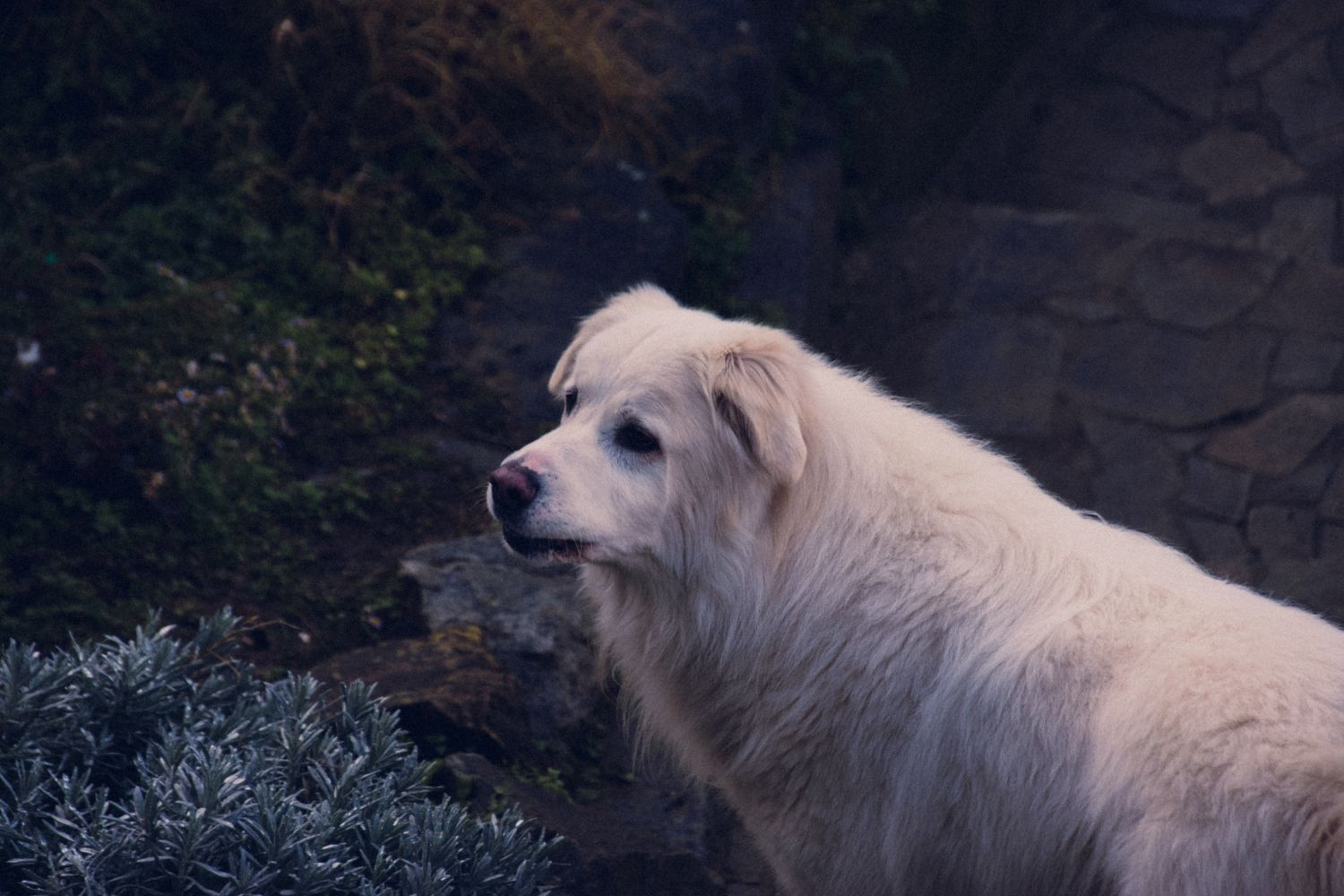
A large white Polish livestock guardian from the Tatra mountains. Calm, watchful, fiercely independent, and used in NZ in the same role as the Maremma and Pyrenean Mountain Dog (protecting sheep, goats and alpacas from feral dogs and pigs on lifestyle blocks and high country runs).

A highly affectionate, great with young children dog. On the practical side: minimal drool. The trade-off is sheds plenty.
About the Polish Tatra Sheepdog.
The Polish Tatra Sheepdog (Owczarek Podhalański in its native Polish) is a large white livestock guardian from the Tatra mountains on the Polish-Slovak border. In NZ the breed is rare and almost exclusively working: the small NZ population is overwhelmingly placed as livestock guardians on sheep, goat and alpaca operations in Hawke’s Bay, Marlborough, Canterbury and Otago, working alongside Maremmas and Pyrenean Mountain Dogs to protect flocks from feral dogs, feral pigs and the occasional kea attack on lambs.
Adults stand 60 to 70 cm at the shoulder and weigh 36 to 60 kg, with males notably heavier than females. The double coat is uniformly white, thick, weather-resistant, and slightly shorter than the giant Pyrenean Mountain Dog’s. The expression is calm and watchful; the head is broad and slightly rounded; the tail hangs low at rest and rises when the dog is alert.
The thing to know up front is that this is a livestock guardian, not a household pet in white clothing. Like the Maremma and the Pyrenean Mountain Dog, the breed was selected for centuries to live with the flock, make its own decisions without a handler, treat the territory rather than the person as the centre of gravity, and bark through the night to deter predators. Trainability and biddability are not the point. A Tatra who has decided your visitor does not belong is not going to be talked out of it by a clicker and a treat.
Personality and behaviour
Tatras are calm, watchful and serious. With family they are affectionate and patient, including with children, but the affection is steady rather than effusive. With strangers they are reserved at best and actively territorial at worst. The breed is hardwired to bark at perceived threats and to escalate from voice to physical block if the threat does not retreat.
Energy is moderate by working-group standards. An adult Tatra will lie watchfully through the day, patrol the perimeter at dawn and dusk, and bark through the night. The night barking is the single most common reason livestock guardians are rehomed when placed in suburban homes: it is how the breed does its job, and it does not turn off in suburbia. Lifestyle-block neighbours within 100 metres will hear it; in close-built suburbs the council noise complaints arrive within a week.
The trait that surprises new owners is independence. A Tatra does not look to its handler for direction; it makes the decision. That makes the breed unsuitable for off-lead recall in unfenced spaces and unsuitable for handlers who want a partner-style working relationship. It also makes the breed exceptional at the job it was bred for.
Care and exercise
Plan on around 60 minutes of daily exercise for a household Tatra, ideally a long calm walk plus free patrol time in a secure yard or paddock. Working livestock guardians on farms self-regulate their activity and need no scheduled exercise beyond the working role. The breed is not built for jogging, long runs or dog sports. They walk, they patrol, they lie down.
The coat is largely self-cleaning. Realistic grooming routine:
- Brush twice a week year-round.
- Daily brushing through the heavy spring and autumn coat blows. Expect rubbish bags of white undercoat for two to three weeks each.
- Bath every two to three months only. Over-bathing strips the weatherproof outer layer.
- Check ears weekly, especially after wet paddock work; the thick coat traps moisture and ear infections are the most common minor health issue.
- Trim nails every three to four weeks for household dogs; working dogs typically wear nails naturally.
Heat is the genuine NZ challenge. The double coat insulates against both heat and cold, but a 28C humid Auckland day is well outside the breed’s comfort range. Walk early or late, provide deep shade, ensure water access at all times, and never leave a Tatra in a hot car or a sun-trap yard. Working dogs in upper North Island farms are managed with shade structures, water troughs and ventilated sheds.
Bloat risk is real for any deep-chested large dog. Feed twice daily, avoid hard exercise within an hour of meals, learn the early signs (unproductive retching, restlessness, swollen belly), and treat as an emergency.
Working livestock guardians on NZ farms
The small NZ Tatra population overlaps substantially with the working Maremma and Pyrenean Mountain Dog populations and operates the same way. Working livestock guardians:
- Are placed with stock from eight to ten weeks old and bond to the flock rather than to people. Early socialisation is with sheep, goats or alpacas, not children and visitors.
- Live full-time with the flock, sleeping in the paddock or open shelter. They are not house dogs.
- Are sourced from working livestock guardian breeders rather than show kennels. Hawke’s Bay, Wairarapa, Marlborough, North Canterbury and the Otago high country are the main NZ regions running working programmes.
- Cost NZ$1,800 to NZ$2,800 per pup, normally only available to working sheep, goat or alpaca operations.
MPI Sustainable Farming Fund trials and several university-led research projects have documented livestock guardian dogs reducing lamb losses to feral dog and pig predation by 70% or more on participating farms. Tatras are used interchangeably with Maremmas and Pyrenean Mountain Dogs on most NZ working operations; choice between the three is usually down to availability rather than working preference.
Climate fit across New Zealand
- Auckland and Northland. The hardest fit. Heat and humidity push the breed beyond its comfort range for several months a year. Practical only with shade structures, ventilation and disciplined limits on midday activity.
- Wellington. Wind is irrelevant; the coat is built for it. Cool damp winters suit the breed. Watch slippery wooden floors as the dog ages; runners and rugs help large-breed hips.
- Christchurch and Canterbury. Excellent fit. Cold winters are a non-issue. Summer heat is more manageable than the upper North Island. The bulk of NZ working livestock guardian operations cluster here and across Marlborough.
- Central Otago and Southland. The breed’s natural climate. Cold tolerance is exceptional. The high country sheep-station livestock-guardian population concentrates here for a reason.
Where to find a Polish Tatra Sheepdog in New Zealand
Three paths, separated by intent.
- Working livestock guardian breeders. The most active source of NZ Tatra pups. Working-line breeders advertise through Federated Farmers networks, rural supply stores and stock-and-station papers rather than Dogs NZ. Pups NZ$1,800 to NZ$2,800. Buyers normally need to confirm a working stock-protection role before a breeder will sell.
- Imports from Poland, Germany or the UK. Companion-line pups are essentially unavailable through NZ kennels; prospective companion buyers usually import. Total cost (pup plus freight, MPI quarantine, vet sign-offs) typically NZ$6,000 to NZ$9,000.
- Rescue. Tatras essentially never appear in NZ rescue. Most surrendered livestock guardians in NZ are Maremmas or Pyrenean Mountain Dogs.
What surprises new owners
The night barking and the heat intolerance, in that order. Both are baked into the breed and neither responds well to training. A Polish Tatra Sheepdog is a livestock guardian first and a household companion second. For working sheep, goat or alpaca farms in cooler NZ regions, the breed is one of the highest-impact tools available against feral dog and pig predation. For suburban household pet life it is a poor fit and the dogs end up rehomed.
The Polish Tatra Sheepdog, by the numbers.
Each trait scored 1 to 5 on the AKC scale. The verdict synthesises the data; the panels below show the strengths, group averages, and the full trait table.
Top strengths
Family Life
avg 3.7Affectionate with Family
Good with Young Children
Good with Other Dogs
Physical
avg 3.0Shedding
Grooming Frequency
Drooling
Social
avg 2.8Openness to Strangers
Playfulness
Watchdog / Protective
Adaptability
Personality
avg 3.5Trainability
Energy Level
Barking Level
Mental Stimulation Needs
Living with a Polish Tatra Sheepdog.
A 24-hour breakdown of how this breed's day typically goes, scaled to its energy, mental-stimulation, and grooming needs.
What a Polish Tatra Sheepdog costs to own.
An indicative NZ lifetime cost: purchase, setup, then food, vet, insurance, grooming and other annual outgoings. Adjust the inputs to see how your choices change the total.
A Polish Tatra Sheepdog costs about
$390per month
$90
$13
$54,274
Adjust the inputs:
Where the monthly cost goes
Food
$162 / mo
$1,940/yr · breed-appropriate dry & wet food
Insurance
$114 / mo
$1,364/yr · lifetime cover protects against breed-specific claims
Vet (avg)
$54 / mo
$650/yr · routine checks plus breed-specific risk
Grooming
$23 / mo
$280/yr · brushes, shampoo, professional clips
Other
$38 / mo
$450/yr · toys, treats, dental, boarding
Indicative NZ averages calculated from breed weight, grooming need and screened-condition count. One-off costs (purchase $2,300 + setup $450) are factored into the lifetime total but not the monthly figure.
How does the Polish Tatra Sheepdog compare?
This breed
Polish Tatra Sheepdog
$54,274
11-year lifetime cost
- Purchase + setup$2,750
- Food (lifetime)$21,340
- Vet (lifetime)$7,150
- Insurance (lifetime)$15,004
- Grooming (lifetime)$3,080
- Other (lifetime)$4,950
Reference
Average NZ medium dog
$38,920
12-year lifetime cost
- Purchase + setup$2,200
- Food (lifetime)$13,200
- Vet (lifetime)$6,000
- Insurance (lifetime)$11,400
- Grooming (lifetime)$2,400
- Other (lifetime)$3,720
A Polish Tatra Sheepdog costs about $15,354 more over a lifetime than the average nz medium dog, mostly higherfood and higherinsurance.
What to ask the breeder.
Reputable NZKC breeders test for these conditions and share results without being prompted. If a breeder won't share screening results, that is itself an answer.
Common
2 conditionsHip and elbow dysplasia
Large breed; ask for hip and elbow scores from both parents.
Heat intolerance
Built for Tatra mountain pasture; upper-North-Island summers require shade, water and ventilation.
Occasional
3 conditionsBloat (gastric dilatation-volvulus)
Deep-chested breed at higher risk; feed twice daily, avoid hard exercise around meals.
Skin and ear infections
The thick coat traps moisture; check ears weekly especially after wet paddock work.
Osteosarcoma (bone cancer)
Large-breed elevated risk in older dogs.
The Polish Tatra Sheepdog in NZ.
- NZ popularity: ranked #195
- Popularity: Very rare in NZ as a registered breed. The small NZ population is overwhelmingly working livestock guardians on Hawke's Bay, Marlborough, Canterbury and Otago sheep, goat and alpaca operations.
- Typical price: NZ$1800–2800 from registered breeders
- Rescue availability: rare
- NZ climate fit: Built for cold Tatra mountain pasture. Excellent in Otago, Southland, Canterbury and Marlborough. Auckland and Northland summers are the genuine difficulty: shade, ventilation and limited daytime activity required.
- Living space: Not a suburban breed. Best on lifestyle blocks of half a hectare or more with secure deer fencing (1.8 m), or as a working dog on a sheep, goat or alpaca operation.
Who the Polish Tatra Sheepdog is for.
Suits
- NZ sheep, goat or alpaca farms wanting a livestock guardian
- Lifestyle blocks of half a hectare or more with secure fencing and tolerant neighbours
- Owners who want a calm watchful guardian rather than a sport dog
Less suited to
- Suburban houses with close neighbours (the night barking will end the relationship)
- First-time owners
- Apartments and small yards
- Hot, humid Auckland summers without aircon and shade
Common questions.
How is a Polish Tatra Sheepdog different from a Maremma or a Pyrenean Mountain Dog?
Are Polish Tatra Sheepdogs used as pets in New Zealand?
How much does a Polish Tatra Sheepdog cost in NZ?
If the Polish Tatra Sheepdog appeals, also consider.
Breeds with a similar profile that might suit your household.
Maremma Sheepdog
The white Italian livestock guardian. A genuine NZ working dog used to protect sheep from feral dogs and pigs on Hawke's Bay, Marlborough and Otago farms, and famously deployed to guard little blue penguin colonies.

Pyrenean Mountain Dog
A giant white livestock guardian bred to live with sheep in the Pyrenees. Independent, nocturnal, and seriously territorial, working in NZ high country flocks rather than household life.

Anatolian Shepherd Dog
A 40 to 65 kg Turkish livestock guardian, bred for thousands of years on the Anatolian plateau to live with the flock and see off wolves and bears. In NZ a niche but growing pick on lifestyle blocks and farms running a Maremma-style guardian programme against feral predators.
Last reviewed:
Sources for this pageInformation only. Breed traits and health notes on this page are aggregated from public registry and breed-authority sources. Individual animals vary; this page is general information, not veterinary, behavioural, or insurance advice. Always consult a registered NZ vet or breeder for guidance specific to your situation.