
Parson Russell Terrier Dog Breed Information
Also known as: Parson Jack Russell, Parson, PRT
The taller, longer-legged kennel-club cousin of the Jack Russell Terrier. A 14 to 17 inch working terrier developed for fox-bolting on horseback, popular on NZ lifestyle blocks and small farms where the extra leg length covers more ground.
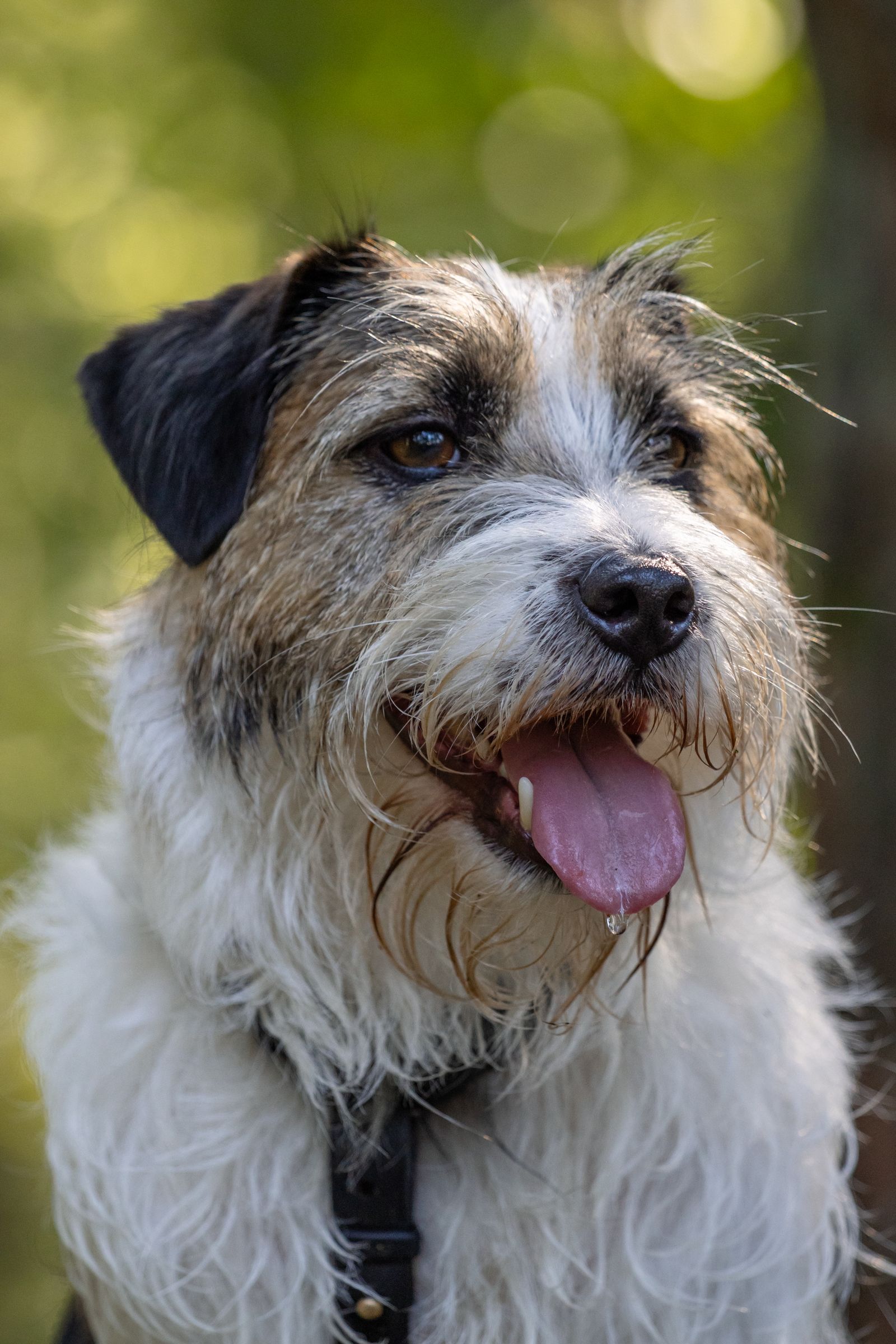
A highly affectionate, highly trainable, high energy dog. On the practical side: low grooming demands and minimal drool. The trade-off is vocal.
About the Parson Russell Terrier.
The Parson Russell Terrier is the taller, longer-legged kennel-club cousin of the Jack Russell Terrier and one of the more common working terriers on NZ lifestyle blocks. Adults stand 33 to 38 cm at the shoulder, sit on a more square build than the Jack, and run with the same fearless prey-driven temperament that Reverend John Russell selected for in 1820s Devon. NZ Parson Russells live mostly on rural lifestyle blocks, small farms and pony properties, with a smaller suburban following.
The point most prospective owners do not see is that the Parson and the Jack are recognised as different breeds by the NZKC, AKC and The Kennel Club (UK). Both descend from the same 19th-century working terrier; the formal split divided the original taller working type (the Parson) from the shorter-legged farm-working strain (the Jack). The temperament is broadly similar, the height and body proportion are not.
(See the Jack Russell Terrier breed page for the shorter-legged cousin.)
Adults stand 33 to 38 cm at the shoulder and weigh 6 to 8 kg. The double coat comes in three textures (smooth, broken, rough) and is predominantly white with tan, black or tricolour markings. Lifespan is unusually long for any breed: 13 to 16 years is normal.
Personality and behaviour
Parson Russells are bold, busy, intelligent and notably more biddable than the Jack on average. The breed is loyal to its family, watchful at the gate, and capable of high-level obedience, agility and earthdog work. Most adults are good with school-age children, polite with familiar visitors, and sociable with the household dog they grow up with.
The trait that surprises new owners is the same combination that surprises Jack Russell owners: prey drive that does not switch off. The Parson was bred to bolt foxes; in NZ the same drive applies to rabbits, possums, rats and small birds. Households with rabbits, guinea pigs or aviary birds need to think hard before adding the breed. Many NZ rural Parson owners run the breed specifically for rabbit and possum control on lifestyle blocks.
The breed is generally more sociable with strange dogs than the Jack and less prone to small-dog snappiness, but it is still a working terrier and not a small companion breed. The Parson wants a job. A Parson without one finds substitutes (the cushion, the garden bed, the postman’s leg) and the substitutes are usually expensive.
Care and exercise
Plan on 70 minutes of real exercise per day, structured rather than meandering. The breed wants to run, sniff, chase and problem-solve. The longer leg length compared to the Jack means the breed covers ground faster and many NZ Parson owners run the breed off-lead alongside horses and bikes.
Mental work matters as much as physical. Scent games, treat puzzles, beginner agility and short trick training sessions burn more energy than another 20 minutes of walking. Parsons are smart and learn fast; they also bore fast and invent their own games when not given one.
The smooth coat sheds modestly year-round; the rough and broken coats shed less but need hand-stripping two to three times a year to keep the wiry texture. Most NZ owners find a local groomer who can hand-strip; expect NZ$60 to NZ$120 per session. Clipping the rough coat (rather than stripping) softens the texture permanently, which most show breeders advise against but pet owners often choose for convenience.
Dental disease is the lifetime watch-point. Small jaws crowd teeth, plaque builds, and by age six many Parsons need a full scale-and-polish under general anaesthetic (NZ$400 to NZ$900 per session). Daily tooth brushing from puppyhood pushes that out by years.
Patellar luxation, lens luxation and deafness are the genetic conditions worth screening. Reputable NZKC breeders DNA test for lens luxation and BAER-test for deafness before mating; eye certificates from a registered ophthalmologist are standard breed-club practice.
Climate fit across New Zealand
The breed handles the full NZ climate range without difficulty.
- Auckland and Northland. Summer heat is the watch-point, less because of the coat (which is light) and more because Parsons don’t self-regulate well; they keep running until they collapse. Walk early or late, ensure shade and water, and don’t let the dog chase a ball in 28 degree midday sun.
- Wellington. The weatherproof coat handles wind and rain easily. The breed does well in suburban Wellington and the Hutt with a fenced section and daily off-lead time at one of the regional parks. Some Wellington Parsons live happily in walk-up flats with daily off-lead time at Mount Victoria or the south coast.
- Christchurch and Canterbury. Cold winters are a non-issue. The breed thrives on rural lifestyle blocks across the plains and does well in suburban Christchurch with secure fencing.
- Central Otago and Southland. Cold tolerance is excellent. The breed’s working drive is well suited to rural and rabbit-heavy country; many Otago lifestyle block and high-country station owners run Parsons specifically for rabbit and rat control.
Where to find a Parson Russell Terrier in New Zealand
Three reasonable paths.
- Registered NZKC breeders. The Dogs NZ breed directory lists registered Parson Russell Terrier breeders separately from Jack Russell Terrier breeders. Expect a 4 to 12 month waitlist, NZ$1,500 to NZ$2,800 per puppy, and parent health screening including patella checks, eye certificates and lens luxation DNA results. Working-line farm breeders sit outside the formal registry but produce many of NZ’s working Russells; ask about parent temperament and any hereditary issues in the line.
- Working farm and trial breeders. A larger number of Parsons in NZ come from working farm and hunting homes outside the NZKC registry. These dogs sit closer to the original working type and suit lifestyle block homes well, but parent health screening varies.
- SPCA NZ and terrier rescue. Parsons (and Parson-Jack crosses) appear occasionally in NZ rescue, often as adolescents from owners who didn’t anticipate the energy and drive. Adoption typically NZ$300 to NZ$500 including desexing, microchipping, vaccination and parasite treatment.
Avoid breeders advertising “miniature” or “teacup” Parson Russells; the breed standard already covers small individuals, and undersized lines often carry health issues. Avoid any seller who can’t show you the dam.
Insurance and lifetime cost
Parson Russell insurance claims in NZ track the Jack Russell pattern closely: dental disease, patellar luxation, lens luxation, eye conditions, and accidents. The breed’s combination of fearlessness and small size puts them in the vet for fight-related and run-into-things injuries more often than larger calmer breeds. The 14 to 16 year lifespan also means more years of premium and more chance of senior conditions.
For a typical NZ Parson Russell on a mid-range lifetime policy, lifetime cost (purchase, setup, plus 13 to 16 years of food, vet, insurance, grooming and other) lands around NZ$22,000 to NZ$32,000.
Working line vs show line vs Parson vs Jack
The Russell terrier landscape in NZ is more varied than most prospective owners expect.
- Parson Russell Terrier (NZKC). The taller, more square-built kennel-club registered breed. Most NZ Parsons in NZKC pedigrees come from show-line stock with health-screened parents.
- Jack Russell Terrier (NZKC). The shorter-legged, longer-bodied kennel-club registered breed. Recognised by the NZKC and AKC since the 2010s as a separate breed.
- Working farm Russell (unregistered). Most NZ working terriers on farms and lifestyle blocks fall outside formal registration and trace to a mix of Parson and Jack lines, often selected on working merit rather than to a written standard. Health screening varies.
For most NZ pet households, the practical question is not Parson versus Jack but registered versus working: registered breeders provide health screening; working breeders provide proven drive and farm temperament. Choose based on the home you have.
The Parson Russell Terrier, by the numbers.
Each trait scored 1 to 5 on the AKC scale. The verdict synthesises the data; the panels below show the strengths, group averages, and the full trait table.
Top strengths
Family Life
avg 3.3Affectionate with Family
Good with Young Children
Good with Other Dogs
Physical
avg 2.0Shedding
Grooming Frequency
Drooling
Social
avg 4.0Openness to Strangers
Playfulness
Watchdog / Protective
Adaptability
Personality
avg 4.5Trainability
Energy Level
Barking Level
Mental Stimulation Needs
Living with a Parson Russell Terrier.
A 24-hour breakdown of how this breed's day typically goes, scaled to its energy, mental-stimulation, and grooming needs.
What a Parson Russell Terrier costs to own.
An indicative NZ lifetime cost: purchase, setup, then food, vet, insurance, grooming and other annual outgoings. Adjust the inputs to see how your choices change the total.
A Parson Russell Terrier costs about
$216per month
$50
$7
$41,540
Adjust the inputs:
Where the monthly cost goes
Food
$59 / mo
$710/yr · breed-appropriate dry & wet food
Insurance
$52 / mo
$626/yr · lifetime cover protects against breed-specific claims
Vet (avg)
$59 / mo
$710/yr · routine checks plus breed-specific risk
Grooming
$8 / mo
$100/yr · brushes, shampoo, professional clips
Other
$38 / mo
$450/yr · toys, treats, dental, boarding
Indicative NZ averages calculated from breed weight, grooming need and screened-condition count. One-off costs (purchase $2,150 + setup $450) are factored into the lifetime total but not the monthly figure.
How does the Parson Russell Terrier compare?
This breed
Parson Russell Terrier
$41,540
15-year lifetime cost
- Purchase + setup$2,600
- Food (lifetime)$10,650
- Vet (lifetime)$10,650
- Insurance (lifetime)$9,390
- Grooming (lifetime)$1,500
- Other (lifetime)$6,750
Reference
Average NZ medium dog
$38,920
12-year lifetime cost
- Purchase + setup$2,200
- Food (lifetime)$13,200
- Vet (lifetime)$6,000
- Insurance (lifetime)$11,400
- Grooming (lifetime)$2,400
- Other (lifetime)$3,720
A Parson Russell Terrier costs about $2,620 more over a lifetime than the average nz medium dog, mostly highervet and higherother.
What to ask the breeder.
Reputable NZKC breeders test for these conditions and share results without being prompted. If a breeder won't share screening results, that is itself an answer.
Common
2 conditionsPatellar luxation
Slipping kneecap; surgical correction NZ$3,500 to NZ$6,500 per knee.
Dental disease
Small jaw, crowded teeth; brush daily and book annual scale-and-polish from age four.
Occasional
3 conditionsLens luxation
DNA-testable; reputable breeders test before mating.
Deafness
More common in predominantly-white dogs. BAER-test before purchase if possible.
Legg-Calve-Perthes disease
An occasional condition in the Parson Russell Terrier. Worth asking about and DNA testing where available.
Rare but urgent
1 conditionLate-onset ataxia
Hereditary neurological disorder. DNA test available.
The Parson Russell Terrier in NZ.
- NZ popularity: ranked #35
- Popularity: A steady NZ presence on rural lifestyle blocks and small farms, especially across Waikato, Manawatu, Canterbury and Otago. The breed sits alongside the Jack Russell as one of the most common terriers on NZ farms; the Parson type is more often seen with horse and pony households where the longer leg length suits running alongside.
- Typical price: NZ$1500–2800 from registered breeders
- Rescue availability: occasional
- NZ climate fit: Comfortable across the full NZ climate range. The weatherproof coat handles cold and wet without trouble. Manage upper North Island heat with shade and avoid midday walks in summer.
- Living space: Apartment living is workable with two real off-lead runs daily. Small properties without secure fencing are a poor fit: the breed digs, squeezes and climbs out of inadequate boundaries.
Who the Parson Russell Terrier is for.
Suits
- Active owners and runners
- Lifestyle blocks where the dog can patrol
- Farms needing a vermin-control terrier
- Households without small pets (rabbits, guinea pigs, cats)
Less suited to
- First-time owners expecting a calm small dog
- Households with rabbits, guinea pigs or hamsters
- Apartment owners without daily off-lead access
- Sedentary households
Common questions.
What is the difference between a Parson Russell Terrier and a Jack Russell Terrier?
Are Parson Russell Terriers good with NZ farm cats?
How much does a Parson Russell Terrier cost in NZ?
If the Parson Russell Terrier appeals, also consider.
Breeds with a similar profile that might suit your household.

Jack Russell Terrier
Small, fearless, high-drive working terrier originally bred to bolt foxes. Lives 14-plus years, runs harder than dogs three times its size, and needs a real outlet for the prey drive.

Fox Terrier (Smooth)
The original NZ farm ratter. A predominantly white short-coated working terrier with black and tan markings, kept on rural lifestyle blocks across the country since colonial settlement, and registered by the NZKC as a separate breed from its Wire-coated relative.

Fox Terrier (Wire)
The wire-coated cousin of the Smooth Fox Terrier, with the same working drive and farm-ratting history but a harsh double coat that needs hand-stripping. Common on NZ rural lifestyle blocks since colonial settlement, registered by the NZKC as a separate breed from the Smooth.
Last reviewed:
Sources for this pageInformation only. Breed traits and health notes on this page are aggregated from public registry and breed-authority sources. Individual animals vary; this page is general information, not veterinary, behavioural, or insurance advice. Always consult a registered NZ vet or breeder for guidance specific to your situation.