
Keeshond Dog Breed Information
Also known as: Dutch Barge Dog, Wolfspitz, Smiling Dutchman
A friendly grey-and-black spitz with a thick double coat, a permanent "smiling" expression and a bark that earned it a thousand years on Dutch canal barges. Affectionate, sociable and one of the more personable Non Sporting breeds in NZ.
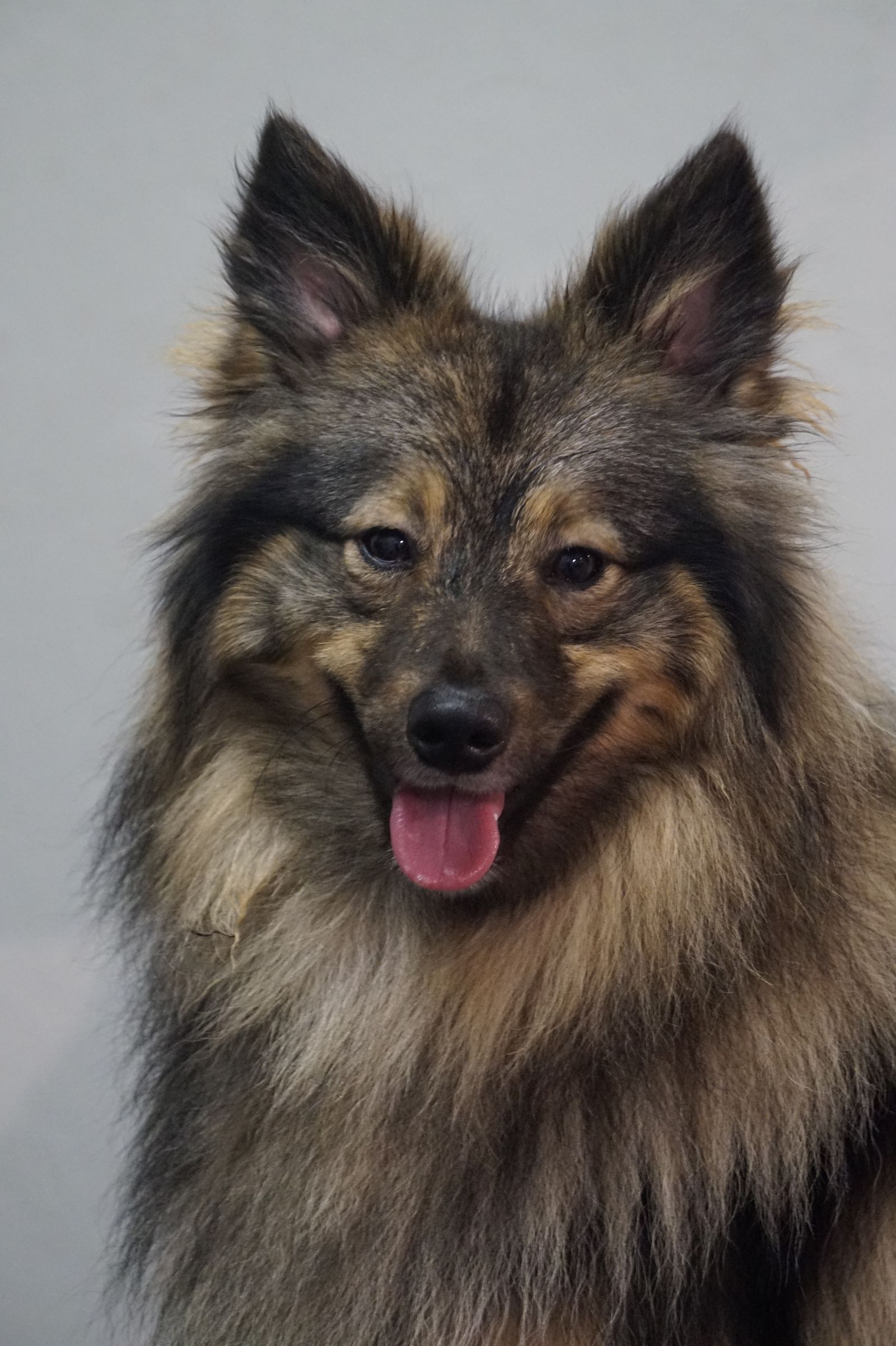
A highly affectionate, highly trainable, great with young children dog. On the practical side: minimal drool. The trade-off is sheds plenty.
About the Keeshond.
The Keeshond is the Dutch barge dog of the canal system, the friendly grey-and-black spitz known in the Netherlands as the “smiling Dutchman” for the upturned face markings around the eyes. Most NZ Keeshonden live in family households across Wellington, Christchurch, Hamilton and the lower South Island, with a small group of NZKC breeders producing one or two litters a year. The breed is one of the more sociable Non Sporting dogs and one of the more personable spitz types: friendly with strangers, biddable in training and at home with children in a way that an Akita or a Chow Chow simply isn’t.
Adults stand 43 to 46 cm at the shoulder and weigh 14 to 20 kg. The coat is double, dense and harsh-textured on the outer layer with a soft cream undercoat, in the breed-standard shaded grey and black with cream markings around the muzzle, eye-spectacles and trousers. Lifespan sits at 12 to 15 years, with hip dysplasia, primary hyperparathyroidism and epilepsy as the breed-specific health concerns to test for.
Personality and behaviour
Keeshonden are openly affectionate with their household and friendly with strangers in a way that surprises owners coming from other spitz breeds. The breed bonds closely, often greets visitors at the door with a soft smile-and-wag rather than a challenge, and tends to follow family members from room to room. Separation distress is real; long workdays without company tend to produce nuisance barking, destructive chewing and the kind of vocal protest that earns letters from neighbours.
Around other dogs the Keeshond is generally polite. The breed lacks the same-sex aggression of the Akita or the Chow, settles well into multi-dog households, and copes with on-lead encounters in NZ urban areas without the reactive flare-ups some spitz breeds produce. Most NZ Keeshond owners report comfortable dog-park use through adulthood.
The trait that surprises new owners is the bark. The Keeshond was selected for centuries as a barge watchdog, and the alert bark is part of the package. The dog will flag visitors at the door, hallway sounds in apartment buildings, possums in the garden at 2 am and the courier turning into the driveway. The bark is sharp and carries. Quiet-on-cue training from puppyhood reduces the volume but does not eliminate it, and a Keeshond is a poor choice for thin-walled apartments where neighbour noise complaints are likely.
The other trait worth flagging is the social pull. Keeshonden are not aloof, not independent and not happy alone. The breed wants to be near someone in the household at all times, prefers to sleep on a couch or in a bedroom rather than in a kennel, and reads any closed door as a personal challenge. Households where the dog is left alone for full workdays without other company should consider another breed, or arrange dog walking or daycare two to three days a week.
Care and exercise
Plan on around 60 minutes of structured exercise a day, split across two walks plus garden time. Keeshonden enjoy off-lead time in fenced parks, scent games, food puzzles and short obedience sessions. The breed is happy to walk briskly for an hour rather than run for ten minutes; sustained moderate effort suits the build better than sprint work.
Grooming is the second major ongoing commitment. The double coat needs twice-weekly brushing year-round with a pin brush and a long-toothed metal comb to prevent matting at the ruff, britches, behind the ears and in the armpits. Twice-yearly coat blow in spring and autumn means daily brushing for two to three weeks while the undercoat releases in cream-coloured clumps. A good vacuum, a slicker brush and a deshedding rake (such as a Furminator-style tool used carefully) are standard kit. Most NZ Keeshond owners book a professional deshed groom every 10 to 12 weeks at NZ$100 to NZ$140 per session.
The hard rule is no clipping. A Keeshond should never be shaved. The double coat is the breed’s primary heat-management system, the outer guard layer reflects sun and the inner layer insulates against cold. Shaved Keeshonden lose both functions, regrow the coat unevenly (often with the undercoat coming back ahead of the guard hairs) and overheat more easily, not less, in NZ summers. Trimming around feet, sanitary areas and ears is fine; clipping the body coat is not.
Diet is uncomplicated. A 16 kg adult eats 160 to 240 g of quality dry food a day, split into two meals. The breed is moderately prone to weight gain on inactive lifestyles, and excess weight is easy to hide under the thick coat. A monthly hands-on body-condition check (ribs felt with light pressure, waist visible from above) catches creep before it becomes a problem.
The breed-specific health items to ask any NZKC breeder about are hip scores under 10 each side, primary hyperparathyroidism DNA test results (a single test clears or identifies carriers), eye certificates current within the year, and patella scores. NZKC-registered Keeshond puppies typically run NZ$2,500 to NZ$4,000 from a small group of NZ breeders, with a 6 to 12 month waitlist common.
Council registration is required by 12 weeks under the Dog Control Act. The DIA national dog database holds the record; your local council issues the tag and the annual fee.
The Keeshond, by the numbers.
Each trait scored 1 to 5 on the AKC scale. The verdict synthesises the data; the panels below show the strengths, group averages, and the full trait table.
Top strengths
Family Life
avg 4.7Affectionate with Family
Good with Young Children
Good with Other Dogs
Physical
avg 3.3Shedding
Grooming Frequency
Drooling
Social
avg 3.8Openness to Strangers
Playfulness
Watchdog / Protective
Adaptability
Personality
avg 3.5Trainability
Energy Level
Barking Level
Mental Stimulation Needs
Living with a Keeshond.
A 24-hour breakdown of how this breed's day typically goes, scaled to its energy, mental-stimulation, and grooming needs.
What a Keeshond costs to own.
An indicative NZ lifetime cost: purchase, setup, then food, vet, insurance, grooming and other annual outgoings. Adjust the inputs to see how your choices change the total.
A Keeshond costs about
$293per month
$68
$10
$52,924
Adjust the inputs:
Where the monthly cost goes
Food
$84 / mo
$1,010/yr · breed-appropriate dry & wet food
Insurance
$67 / mo
$806/yr · lifetime cover protects against breed-specific claims
Vet (avg)
$64 / mo
$770/yr · routine checks plus breed-specific risk
Grooming
$40 / mo
$480/yr · brushes, shampoo, professional clips
Other
$38 / mo
$450/yr · toys, treats, dental, boarding
Indicative NZ averages calculated from breed weight, grooming need and screened-condition count. One-off costs (purchase $3,250 + setup $450) are factored into the lifetime total but not the monthly figure.
How does the Keeshond compare?
This breed
Keeshond
$52,924
14-year lifetime cost
- Purchase + setup$3,700
- Food (lifetime)$14,140
- Vet (lifetime)$10,780
- Insurance (lifetime)$11,284
- Grooming (lifetime)$6,720
- Other (lifetime)$6,300
Reference
Average NZ medium dog
$38,920
12-year lifetime cost
- Purchase + setup$2,200
- Food (lifetime)$13,200
- Vet (lifetime)$6,000
- Insurance (lifetime)$11,400
- Grooming (lifetime)$2,400
- Other (lifetime)$3,720
A Keeshond costs about $14,004 more over a lifetime than the average nz medium dog, mostly highervet and highergrooming.
What to ask the breeder.
Reputable NZKC breeders test for these conditions and share results without being prompted. If a breeder won't share screening results, that is itself an answer.
Occasional
7 conditionsHip dysplasia
Reputable NZKC breeders score hips before mating.
Patellar luxation
An occasional condition in the Keeshond. Worth asking about and DNA testing where available.
Primary hyperparathyroidism
A genetic test is available. The breed is over-represented for this endocrine condition.
Epilepsy
An occasional condition in the Keeshond. Worth asking about and DNA testing where available.
Hypothyroidism
An occasional condition in the Keeshond. Worth asking about and DNA testing where available.
Cardiac conditions (tetralogy of Fallot, mitral valve disease)
An occasional condition in the Keeshond. Worth asking about and DNA testing where available.
Skin allergies and hot spots
The dense undercoat traps moisture. Regular brushing reduces incidence.
The Keeshond in NZ.
- Popularity: A small, loyal presence in NZKC Non Sporting registrations. Most NZ Keeshonden live in family households across Wellington, Christchurch, Hamilton and the lower South Island, with breeders concentrated in the central and southern North Island.
- Typical price: NZ$2500–4000 from registered breeders
- Rescue availability: rare
- NZ climate fit: Built for cold and damp Dutch winters. The double coat handles Wellington, Christchurch, Otago and Southland year-round with no special preparation. Auckland and Northland summers need indoor cooling and an early-morning walk routine.
- Living space: Suits houses and lifestyle blocks. Apartment life is possible but the strong alert-barking habit makes shared-wall living a poor fit unless quiet-on-cue training has held since puppyhood.
Who the Keeshond is for.
Suits
- Active families with children
- First-time owners willing to commit to grooming
- Households wanting a friendly, vocal watchdog at medium size
- NZ regions with cool to cold climates
Less suited to
- Apartments where neighbour noise complaints are likely
- Owners who can't manage heavy seasonal shedding
- Hot Auckland and Northland summers without indoor cooling
- Households left empty for full workdays
Common questions.
Are Keeshonden good family dogs?
Do Keeshonden bark a lot?
How much do Keeshonden shed?
Are Keeshonden suitable for hot NZ summers?
If the Keeshond appeals, also consider.
Breeds with a similar profile that might suit your household.

Samoyed
The white "smiling" Siberian sled and reindeer-herding dog. Friendly, vocal, fluffy beyond reason and built for cold. Suits Otago and Southland far better than Northland.

Pomeranian
A 2 to 3 kg spitz with a stand-off double coat, a fox-like face, and a confidence well out of proportion to the body. Vocal, busy, and a default choice for Auckland and Wellington apartment owners who want a small dog with personality.

Akita
A large Japanese guarding spitz with a curled tail, a thick double coat and a famously dignified, one-family temperament. Quiet at home, intolerant of other dogs of the same sex, and a bigger commitment than most NZ owners realise.
Last reviewed:
Sources for this pageInformation only. Breed traits and health notes on this page are aggregated from public registry and breed-authority sources. Individual animals vary; this page is general information, not veterinary, behavioural, or insurance advice. Always consult a registered NZ vet or breeder for guidance specific to your situation.