
Japanese Chin Dog Breed Information
Also known as: Chin, Japanese Spaniel
A 2 to 4 kg toy spaniel with a silky coat, a flat face and an almost cat-like temperament. Quiet, dignified and unusually independent for a Toy, with the trade-off of brachycephalic heat sensitivity that needs respect in NZ summers.
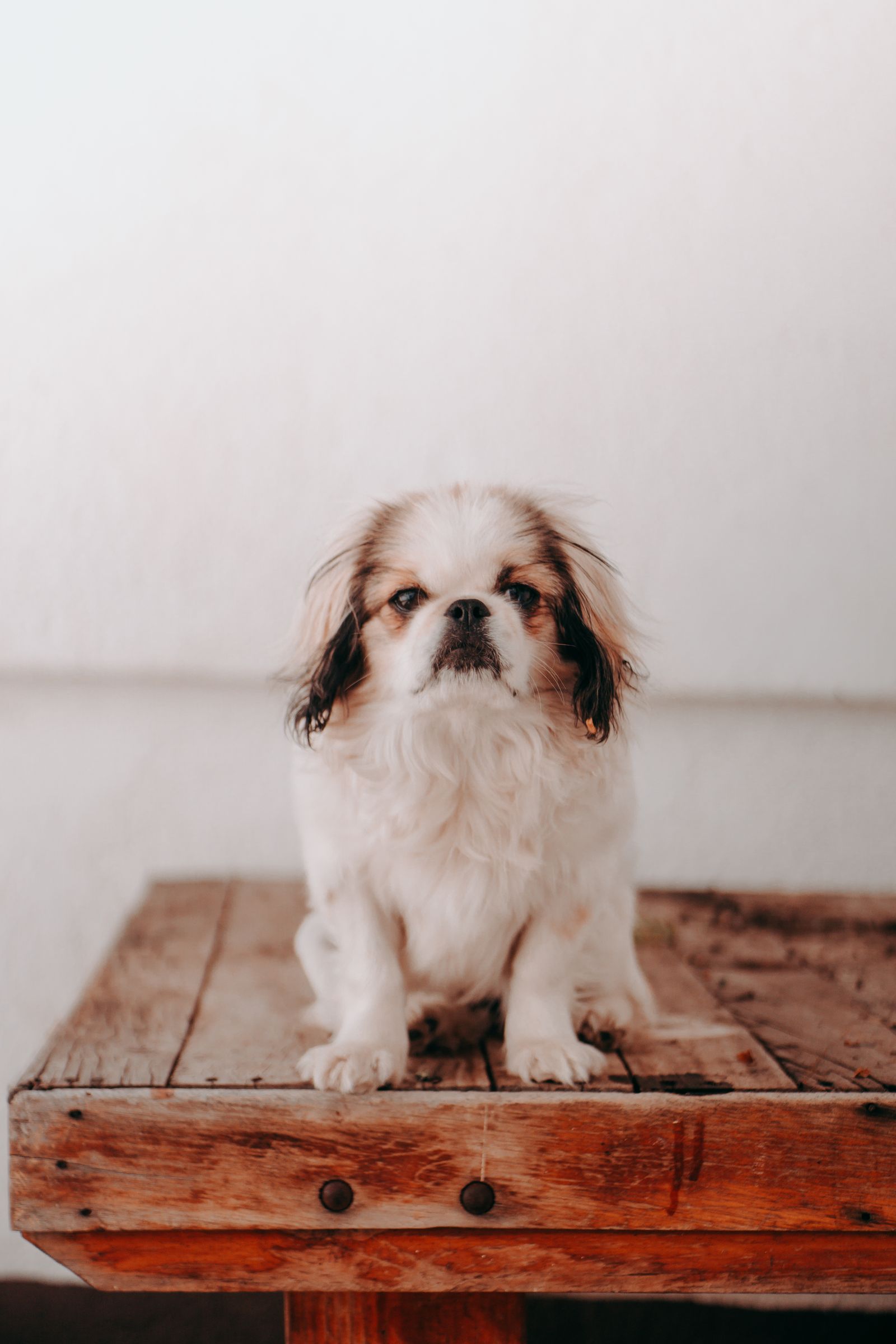
A highly affectionate dog. On the practical side: minimal drool and low shedding.
About the Japanese Chin.
The Japanese Chin is one of the quietest, most cat-like dogs in any size class, and one of the rarer Toys in New Zealand. The 2 to 4 kg body, the flat face, the silky coat and the dignified independence make for a breed that suits a specific household well: a quiet apartment, a retiree’s villa, a Wellington flat owner who works from home, anywhere a low-energy, low-noise small companion solves a problem.
Adults stand 20 to 27 cm at the shoulder and weigh 2 to 4 kg. The single silky coat (no undercoat) sheds modestly, does not mat the way a Maltese or Shih Tzu coat does, and lifespan runs 12 to 14 years.
Personality and behaviour
Japanese Chin owners reach for the cat comparison within a week of bringing the puppy home, and the comparison is fair. Chins climb onto the backs of sofas, balance on chair backs, groom themselves with their paws, observe a room from an elevated perch, and tend toward quiet engagement rather than constant interaction. They will follow a favourite person around the house, but they settle nearby rather than demanding contact, and they are unusually content with their own company for a Toy.
The breed is dignified and selective. A Chin chooses its people, warms slowly to strangers, and is not the dog at the dog park rolling around with every newcomer. With other dogs the default is polite indifference. The bark is rare. Most Chins alert at the door and then go back to whatever they were doing, which is a notable contrast to a Maltese or Pomeranian.
Around children, the breed is patient with calm, considerate older kids. Toddlers are a poor match: the small frame is fragile, the breed dislikes being grabbed, and the eyes are vulnerable. Most NZ breeders prefer households with children seven or older.
The trait that surprises new owners is the independence. People who buy a Toy expecting a Velcro lap dog find a small dog who will sit on the back of the sofa watching the room rather than glued to a knee, and who appears mildly offended by attempts to over-cuddle. Chins love their people in their own way, but the way is not Cavalier-style devotion.
Care and exercise
Plan on around 30 minutes of exercise a day, split between two short walks and indoor play. The breed is low-energy by Toy standards: a 15-minute morning walk and a 15-minute evening walk plus a play session is plenty for most adult Chins. They are happy to do less in hot weather and content to do more on a cool autumn day. The breed is not built for hour-long walks or beach runs; the flat face limits panting, and small legs cover less ground than they look like.
Grooming is surprisingly easy. Brush the single silky coat two to three times a week with a pin brush. The lack of an undercoat means no heavy seasonal shed and far less matting risk than for similar long-coated Toys. Bath every four to six weeks. The breed grooms itself with its paws like a cat, which keeps the face and front feathering tidier than expected. Pay attention to the eyes (daily wipe with a damp cotton pad to clear discharge and prevent fold dermatitis) and the ear fringes (weekly check).
Dental care is the ongoing task. Toy-breed jaws crowd teeth, plaque builds, and a scale-and-polish under anaesthetic every two to three years from age five is typical at NZ$500 to NZ$900 per visit. Daily home brushing slows the build-up; dental chews help.
The dietary watch-out is portion control. A 3 kg adult eats 60 to 100 g of food a day, and the flat face means small kibble pieces are easier to manage than large biscuits. Treats need to come out of the daily allowance, not on top of it.
Climate fit across New Zealand
The Japanese Chin’s flat face limits heat tolerance, and the silky coat traps a moderate amount of warmth. Climate matters more for this breed than for most Toys.
- Auckland and Northland. The hardest fit. Humid summers above 25 degrees regularly push brachycephalic Toys toward heat stress. Walk before 8 am or after 7 pm December through February, ensure aircon or a tile floor for indoor cooling, and never leave a Chin in a parked car. The breed copes, but the household needs to plan around the heat.
- Wellington. A great fit. Cool summers and breezy days suit the breed. Wind is no concern; the small body weight means the dog notices less than a Sighthound. A fitted coat for winter walks below 8 degrees is sensible.
- Christchurch and Canterbury. A comfortable year-round fit. The dry winter cold is manageable with a small coat for walks. Summer hot dry nor’westers still need early-walks discipline because of the flat face, but the climate is generally kinder than Auckland.
- Central Otago and Southland. Suits the breed indoors. The single coat is not built for prolonged outdoor cold; an insulated coat for winter walks and a heated dog bed are sensible. Most Otago Chins live as indoor companions.
Where to find a Japanese Chin in New Zealand
Three paths, with the caveat that the breed is genuinely rare in NZ and supply is tight.
- Registered NZKC breeders. The Dogs NZ breeders directory lists the small handful of registered Japanese Chin breeders. Expect a 12 to 24 month waitlist and NZ$2,500 to NZ$4,500 per puppy. A reputable breeder shows patella scores, eye certification, and ideally cardiac auscultation results for both parents. Some NZ owners import from Australian registered breeders; the cost runs NZ$5,000 to NZ$7,000 with shipping and quarantine.
- Toy and small-breed rescue. Pure Japanese Chin in NZ rescue is essentially unheard of; the breed’s small population means almost none end up surrendered. Toy-cross dogs (often Chin-Cavalier or Chin-Pekingese) occasionally appear and are worth considering. Adoption fees run NZ$400 to NZ$700.
- SPCA NZ. Pure Chins are vanishingly rare. Standard SPCA fees apply if one does appear, NZ$300 to NZ$600.
Avoid online listings without parent photos, “teacup Chin” listings (the term has no breed-standard meaning), and any source unable to show patella and eye screening.
Insurance and lifetime cost
Japanese Chin insurance claims in NZ cluster around three categories: brachycephalic respiratory issues (heat-related, exercise-related), eye injuries (corneal ulcers from the bulging eyes), and dental work in middle age. Three things to weigh on a policy:
- Brachycephalic exclusions. Some NZ insurers exclude or limit cover for conditions related to a brachycephalic head shape (BOAS, soft palate surgery, heat stroke). Read the policy wording closely; for any flat-faced breed, this is the most important clause.
- Dental cover. Many NZ insurers exclude routine dental and only cover injury or disease-related extractions. For a Toy with predictable lifelong dental work, a policy with a dental allowance saves real money.
- Sub-limits per condition. Cheaper policies cap how much they pay for any one condition over the dog’s life. Recurrent eye conditions are the typical breed claim that exhausts low sub-limits fastest.
For a typical NZ Japanese Chin on a mid-range lifetime policy, lifetime cost (purchase plus 12 to 14 years of food, vet, insurance, council registration, grooming and other) lands around NZ$22,000 to NZ$32,000. The food bill is small, the grooming bill is small (no professional clip needed), and the brachycephalic vet line is the variable.
The Japanese Chin, by the numbers.
Each trait scored 1 to 5 on the AKC scale. The verdict synthesises the data; the panels below show the strengths, group averages, and the full trait table.
Top strengths
Family Life
avg 4.0Affectionate with Family
Good with Young Children
Good with Other Dogs
Physical
avg 2.0Shedding
Grooming Frequency
Drooling
Social
avg 3.3Openness to Strangers
Playfulness
Watchdog / Protective
Adaptability
Personality
avg 2.5Trainability
Energy Level
Barking Level
Mental Stimulation Needs
Living with a Japanese Chin.
A 24-hour breakdown of how this breed's day typically goes, scaled to its energy, mental-stimulation, and grooming needs.
What a Japanese Chin costs to own.
An indicative NZ lifetime cost: purchase, setup, then food, vet, insurance, grooming and other annual outgoings. Adjust the inputs to see how your choices change the total.
A Japanese Chin costs about
$215per month
$50
$7
$37,542
Adjust the inputs:
Where the monthly cost goes
Food
$49 / mo
$590/yr · breed-appropriate dry & wet food
Insurance
$46 / mo
$554/yr · lifetime cover protects against breed-specific claims
Vet (avg)
$59 / mo
$710/yr · routine checks plus breed-specific risk
Grooming
$23 / mo
$280/yr · brushes, shampoo, professional clips
Other
$38 / mo
$450/yr · toys, treats, dental, boarding
Indicative NZ averages calculated from breed weight, grooming need and screened-condition count. One-off costs (purchase $3,500 + setup $450) are factored into the lifetime total but not the monthly figure.
How does the Japanese Chin compare?
This breed
Japanese Chin
$37,542
13-year lifetime cost
- Purchase + setup$3,950
- Food (lifetime)$7,670
- Vet (lifetime)$9,230
- Insurance (lifetime)$7,202
- Grooming (lifetime)$3,640
- Other (lifetime)$5,850
Reference
Average NZ medium dog
$38,920
12-year lifetime cost
- Purchase + setup$2,200
- Food (lifetime)$13,200
- Vet (lifetime)$6,000
- Insurance (lifetime)$11,400
- Grooming (lifetime)$2,400
- Other (lifetime)$3,720
A Japanese Chin costs about $1,378 less over a lifetime than the average nz medium dog, mostly lowerfood and lowerinsurance.
What to ask the breeder.
Reputable NZKC breeders test for these conditions and share results without being prompted. If a breeder won't share screening results, that is itself an answer.
Common
4 conditionsBrachycephalic obstructive airway syndrome (BOAS)
Less severe than in Pug or French Bulldog but still real. Heat tolerance is limited.
Patellar luxation
Reputable NZKC breeders score parents.
Eye conditions (corneal ulcer, cataracts, entropion)
Bulging eyes sit close to the world and to the lid edge.
Dental disease
Daily brushing slows it; a scale-and-polish every two to three years from age five is typical.
Occasional
2 conditionsHeart murmurs and mitral valve disease
Annual cardiac auscultation from age six is sensible.
Atlantoaxial instability
A toy-breed neck condition. Avoid jerking on a collar; use a Y-front harness.
The Japanese Chin in NZ.
- Popularity: Uncommon in New Zealand. The breed appears in NZKC registrations in single digits most years. Most NZ Japanese Chins come from a small handful of dedicated breeders, with occasional imports from Australia.
- Typical price: NZ$2500–4500 from registered breeders
- Rescue availability: rare
- NZ climate fit: Heat tolerance is moderate at best because of the flat face. Cooler NZ regions (Wellington, Christchurch, Otago) suit the breed well. In Auckland and Northland, aircon or shade and early-or-late walks are essential through summer.
- Living space: Excellent apartment dog. Quiet, small, low-energy, and adapts well to flat life. The 30-minute exercise need is easy to meet on city walks.
Who the Japanese Chin is for.
Suits
- Apartment dwellers and retirees who want a quiet, low-energy companion
- Households where someone is home most of the day
- Owners who appreciate cat-like independence in a small dog
- Wellington, Christchurch and Otago homes (cooler climates suit the breed)
Less suited to
- Active families wanting a hiking, running or beach companion
- Households with toddlers or boisterous young children
- Outdoor-only living or hot upper-North-Island summer households without aircon
- First-time owners expecting fast obedience
Common questions.
Is the Japanese Chin really cat-like?
Does the Japanese Chin bark much?
Are Japanese Chins healthy enough to live in Auckland summers?
How does the Japanese Chin compare to the Pekingese?
If the Japanese Chin appeals, also consider.
Breeds with a similar profile that might suit your household.

Pekingese
An ancient Chinese palace breed with a heavily brachycephalic head, a thick double coat and a famous lion-like profile. Dignified, devoted and stubbornly independent, with serious heat sensitivity that rules out many upper-North-Island summer households.

Papillon
A 3 to 5 kg toy spaniel with butterfly-shaped ears and a working brain. One of the most consistent top finishers in NZ agility for a small breed, and a sharp choice for active urban owners who want a Toy that earns its keep.

Shih Tzu
A small, long-coated companion breed bred for centuries for the Chinese imperial court. Affectionate, low-energy, low-shedding and high-grooming.
Last reviewed:
Sources for this pageInformation only. Breed traits and health notes on this page are aggregated from public registry and breed-authority sources. Individual animals vary; this page is general information, not veterinary, behavioural, or insurance advice. Always consult a registered NZ vet or breeder for guidance specific to your situation.