
Italian Spinone Dog Breed Information
Also known as: Spinone Italiano, Spinone, Italian Griffon
A large, hairy, droll-faced Italian versatile gundog. Famously calm in the home, surprisingly active in the field, and one of the gentler-tempered continental pointers held by NZ gundog and lifestyle-block households.
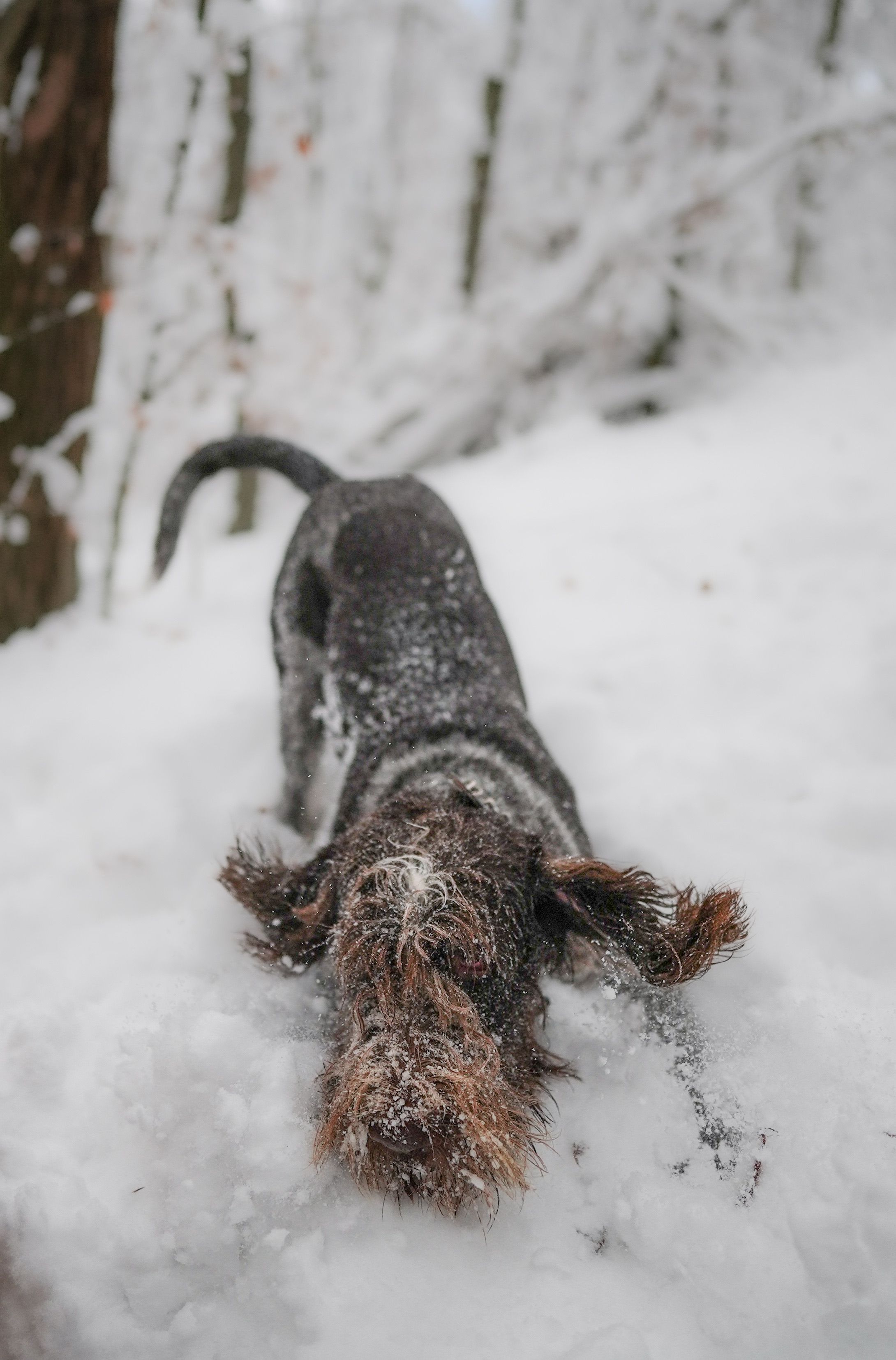
A highly affectionate, highly trainable, great with young children dog. On the practical side: low shedding. The trade-off is drooly.
About the Italian Spinone.
The Italian Spinone is a large, hairy, droll-faced versatile gundog from northern Italy, and one of the gentler-tempered continental pointers in the NZ gundog scene. The breed appeals to households who want a working pointing-retrieving dog with a calmer house manner than a Vizsla or Weimaraner and a more biddable temperament than a German Wirehaired Pointer.
Adults stand 58 to 70 cm at the shoulder and weigh 28 to 39 kg, with a heavy frame, a deep chest and the breed’s signature wire coat. The coat is harsh, dense and weatherproof, longer over the eyebrows, beard and moustache, in white, white and orange, orange roan, white and brown or brown roan. Lifespan is 9 to 12 years, on the shorter end for a large gundog.
The signal that defines daily life with a Spinone is a two-register temperament. In the house the breed is famously calm, content to settle on a couch and watch the family go about its day. In the field the same dog is a hard-working pointing-retrieving gundog with real stamina, holding an extended trot for hours rather than the gallop of an English Pointer or Vizsla. Owners who confuse the indoor calmness with a low exercise need end up with a destructive adult; the calm comes from being properly tired.
Personality and behaviour
Spinones are deeply affectionate with the household, friendly with strangers and good with other dogs and children. The breed is famously gentle around kids, more so than most large gundogs, and many NZ owners describe the Spinone as the most patient large dog they have lived with around toddlers and primary-age children.
Around strangers the breed is open and curious rather than reserved or protective. The default reaction to a stranger at the door is interest, not warning. The protective instinct is moderate; a Spinone will alert at the gate but is not a guard dog.
The trait that surprises new owners is drool. The loose lower lip and bearded muzzle hold water after drinking and saliva after eating, and the breed produces drool ropes that swing when the dog shakes its head. Expect a wet beard most of the day, water on the kitchen floor near the bowl, and a small constant household maintenance task. Owners who prize a tidy house struggle with the breed.
The breed is sensitive. Harsh handling shuts a Spinone down quickly and the dog remembers it. Reward-based training is the only sensible approach. The Spinone is more biddable than most continental pointers but slower-paced than a Labrador; clear, calm, consistent rewards work brilliantly and high-pressure obedience drills work poorly.
Loneliness is workable but not ideal. The breed prefers company and bonded households suit the breed best.
Care and exercise
Plan on 75 to 90 minutes of exercise per day, with real off-lead running on safe ground. The Spinone trots rather than gallops at work; the exercise need is sustained moderate movement rather than brief intense sprints. Tramping, beach walking, retrieve work and gundog training all suit the breed. A pair of 30-minute on-lead walks holds weight but does not satisfy the underlying drive.
Grooming is moderate but specific. The wire coat needs weekly brushing to keep mats out of the feathering, with hand-stripping or strip-combing every 8 to 12 weeks to maintain the harsh outer coat texture. Clipping with electric clippers softens the coat and reduces weatherproofing; show-coat owners and many pet owners prefer hand-stripping for that reason. Professional grooming for the breed runs NZ$80 to NZ$140 per session and not every NZ groomer is comfortable with wire-coat work; ask before you book.
Trim the beard moustache regularly so food and water stay out of the dog’s face. Check ears after every walk; the heavy dropped ear traps moisture and grass seeds.
Bloat is a real risk. The deep chest and heavy build predispose the breed to gastric dilatation-volvulus, a fast-onset surgical emergency. Feed two smaller meals a day, avoid heavy exercise within an hour of meals, and learn the early signs (unproductive retching, distended belly, restlessness, drooling).
Watch the weight. Pet-line Spinones carry weight readily without daily working exercise. Measure portions, weigh the dog every two months, and split the day’s food into two meals.
Working line vs pet line
Both register as the same breed but raise differently. Working-line Spinones are leaner, faster, higher-drive and bred for trial and gamebird work. They suit gundog and active rural homes and are not the relaxed indoor breed the Spinone reputation suggests. Pet-line dogs are slightly heavier-built, calmer, and settle earlier as adults; they suit the breed’s classic family-and-gundog reputation.
Most NZ Spinones fall between the two extremes. Ask your breeder which lines the parents trace from and what the parents’ temperament is like as adults.
Where to find an Italian Spinone in New Zealand
The breed is small in numbers and the route to a puppy is slow.
- Registered NZKC breeders. The Dogs NZ breeders directory lists the small number of registered Spinone breeders, often just one or two active at any time. National litters are infrequent. Expect a 12 to 24 month waitlist, NZ$2,500 to NZ$4,500 per puppy, and full parent health screening (hip and elbow scores, eye certificates, cerebellar ataxia DNA results).
- Imported puppies. Many prospective NZ owners import from Australia or the UK after exhausting local options. Allow NZ$8,000 to NZ$15,000 total including transport, MPI quarantine compliance and the puppy itself.
- NZ Gundog Trial Association contacts. Working Spinone litters appear occasionally through the gundog community; numbers are small.
- Rescue. Pure Spinone surrenders are extremely rare in NZ given the small national numbers. SPCA NZ very occasionally has Spinone-crosses.
Avoid any breeder who cannot show you parent health screening, who has not raised the puppies in the home, or who pressures a sale without an interview process.
Climate fit and household fit
The wire weatherproof coat handles the full NZ climate range and the breed is genuinely happy in winter conditions. Auckland and Northland summer heat is the main concern; the dense coat insulates more than it looks and the heavy build does not radiate heat well. Walk early or late, avoid midday December through February, ensure shade and water, and use sea or river swims to cool the dog. Wellington wet, windy weather is fine for the coat; towel the beard down after wet walks. Christchurch and Canterbury suit the breed well across all seasons. Central Otago and Southland are an excellent fit for the breed’s cold tolerance and sustained-pace working style.
The Spinone suits an active family or rural household with time for daily exercise, tolerance for drool and beard maintenance, and a preference for a calmer house dog over a busy one. The breed does not fit hot inner-city apartments, households unwilling to manage drool, or owners expecting a fast, sharp gundog. For households who match the breed well, the Spinone is one of the most quietly devoted large dogs you can live with, and one of the few continental pointers that slips comfortably into family life.
The Italian Spinone, by the numbers.
Each trait scored 1 to 5 on the AKC scale. The verdict synthesises the data; the panels below show the strengths, group averages, and the full trait table.
Top strengths
Family Life
avg 4.7Affectionate with Family
Good with Young Children
Good with Other Dogs
Physical
avg 3.3Shedding
Grooming Frequency
Drooling
Social
avg 3.5Openness to Strangers
Playfulness
Watchdog / Protective
Adaptability
Personality
avg 3.3Trainability
Energy Level
Barking Level
Mental Stimulation Needs
Living with a Italian Spinone.
A 24-hour breakdown of how this breed's day typically goes, scaled to its energy, mental-stimulation, and grooming needs.
What a Italian Spinone costs to own.
An indicative NZ lifetime cost: purchase, setup, then food, vet, insurance, grooming and other annual outgoings. Adjust the inputs to see how your choices change the total.
A Italian Spinone costs about
$337per month
$78
$11
$48,478
Adjust the inputs:
Where the monthly cost goes
Food
$125 / mo
$1,505/yr · breed-appropriate dry & wet food
Insurance
$92 / mo
$1,103/yr · lifetime cover protects against breed-specific claims
Vet (avg)
$59 / mo
$710/yr · routine checks plus breed-specific risk
Grooming
$23 / mo
$280/yr · brushes, shampoo, professional clips
Other
$38 / mo
$450/yr · toys, treats, dental, boarding
Indicative NZ averages calculated from breed weight, grooming need and screened-condition count. One-off costs (purchase $3,500 + setup $450) are factored into the lifetime total but not the monthly figure.
How does the Italian Spinone compare?
This breed
Italian Spinone
$48,478
11-year lifetime cost
- Purchase + setup$3,950
- Food (lifetime)$16,555
- Vet (lifetime)$7,810
- Insurance (lifetime)$12,133
- Grooming (lifetime)$3,080
- Other (lifetime)$4,950
Reference
Average NZ medium dog
$38,920
12-year lifetime cost
- Purchase + setup$2,200
- Food (lifetime)$13,200
- Vet (lifetime)$6,000
- Insurance (lifetime)$11,400
- Grooming (lifetime)$2,400
- Other (lifetime)$3,720
A Italian Spinone costs about $9,558 more over a lifetime than the average nz medium dog, mostly higherfood and highervet.
What to ask the breeder.
Reputable NZKC breeders test for these conditions and share results without being prompted. If a breeder won't share screening results, that is itself an answer.
Common
2 conditionsHip dysplasia
Larger gundog; ask breeders for hip scores from both parents.
Ear infections
Heavy dropped ears trap moisture; check after every walk.
Occasional
4 conditionsElbow dysplasia
An occasional condition in the Italian Spinone. Worth asking about and DNA testing where available.
Cerebellar ataxia
DNA-testable hereditary neurological condition specific to the breed; reputable breeders screen.
Bloat (gastric dilatation-volvulus)
Deep-chested breed; feed twice daily, avoid heavy exercise around meals, and learn the early signs.
Ectropion and entropion
Loose facial skin around the eye; reputable breeders screen the parents.
The Italian Spinone in NZ.
- Popularity: A small but committed breed in NZ, mostly held by active suburban and lifestyle-block families and gundog households. Visible at NZ Gundog Trial Association field events and Dogs NZ specialty shows.
- Typical price: NZ$2500–4500 from registered breeders
- Rescue availability: rare
- NZ climate fit: Suits the full NZ climate range. The wire weatherproof coat handles wet and cold easily and the breed is genuinely happy in winter conditions. Manage upper North Island summer heat with shade, water and earlier walks; the dense coat insulates more than it looks.
- Living space: Best with a fenced yard and safe off-lead exercise. Lifestyle blocks and rural sections are ideal. Suburban homes work with a serious daily exercise plan.
Who the Italian Spinone is for.
Suits
- Active families with kids
- NZ gamebird and rough-shooting households
- Owners wanting a calmer alternative to the German pointers
Less suited to
- Hot apartments without serious daily exercise
- Households unwilling to tolerate drool and a wet beard
- First-time owners wanting a low-maintenance dog
Common questions.
Is the Italian Spinone really a calm dog?
How much does an Italian Spinone shed and drool?
How much does an Italian Spinone cost in NZ?
If the Italian Spinone appeals, also consider.
Breeds with a similar profile that might suit your household.

German Wirehaired Pointer
The wirehaired version of the GSP. A versatile German hunting dog with a weather-resistant beard-and-eyebrow coat, popular in NZ rural and gamebird hunting circles. All-weather all-terrain working dog with serious daily exercise needs.

English Pointer
Classic upland-bird pointing dog, lean and athletic, with a high working drive and a famously focused point. Less common in NZ than the Cocker or Springer but well represented in the gundog community.

Weimaraner
Tall, athletic German pointing breed with a distinctive silver-grey coat and very high drive. Suits experienced active households and gundog homes; does not suit quiet apartment life or long workdays.
Last reviewed:
Sources for this pageInformation only. Breed traits and health notes on this page are aggregated from public registry and breed-authority sources. Individual animals vary; this page is general information, not veterinary, behavioural, or insurance advice. Always consult a registered NZ vet or breeder for guidance specific to your situation.