
Irish Terrier Dog Breed Information
Also known as: Daredevil, Irish Red Terrier
Medium-sized red Irish working terrier with a wire double coat and a reputation for boldness that earned the breed-club nickname Daredevil. A small but loyal NZ following, mostly on lifestyle blocks and rural sections.
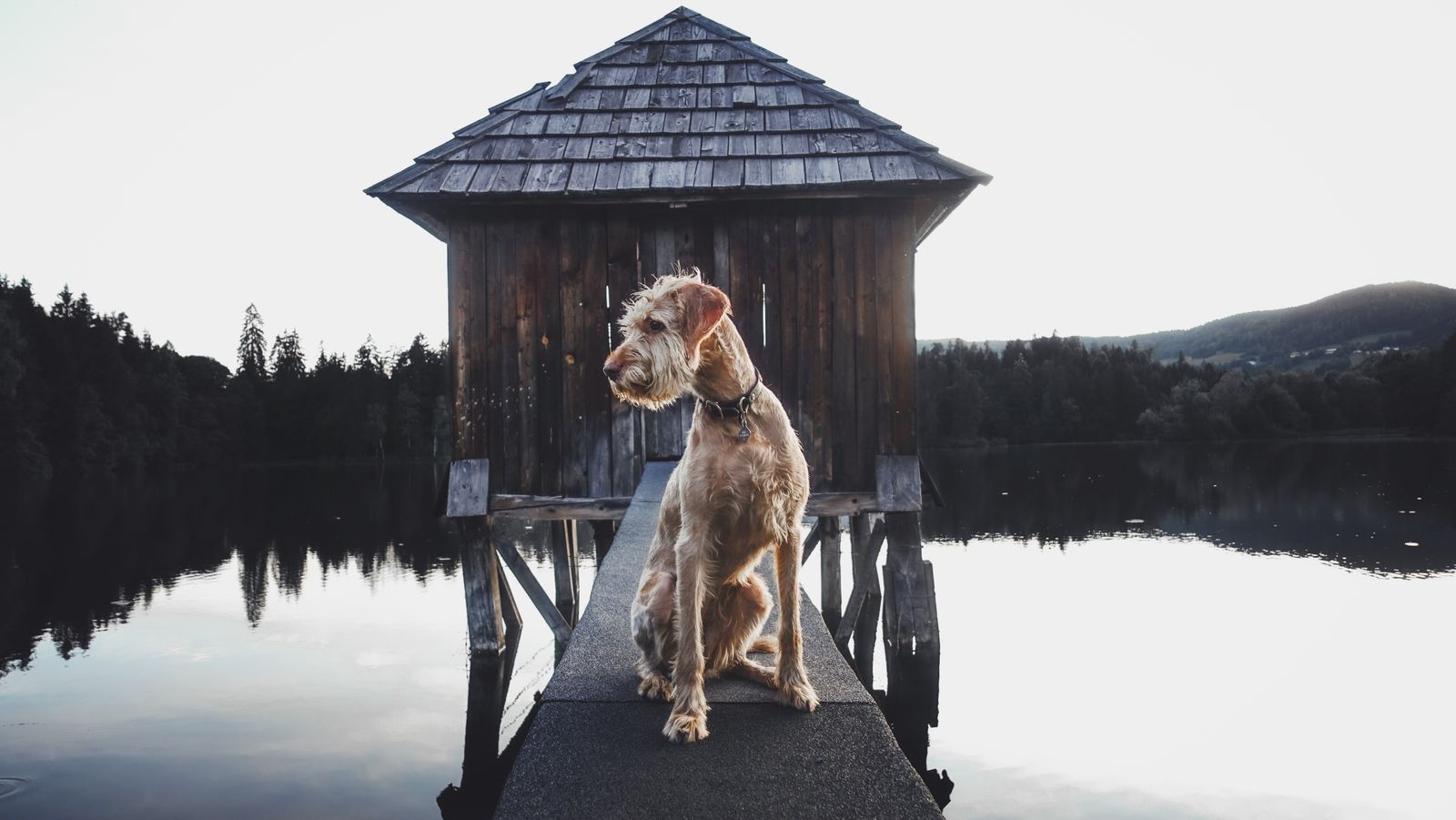
A highly affectionate, highly trainable, great with young children dog. On the practical side: minimal drool and low shedding. The trade-off is high grooming needs.
About the Irish Terrier.
The Irish Terrier is the medium red working terrier with the breed-club nickname Daredevil, earned across two World Wars of military service. Adults stand 45 to 48 cm at the shoulder, weigh 11 to 12 kg, and run with a working temperament that sits between an Airedale and a Lakeland: bolder than a Wheaten, less social with strange dogs than a Welsh, and unmistakably red. NZ Irish Terriers are rare. Active NZKC breeders number one or two at any given time, and most NZ Irish Terriers live on rural lifestyle blocks and small farms.
The point to know up front is that this is a single-dog breed for most NZ households. The Irish Terrier is loyal and loving with its own family, polite with humans it meets, and unreliable with unfamiliar same-sex dogs. The breed does not bring trouble, but it does not back down when trouble arrives.
Personality and behaviour
Irish Terriers are confident, affectionate and demonstrably loyal to their family. The breed is more biddable than a Jack Russell, more reserved than a Wheaten and more dog-selective than either. Most adults greet visitors politely, settle hard at home, and watch the gate without becoming reactive at every passing pedestrian.
The trait that surprises new owners is the same-sex dog reactivity. An Irish Terrier puppy raised at the dog park looks fine until 14 to 18 months, when adolescence sharpens the breed’s natural opinion about unfamiliar dogs of the same sex. By two years many Irish Terriers prefer single-dog life or live happily with one opposite-sex housemate they have grown up alongside. Multi-dog households (especially with two males or two females of any breed) are the most common reason NZ Irish Terriers come up for rehoming.
The other surprise is the boldness with the wider world. The breed earned Daredevil for a reason: Irish Terriers do not retreat from new situations, loud noises or perceived threats. Households who want a soft, biddable family terrier are usually better served by the Wheaten. Households who want a small bold dog with an opinion are exactly what the Irish Terrier is.
Affection at home is high. The breed is famously cuddly with its own family and tolerates school-age children well. Toddlers and very young kids should always be supervised; the breed is patient but does not love being grabbed or sat on.
Care and exercise
Plan on 70 minutes of real exercise per day, including off-lead time. The breed wants a job. Daily on-lead walks through the suburbs satisfy almost no Irish Terrier; the dog needs scent work, retrieve games, agility, tracking or actual farm work to settle. Many NZ rural Irish Terriers work as multi-purpose farm dogs, dispatching rabbits and rats and accompanying the owner on daily property rounds.
Grooming is the underestimated cost. The breed-correct approach is hand-stripping every three to four months. NZ groomers who hand-strip Irish Terriers charge NZ$100 to NZ$180 per session and are not in every town; many South Island and provincial owners drive 90 minutes for a competent stripping. Most pet owners clip instead, which is faster and cheaper but softens the coat permanently and fades the deep red to a paler, lighter colour. Brush twice weekly either way, and trim around the eyes, ears and feet monthly.
Watch for hyperkeratosis on the foot pads. The breed carries a foot-pad thickening disorder (corny feet) at higher rates than most terriers, and a DNA test identifies carriers. Reputable NZKC breeders test the parents.
Cystinuria (a hereditary kidney stone disorder, mostly in male dogs) is the other genetic condition worth screening. DNA test available, single-gene autosomal recessive, well documented in the breed.
Climate fit across New Zealand
The wire double coat handles the full NZ climate range, with one upper-North-Island caveat.
- Auckland and Northland. Heat is the main watch-point. The dark red coat absorbs sun and the breed does not self-regulate well above 26 degrees. Walk early or late, ensure shade and water, and consider a summer hand-strip or clip to thin the coat through January and February.
- Wellington. The harsh wire coat handles wind and rain easily. The breed does well in suburban Wellington and the Hutt with a fenced section and daily off-lead time at one of the regional parks.
- Christchurch and Canterbury. Cold winters are no problem. The breed thrives on rural lifestyle blocks across the plains and does well in suburban Christchurch with secure fencing.
- Central Otago and Southland. Excellent cold tolerance. The wire double coat insulates well, and the breed’s working drive is well suited to rural and rabbit-heavy country.
Training an Irish Terrier in New Zealand
Irish Terriers are smarter and more biddable than most working terriers, but they are still terriers and they make their own decisions when the handler is unclear. Reinforcement-based methods are the default.
In practice that means:
- Build foundation behaviours early. Sit, stay, leash pressure, name response and recall need to be solid before adolescence (4 to 8 months) hits.
- Reward escalation matters. Kibble at home, freeze-dried liver outdoors, raw chicken or cheese around prey scents and unfamiliar dogs.
- Socialise widely between 8 and 16 weeks, then maintain through adolescence. The breed’s same-sex dog reactivity is shaped during the second year more than the first; controlled positive interactions with calm adult dogs through 12 to 24 months pay off long-term.
- A securely fenced yard is non-negotiable. Standard 1.2 m suburban fences are not enough; Irish Terriers jump and dig.
- NZKC obedience clubs and SPCA puppy classes handle the breed well. Expect NZ$120 to NZ$280 for a six-week course.
Where to find an Irish Terrier in New Zealand
The breed is genuinely rare in NZ.
- Registered NZKC breeders. The Dogs NZ breed directory lists active Irish Terrier breeders. Active NZ breeders number one or two at any given time, litter sizes run 4 to 7 puppies, and waitlists of 12 to 24 months are normal. Expect NZ$2,500 to NZ$4,000 per puppy. Reputable breeders provide hip scores, eye certificates, DNA tests for hyperkeratosis and cystinuria, plus early socialisation in the breeder’s home.
- Australian breeders. Where NZ waitlists are long, some NZ buyers source from registered Australian Irish Terrier breeders and import. Total cost (puppy plus quarantine plus flights) typically NZ$5,500 to NZ$8,000.
- Rescue. Irish Terriers turn up perhaps once a year through SPCA centres or Dogs NZ informal rehoming. Adoption typically NZ$400 to NZ$700.
Avoid Trade Me listings without parent health screening. The breed’s hyperkeratosis and cystinuria DNA tests are genuinely meaningful and are the questions to ask any breeder.
Insurance and lifetime cost
Irish Terrier insurance claims in NZ skew toward skin disease, foot-pad issues, urinary stones (in male dogs) and senior cancer. Lifetime cover handles the chronic conditions and the senior years that accident-only policies do not.
For a typical NZ Irish Terrier on a mid-range lifetime policy, lifetime cost (purchase, setup, plus 13 to 15 years of food, vet, grooming, insurance and other) lands around NZ$28,000 to NZ$42,000. Grooming runs at the upper end of NZ averages if hand-stripping is maintained.
The Irish Terrier, by the numbers.
Each trait scored 1 to 5 on the AKC scale. The verdict synthesises the data; the panels below show the strengths, group averages, and the full trait table.
Top strengths
Family Life
avg 3.7Affectionate with Family
Good with Young Children
Good with Other Dogs
Physical
avg 2.3Shedding
Grooming Frequency
Drooling
Social
avg 3.8Openness to Strangers
Playfulness
Watchdog / Protective
Adaptability
Personality
avg 3.8Trainability
Energy Level
Barking Level
Mental Stimulation Needs
Living with a Irish Terrier.
A 24-hour breakdown of how this breed's day typically goes, scaled to its energy, mental-stimulation, and grooming needs.
What a Irish Terrier costs to own.
An indicative NZ lifetime cost: purchase, setup, then food, vet, insurance, grooming and other annual outgoings. Adjust the inputs to see how your choices change the total.
A Irish Terrier costs about
$261per month
$60
$9
$47,548
Adjust the inputs:
Where the monthly cost goes
Food
$70 / mo
$845/yr · breed-appropriate dry & wet food
Insurance
$59 / mo
$707/yr · lifetime cover protects against breed-specific claims
Vet (avg)
$54 / mo
$650/yr · routine checks plus breed-specific risk
Grooming
$40 / mo
$480/yr · brushes, shampoo, professional clips
Other
$38 / mo
$450/yr · toys, treats, dental, boarding
Indicative NZ averages calculated from breed weight, grooming need and screened-condition count. One-off costs (purchase $3,250 + setup $450) are factored into the lifetime total but not the monthly figure.
How does the Irish Terrier compare?
This breed
Irish Terrier
$47,548
14-year lifetime cost
- Purchase + setup$3,700
- Food (lifetime)$11,830
- Vet (lifetime)$9,100
- Insurance (lifetime)$9,898
- Grooming (lifetime)$6,720
- Other (lifetime)$6,300
Reference
Average NZ medium dog
$38,920
12-year lifetime cost
- Purchase + setup$2,200
- Food (lifetime)$13,200
- Vet (lifetime)$6,000
- Insurance (lifetime)$11,400
- Grooming (lifetime)$2,400
- Other (lifetime)$3,720
A Irish Terrier costs about $8,628 more over a lifetime than the average nz medium dog, mostly highergrooming and highervet.
What to ask the breeder.
Reputable NZKC breeders test for these conditions and share results without being prompted. If a breeder won't share screening results, that is itself an answer.
Common
2 conditionsHyperkeratosis (corny feet)
Breed-specific condition causing thickened pad keratin. DNA test available; reputable breeders test parents.
Atopic dermatitis
Skin allergies present in NZ vet dermatology clinics across most wire-coat terrier breeds.
Occasional
3 conditionsHip dysplasia
Reputable NZKC breeders score parents under the Dogs NZ hip scheme.
Cystinuria
Hereditary kidney stone disorder, mostly in male dogs. DNA test available.
Hypothyroidism
An occasional condition in the Irish Terrier. Worth asking about and DNA testing where available.
The Irish Terrier in NZ.
- NZ popularity: ranked #95
- Popularity: A small persistent presence in NZ registrations, with most Irish Terriers living on rural lifestyle blocks and small farms across Waikato, Manawatu and Canterbury. The breed has a particular following among single-dog households who want one bold working terrier rather than a pack.
- Typical price: NZ$2500–4000 from registered breeders
- Rescue availability: rare
- NZ climate fit: Built for Irish weather. The harsh wire double coat handles Wellington wind, Otago winters and West Coast rain easily. Upper North Island summer heat is the watch-point; the dark red coat absorbs sun and the breed does not self-regulate well above 26 degrees.
- Living space: Apartment living is a poor fit. The breed needs a fenced section, secure perimeter (Irish Terriers jump and dig), and access to real off-lead exercise daily. Lifestyle blocks suit the breed best.
Who the Irish Terrier is for.
Suits
- Active families with school-age children
- Lifestyle block owners who want a versatile working dog
- Single-dog households
- Owners with previous terrier experience
Less suited to
- Multi-dog households (especially same-sex)
- First-time owners expecting an easy social dog
- Households with rabbits, guinea pigs or outdoor cats
- Apartment living without secure off-lead access
Common questions.
Is the Irish Terrier the same as the Irish Soft Coated Wheaten Terrier?
Are Irish Terriers good with other dogs?
How much does an Irish Terrier cost in New Zealand?
If the Irish Terrier appeals, also consider.
Breeds with a similar profile that might suit your household.

Welsh Terrier
A compact black-and-tan wire terrier that looks like a small Airedale. Lively, friendly for a working terrier, and a steady NZ family option for households wanting a 9-to-10 kg version of the King of Terriers.

Lakeland Terrier
A compact black-and-tan or grizzle wire terrier from the English Lake District, very similar to the Welsh Terrier in look and temperament. 7 to 8 kg, harsh weatherproof coat, real working drive on rabbits and possums. Rare in NZ but a steady option for households wanting a small working terrier.

Airedale Terrier
The largest terrier the NZKC registers. A 25 to 30 kg working dog with a tan and black wire coat, a long history of military and farm work, and a steady but small presence on NZ rural lifestyle blocks.

Kerry Blue Terrier
The national terrier of Ireland. Born black, fading to a slate-blue adult coat between 18 months and three years. A medium-sized single-coat working terrier with a small but loyal NZ following.
Last reviewed:
Sources for this pageInformation only. Breed traits and health notes on this page are aggregated from public registry and breed-authority sources. Individual animals vary; this page is general information, not veterinary, behavioural, or insurance advice. Always consult a registered NZ vet or breeder for guidance specific to your situation.