
Estrela Mountain Dog Dog Breed Information
Also known as: Cao da Serra da Estrela, Portuguese Shepherd, Estrela
A large Portuguese livestock guardian, one of the oldest breeds on the Iberian peninsula. Used in NZ in the same niche as the Maremma, protecting stock from feral dogs and pigs on lifestyle blocks and small farms.

A highly affectionate, great with young children dog. The trade-off is sheds plenty.
About the Estrela Mountain Dog.
The Estrela Mountain Dog (Cao da Serra da Estrela) is a Portuguese livestock guardian, used in NZ in the same niche as the better-known Maremma: protecting sheep, goats, alpacas and lifestyle-block stock from feral dogs, pigs and stoats. NZ numbers are small, mostly clustered on rural lifestyle blocks in the Waikato, Manawatu and Canterbury, where the breed earns its keep guarding stock that the family genuinely cares about.
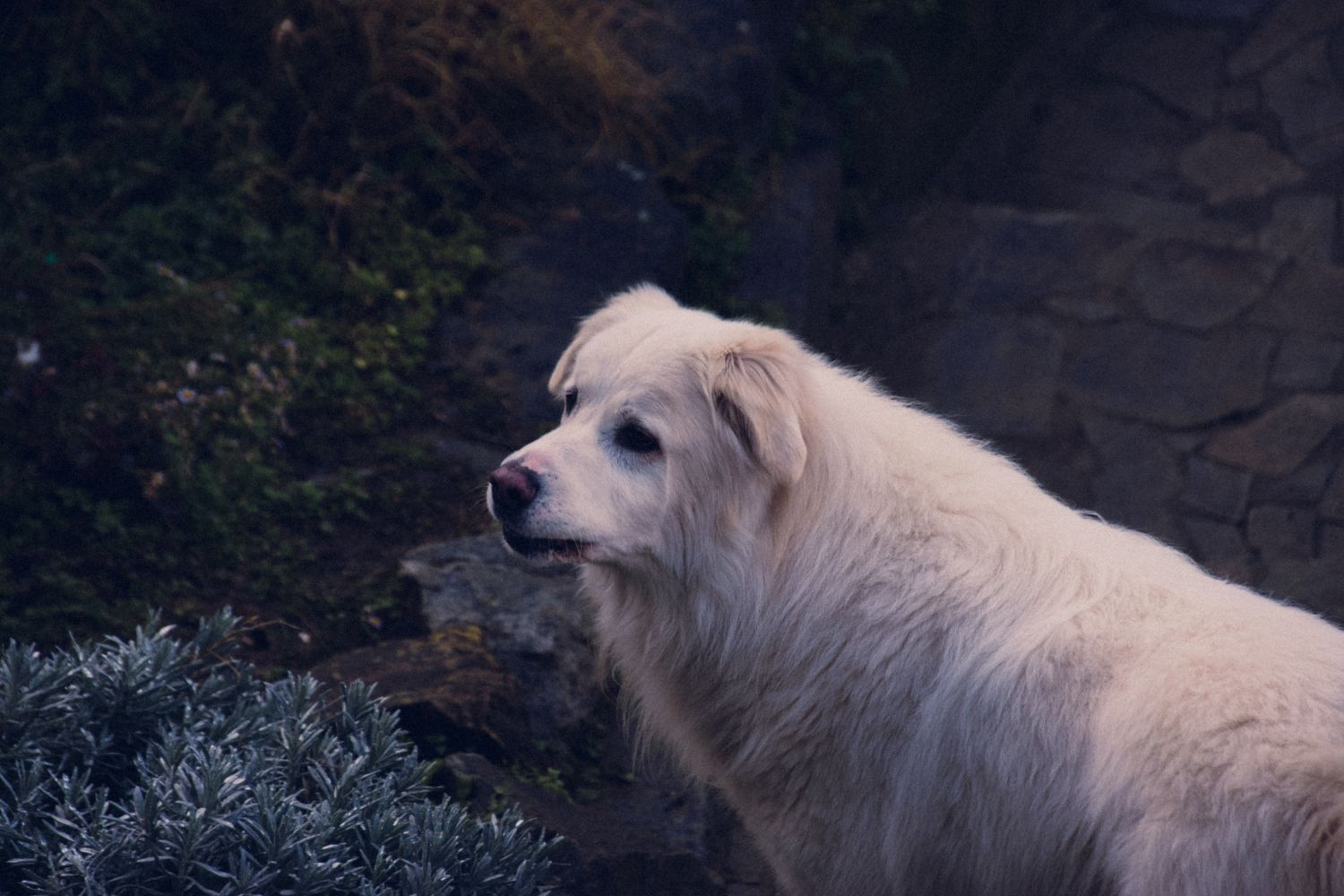
Adults stand 62 to 72 cm at the shoulder and weigh 30 to 60 kg, with bitches noticeably lighter than dogs. The breed comes in two coat varieties (long and short), both recognised by Dogs NZ. Colours are fawn, wolf-grey, yellow and brindle, often with a darker mask. The long coat is the more iconic look and the more common variety in NZ.
Personality and behaviour
Estrelas are deeply bonded to their household and the stock they guard. With family they are calm, affectionate and steady; with strangers they are typically reserved and watchful, alert without being instantly hostile to known visitors but unequivocal about unknown people on the property after dark. With other dogs in the household they are usually fine if raised together, less reliable with unfamiliar dogs on the boundary fence.
The defining trait is the working role. The Estrela is bred to make decisions about threats and stock without consulting a handler. That makes the breed an excellent guardian and a frustrating obedience prospect: an Estrela that decides a recall is unimportant compared to watching the paddock will not come, and no amount of leash work changes that fundamentally. NZ owners who try to retrofit a guardian into a precision-sport dog are usually disappointed.
The trait that surprises new owners is how vocal the breed is. Estrelas bark at night, at strange noises, at perimeter movement, at neighbours’ dogs across paddocks, at headlights on rural roads. The barking is the working role doing exactly what it should do; suburban neighbours rarely see it that way.
Care and exercise
Plan on an hour of exercise a day plus the slow-burning work of patrolling the property. A 60-minute walk does not satisfy a working Estrela; the breed wants a job, and the job is being where the stock is. On lifestyle blocks and small farms the dog earns its exercise without the owner needing to schedule it.
The double coat is the main grooming task. Realistic routine:
- Long coat: brush twice a week year-round with a slicker brush and undercoat rake; daily through the two to three week spring and autumn coat blows.
- Short coat: weekly brush year-round, daily through the seasonal coat blows.
- Pay attention to the heavy ear feathering after rural walks; grass seeds and barley grass embed fast.
- Bath every three months. Over-bathing strips coat oils.
- Trim nails every three to four weeks.
Diet matters for a large, slow-growing breed. A high-quality large-breed puppy formula for the first 18 months, then large-breed adult, split into two meals daily, with no hard exercise around meals (bloat risk). Do not rush calorie or protein levels in the first 18 months; rapid growth in this breed correlates with hip and elbow problems later.
Climate fit across New Zealand
The double coat is built for Portuguese mountain winters and the breed copes well with cold, wet weather across most of NZ. Heat is the genuine challenge.
- Auckland and Northland. The toughest climate fit. Humid summers above 25C combined with a heavy double coat create real heat-stress risk. Provide deep shade, fresh water in multiple locations, and avoid any work or exercise in the middle of the day from December through February. The short-coated variety copes slightly better but is still not a tropical-summer dog.
- Wellington. Wind is no issue. Wet winters are no issue. Coastal humidity in summer is manageable with shade.
- Christchurch and Canterbury. Excellent climate fit. The breed thrives in dry winters and the cold mornings.
- Central Otago and Southland. Built for it. The double coat handles frost, snow and wind without effort.
Where to find an Estrela Mountain Dog in New Zealand
Three paths, with realistic gates on the first two.
- Registered NZKC breeders. The Dogs NZ breeders directory lists a small number of registered Estrela breeders, mostly in rural North Island regions. Litters are infrequent. Expect a 12 to 24 month waitlist, NZ$2,500 to NZ$4,500 per puppy, with hip and elbow scores plus pedigree health history available on request.
- European or Portuguese imports. A small number of NZ working-stock owners import directly from established Portuguese kennels. Pups go to lifestyle-block or farm homes; contacts come through breed networks rather than online directories. Imported pups run NZ$4,000 to NZ$6,500 plus shipping.
- Breed rescue and SPCA. The breed rarely appears in rescue. Surrenders are usually young adults rehomed for behavioural reasons (suburban placements that did not work). Rehoming homes need a property with a guardian role.
Insurance and lifetime cost
Estrela claims in NZ are dominated by orthopaedic conditions (hips, elbows, cruciate ligament rupture), bloat (single-event surgical, NZ$5,000 to NZ$10,000), and heat-stress events in northern regions. Things to ask insurers about:
- Lifetime cover vs accident-only. For a large, deep-chested guardian breed, lifetime cover is meaningful; chronic orthopaedic conditions can run for years.
- Working-dog exclusions. Some policies exclude dogs used for stock work or guardian roles. Read the fine print if the dog earns its keep on a working lifestyle block.
- Sub-limits per condition. Cheap policies cap how much they pay for any one condition over the dog’s life. Hip surgery on a 50 kg dog runs NZ$8,000 to NZ$15,000 per side.
What surprises new owners
The barking, the heat sensitivity in upper North Island summers, and how fundamentally the breed needs a job. Choose the Estrela because you have stock to guard or a property where the breed earns its place. Without a working role the dog is bored, vocal and restless; with one, it is exactly what the breed has been for the last five centuries.
The Estrela Mountain Dog, by the numbers.
Each trait scored 1 to 5 on the AKC scale. The verdict synthesises the data; the panels below show the strengths, group averages, and the full trait table.
Top strengths
Family Life
avg 3.7Affectionate with Family
Good with Young Children
Good with Other Dogs
Physical
avg 3.3Shedding
Grooming Frequency
Drooling
Social
avg 2.8Openness to Strangers
Playfulness
Watchdog / Protective
Adaptability
Personality
avg 3.3Trainability
Energy Level
Barking Level
Mental Stimulation Needs
Living with a Estrela Mountain Dog.
A 24-hour breakdown of how this breed's day typically goes, scaled to its energy, mental-stimulation, and grooming needs.
What a Estrela Mountain Dog costs to own.
An indicative NZ lifetime cost: purchase, setup, then food, vet, insurance, grooming and other annual outgoings. Adjust the inputs to see how your choices change the total.
A Estrela Mountain Dog costs about
$378per month
$87
$12
$58,430
Adjust the inputs:
Where the monthly cost goes
Food
$154 / mo
$1,850/yr · breed-appropriate dry & wet food
Insurance
$109 / mo
$1,310/yr · lifetime cover protects against breed-specific claims
Vet (avg)
$54 / mo
$650/yr · routine checks plus breed-specific risk
Grooming
$23 / mo
$280/yr · brushes, shampoo, professional clips
Other
$38 / mo
$450/yr · toys, treats, dental, boarding
Indicative NZ averages calculated from breed weight, grooming need and screened-condition count. One-off costs (purchase $3,500 + setup $450) are factored into the lifetime total but not the monthly figure.
How does the Estrela Mountain Dog compare?
This breed
Estrela Mountain Dog
$58,430
12-year lifetime cost
- Purchase + setup$3,950
- Food (lifetime)$22,200
- Vet (lifetime)$7,800
- Insurance (lifetime)$15,720
- Grooming (lifetime)$3,360
- Other (lifetime)$5,400
Reference
Average NZ medium dog
$38,920
12-year lifetime cost
- Purchase + setup$2,200
- Food (lifetime)$13,200
- Vet (lifetime)$6,000
- Insurance (lifetime)$11,400
- Grooming (lifetime)$2,400
- Other (lifetime)$3,720
A Estrela Mountain Dog costs about $19,510 more over a lifetime than the average nz medium dog, mostly higherfood and higherinsurance.
What to ask the breeder.
Reputable NZKC breeders test for these conditions and share results without being prompted. If a breeder won't share screening results, that is itself an answer.
Common
2 conditionsHip and elbow dysplasia
Large-breed orthopaedic risk. Ask for hip and elbow scores from both parents.
Heat stress
Heavy double coat is built for Portuguese mountain winters, not humid NZ summers.
Occasional
3 conditionsGastric dilatation-volvulus (bloat)
Deep-chested breed. Feed twice daily and avoid hard exercise around meals.
Dilated cardiomyopathy
An occasional condition in the Estrela Mountain Dog. Worth asking about and DNA testing where available.
Progressive retinal atrophy (PRA)
An occasional condition in the Estrela Mountain Dog. Worth asking about and DNA testing where available.
The Estrela Mountain Dog in NZ.
- NZ popularity: ranked #160
- Popularity: A rare breed in NZ, mostly placed on lifestyle blocks and small farms as livestock guardians. Concentrations in Waikato, Manawatu and Canterbury rural belts.
- Typical price: NZ$2500–4500 from registered breeders
- Rescue availability: rare
- NZ climate fit: The heavy double coat is built for Portuguese mountain winters and copes well with South Island cold. Heat tolerance is the genuine NZ challenge: humid Auckland and Northland summers above 25C create real heat-stress risk for both coat varieties.
- Living space: A working livestock guardian, best on a lifestyle block or small farm with stock to guard. Suburban houses are a poor fit; apartments not realistic.
Who the Estrela Mountain Dog is for.
Suits
- Lifestyle blocks and small farms with stock to guard
- Owners who want a Maremma-style livestock guardian with a slightly more bonded family temperament
- Households with secure rural fencing and full-time presence
Less suited to
- First-time dog owners
- Apartments and townhouses
- Suburban houses with neighbours nearby (the breed barks at night)
- Owners working long hours away from the property
Common questions.
Is an Estrela Mountain Dog the same as a Maremma?
Will an Estrela work in a suburban NZ home?
How much does a registered Estrela Mountain Dog cost in NZ?
Long coat or short coat?
If the Estrela Mountain Dog appeals, also consider.
Breeds with a similar profile that might suit your household.
Maremma Sheepdog
The white Italian livestock guardian. A genuine NZ working dog used to protect sheep from feral dogs and pigs on Hawke's Bay, Marlborough and Otago farms, and famously deployed to guard little blue penguin colonies.

Anatolian Shepherd Dog
A 40 to 65 kg Turkish livestock guardian, bred for thousands of years on the Anatolian plateau to live with the flock and see off wolves and bears. In NZ a niche but growing pick on lifestyle blocks and farms running a Maremma-style guardian programme against feral predators.

Caucasian Shepherd Dog
One of the largest livestock-guardian breeds in the world, with adult males commonly 50 to 80 kg, bred in the Caucasus mountains to deter wolves and bears. A serious-purpose working dog that flags hard for any first-time NZ owner. Niche in NZ, almost always working or specialist homes.
Last reviewed:
Sources for this pageInformation only. Breed traits and health notes on this page are aggregated from public registry and breed-authority sources. Individual animals vary; this page is general information, not veterinary, behavioural, or insurance advice. Always consult a registered NZ vet or breeder for guidance specific to your situation.