
Dutch Shepherd Dog Breed Information
Also known as: Hollandse Herder, Dutchie, Dutch Herder
The brindle cousin of the Belgian Malinois and German Shepherd, developed in the Netherlands as a herding shepherd and now used worldwide in police, military and protection sport. Building a real NZ following in protection sport, scent detection and increasingly in NZ Police K9 placements alongside the Mal.
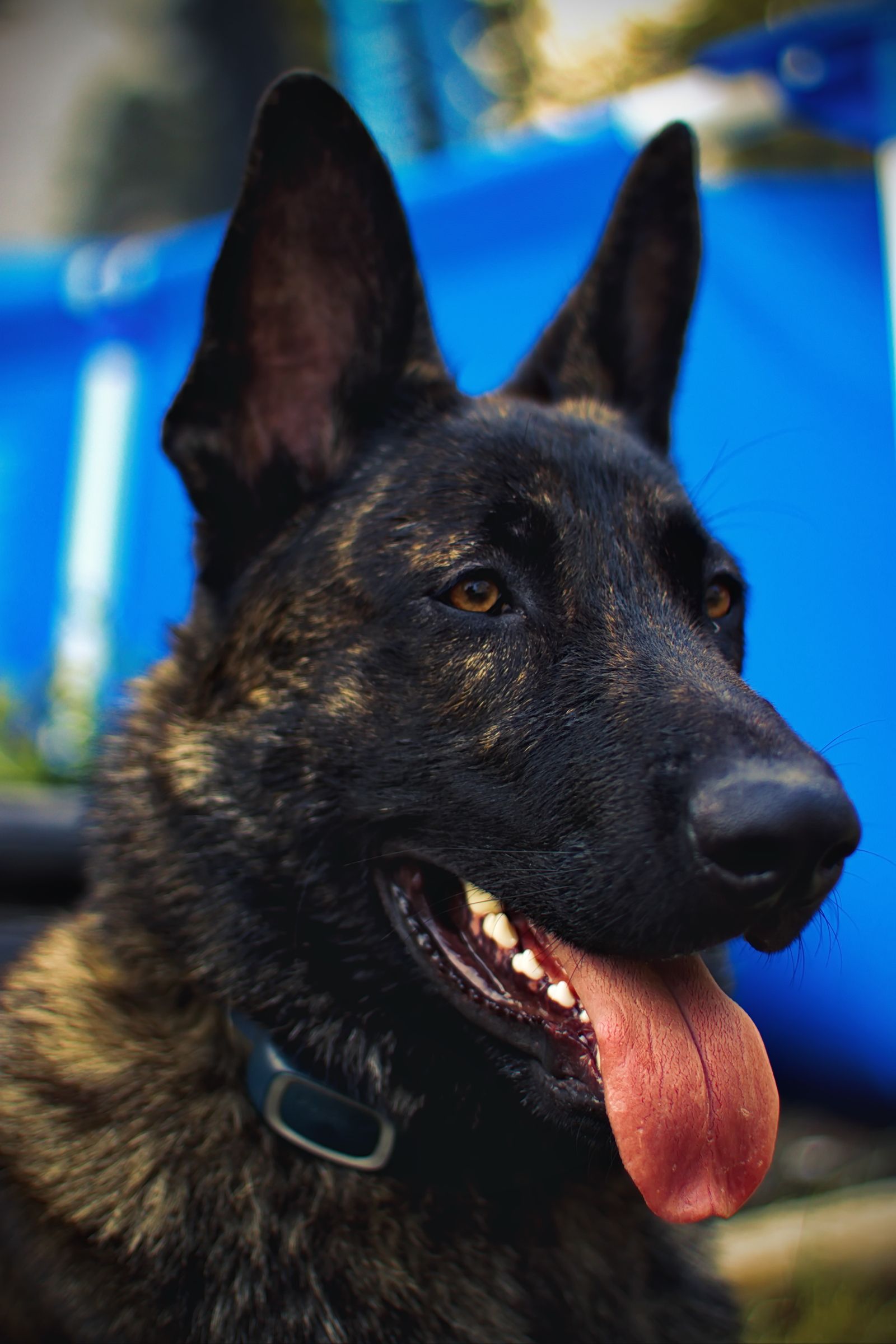
A highly affectionate, highly trainable, high energy dog. On the practical side: low grooming demands and minimal drool.
About the Dutch Shepherd.
The Dutch Shepherd (Hollandse Herder, “the Dutchie”) is the brindle cousin of the Belgian Malinois and the German Shepherd, developed in the rural Netherlands as a herding shepherd and now used worldwide in police, military and protection sport. NZ Police K9, Customs detection and the small NZ protection-sport community have steadily added Dutch Shepherd lines alongside the more familiar Malinois through the 2010s and 2020s, and the breed is building a real NZ following in working-dog circles. As a household pet it is uncommon and almost always a misjudged choice for inexperienced buyers.
The single sentence to read before researching this breed any further is the same sentence that applies to the Malinois. Do not get a Dutch Shepherd as a pet without prior dog-sport or working-dog experience. Reputable NZ breeders enforce this on the supply side, and the dogs end up in rescue, kennels or worse when the supply side is bypassed. The breed is not a friendlier Malinois in fawn-and-stripes.
Adults stand 55 to 62 cm at the shoulder and weigh 20 to 32 kg, on the lighter end of the working-shepherd cluster. The short double coat is gold brindle or silver brindle (the breed standard does not allow solid fawn, sable or black), and three coat varieties exist (short-haired, long-haired and rough-haired) though the short-haired is by far the most common in NZ working lines. Lifespan runs 12 to 14 years.
Personality and behaviour
Dutchies are intensely affectionate with their handler and household, deeply bonded and constantly engaged. The default mode is “on”: eyes up, watching for the next thing to do. They are reserved with strangers and quick to alert; with other dogs they are usually civil if well socialised but rarely casually friendly. The temperament is close to the Malinois with marginally more biddability and slightly better natural recall by handler reports, but the differences are small enough that experienced handlers often choose by individual dog rather than by breed.
The defining trait is drive. A working-line Dutch Shepherd has more raw drive than almost any other breed and channels it through play, tug, bite work and scent. Without structured daily outlets the drive turns inward as anxiety, perimeter patrolling, fence reactivity, resource guarding or destructive boredom. Bored Dutchies dismantle gardens, fences, doors and households at speeds that surprise new owners.
The trait that surprises owners coming from a German Shepherd background is the intensity. A well-raised companion-line GSD settles in the house and works on demand; a Dutch Shepherd rarely switches off without structured daily outlets. The brindle coat and slightly stockier build suggest “GSD lite” to inexperienced buyers; the breed is anything but.
The other surprise for first-time working-dog handlers is the sensitivity. The same intensity that makes the breed exceptional at police work makes it acutely responsive to handler emotion. A stressed handler builds a stressed Dutchie. Force-free, motivational training is the standard for NZ Police and Customs programmes for exactly this reason.
Around children, the breed is patient with its own household kids when raised together. Visiting children are managed through the handler. Most NZ breeders prefer households with children eight or older, and supervision around visiting kids is non-negotiable.
Care and exercise
Plan on two hours of structured daily activity. A walk on lead is a baseline; the breed needs off-lead running, fetch, tug, scent work, structured agility, protection sport or some other outlet that fully engages body and brain. Two short focused sessions beat one long aimless wander. The breed is fast (similar to the Mal across most distances) and jumps higher than owners expect (a motivated adult clears 1.8 m from standstill).
The short double coat is the easiest part of Dutchie ownership. Realistic grooming routine:
- Brush once a week year-round, daily through the spring and autumn coat blows (two to three weeks each).
- Bath every two to three months.
- Check ears weekly. Trim nails every three to four weeks.
Diet is straightforward. Working-line Dutchies burn calories at a rate that surprises new owners, and a high-quality active-dog diet split into two meals daily covers most adults. Avoid free-feeding. Watch the body condition during transitional periods (after surgery, during injury rehab) when activity drops faster than the appetite does.
NZ climate fit is broadly good. The short double coat handles Wellington wet, Canterbury frost and Otago cold with ease, and heat tolerance in humid Auckland and Northland summer days above 25C is similar to the Malinois (better than the GSD). Walks shifted to early morning or late evening cover most of the upper North Island summer issue. Working Dutchies on extended outdoor work in Otago winters benefit from a coat for paddock-temperature handler-led training.
Fencing is the practical limit on suburban placements. The breed jumps higher than its size suggests, digs out if motivated and reads gates and latches faster than most breeds. Secure 1.8 m fencing is the minimum, ideally dig-proof at the base.
Training a Dutch Shepherd in New Zealand
The breed is the most trainable in the world for the right handler and disastrous for the wrong handler, on a similar curve to the Malinois. NZ training routes are the same:
- Sport-style foundation training starts the week the puppy arrives. Expect a structured tug-and-drive routine from week one, not the casual obedience-class trajectory that suits a Labrador.
- NZKC working-dog clubs, IGP clubs, French Ring clubs and mondioring groups are the main NZ training routes. They cluster in Auckland, Hamilton, Wellington and Canterbury. Expect NZ$200 to NZ$500 a year in club fees plus weekly training time.
- NZ Police K9 puppy walking is the closest thing to a structured working-line raising programme available outside the sport network. Police place a small number of working-line shepherds (Mal and Dutchie) with experienced volunteer puppy walkers each year.
- Adolescence (10 to 24 months) is harder than puppyhood. Reactivity, fence running, redirected biting, selective recall and resource guarding all peak here. Drop training during adolescence and the dog usually surrenders at 18 to 30 months.
- Recall in open spaces is unreliable for novice handlers and reliable for trained handlers; the variable is the handler.
Where to find a Dutch Shepherd in New Zealand
Three paths, with realistic gates on the first two.
- Registered NZKC breeders. The Dogs NZ breeders directory lists a very small number of registered Dutch Shepherd breeders, concentrated in Auckland, Waikato and Canterbury. Most reputable breeders interview rigorously before accepting a deposit and will refuse buyers without prior dog-sport, IGP, herding, mondioring or working-dog experience. Expect a 12 to 24 month waitlist, NZ$2,500 to NZ$4,500 per puppy from companion-line litters, and NZ$4,000 to NZ$7,000 from imported working-line litters with European sport titles in the parents.
- Sport and working-line breeders. NZ has a small but active community of mondioring, IGP and French Ring handlers bringing in Dutch Shepherd lines from the Netherlands, Belgium and the US. These pups are normally placed only with sport handlers. Contacts come through NZ working-dog clubs rather than online directories.
- Breed rescue and SPCA. Dutchies in NZ rescue are rare; the small population means the surrendered dogs are almost always rehomed through breeder networks before reaching SPCA. Adoption fees through breed networks usually run NZ$400 to NZ$800.
The pattern to avoid is buying from Trade Me listings advertising Dutch Shepherd or “Dutchie” puppies at low prices. The brindle look attracts low-quality breeding, and the dogs frequently re-surface in rescue within 12 to 24 months. The breed is too high-drive and too working-purpose to gamble on temperament from unverified sources.
The Dutch Shepherd, by the numbers.
Each trait scored 1 to 5 on the AKC scale. The verdict synthesises the data; the panels below show the strengths, group averages, and the full trait table.
Top strengths
Family Life
avg 3.7Affectionate with Family
Good with Young Children
Good with Other Dogs
Physical
avg 2.0Shedding
Grooming Frequency
Drooling
Social
avg 3.8Openness to Strangers
Playfulness
Watchdog / Protective
Adaptability
Personality
avg 4.5Trainability
Energy Level
Barking Level
Mental Stimulation Needs
Living with a Dutch Shepherd.
A 24-hour breakdown of how this breed's day typically goes, scaled to its energy, mental-stimulation, and grooming needs.
What a Dutch Shepherd costs to own.
An indicative NZ lifetime cost: purchase, setup, then food, vet, insurance, grooming and other annual outgoings. Adjust the inputs to see how your choices change the total.
A Dutch Shepherd costs about
$287per month
$66
$9
$48,774
Adjust the inputs:
Where the monthly cost goes
Food
$107 / mo
$1,280/yr · breed-appropriate dry & wet food
Insurance
$81 / mo
$968/yr · lifetime cover protects against breed-specific claims
Vet (avg)
$54 / mo
$650/yr · routine checks plus breed-specific risk
Grooming
$8 / mo
$100/yr · brushes, shampoo, professional clips
Other
$38 / mo
$450/yr · toys, treats, dental, boarding
Indicative NZ averages calculated from breed weight, grooming need and screened-condition count. One-off costs (purchase $3,500 + setup $450) are factored into the lifetime total but not the monthly figure.
How does the Dutch Shepherd compare?
This breed
Dutch Shepherd
$48,774
13-year lifetime cost
- Purchase + setup$3,950
- Food (lifetime)$16,640
- Vet (lifetime)$8,450
- Insurance (lifetime)$12,584
- Grooming (lifetime)$1,300
- Other (lifetime)$5,850
Reference
Average NZ medium dog
$38,920
12-year lifetime cost
- Purchase + setup$2,200
- Food (lifetime)$13,200
- Vet (lifetime)$6,000
- Insurance (lifetime)$11,400
- Grooming (lifetime)$2,400
- Other (lifetime)$3,720
A Dutch Shepherd costs about $9,854 more over a lifetime than the average nz medium dog, mostly higherfood and highervet.
What to ask the breeder.
Reputable NZKC breeders test for these conditions and share results without being prompted. If a breeder won't share screening results, that is itself an answer.
Occasional
3 conditionsHip and elbow dysplasia
Lower incidence than the German Shepherd. Ask for hip and elbow scores from both parents.
Goniodysplasia
An inherited eye condition specific to the breed, screened by ophthalmologist examination. Reputable breeders test parents.
Cruciate ligament injury
Sport-level intensity contributes to overrepresentation in working dogs.
Rare but urgent
2 conditionsInflammatory myopathy
A breed-specific muscle disorder, rare but documented. DNA test is available.
Anaesthesia sensitivity
Some Dutch Shepherd lines carry MDR1; DNA-test before surgery.
The Dutch Shepherd in NZ.
- Popularity: A rising breed in NZ. Still uncommon as a household pet but growing in NZ Police K9 placements alongside the Belgian Malinois, in NZ Customs detection, and in the small NZ protection-sport community (mondioring, IGP, French Ring). Under 30 NZKC registrations a year.
- Typical price: NZ$2500–4500 from registered breeders
- Rescue availability: rare
- NZ climate fit: Short double coat handles the full NZ climate range with ease. Heat tolerance is similar to the Malinois, better than the German Shepherd. Cold tolerance is good and a working Dutchie may need a coat for extended outdoor work in Otago winters.
- Living space: Best on a lifestyle block or larger property with secure 1.8 m fencing. Suburban houses work only with handler experience and structured daily outlets. Apartments are not realistic.
Who the Dutch Shepherd is for.
Suits
- Experienced handlers with prior protection-sport, IGP, mondioring or working-dog backgrounds
- Households actively training in protection sport, scent detection or agility
- Lifestyle blocks with structured daily training and full-time presence
Less suited to
- First-time dog owners (consistently a poor outcome)
- Households expecting a Belgian Malinois that is "easier"
- Owners working long hours with the dog left alone
- Apartments and townhouses
- Buyers attracted by the brindle look on Instagram
Common questions.
What is the difference between a Dutch Shepherd and a Belgian Malinois?
Should a Dutch Shepherd be a first dog?
How much does a Dutch Shepherd puppy cost in NZ?
Are there long-haired or rough-haired Dutch Shepherds in NZ?
If the Dutch Shepherd appeals, also consider.
Breeds with a similar profile that might suit your household.

Belgian Shepherd Malinois
A high-drive working shepherd from Belgium, the modern police, military and protection-sport dog of choice worldwide. Often confused with the German Shepherd; lives a very different life.

German Shepherd Dog
Athletic, sharp-minded working dog with strong protective instincts. Bonds tightly to its handler and needs a real job to be a good house dog.

Australian Kelpie
An Australian sheepdog used widely on NZ farms for sheep and cattle work. Lean, athletic, eye-driven, biddable to a handler and notoriously hard to outwit.
Last reviewed:
Sources for this pageInformation only. Breed traits and health notes on this page are aggregated from public registry and breed-authority sources. Individual animals vary; this page is general information, not veterinary, behavioural, or insurance advice. Always consult a registered NZ vet or breeder for guidance specific to your situation.