
Czechoslovakian Wolfdog Dog Breed Information
Also known as: Ceskoslovensky Vlcak, CSV, Czech Wolfdog, Slovak Wolfdog
A deliberate German Shepherd × Carpathian wolf hybrid created in 1955 by the Czechoslovak military to combine wolf endurance with shepherd trainability. Recognised by NZKC since 2014. Ownership requires significant working-dog experience and is not a beginner choice under any reasonable definition.
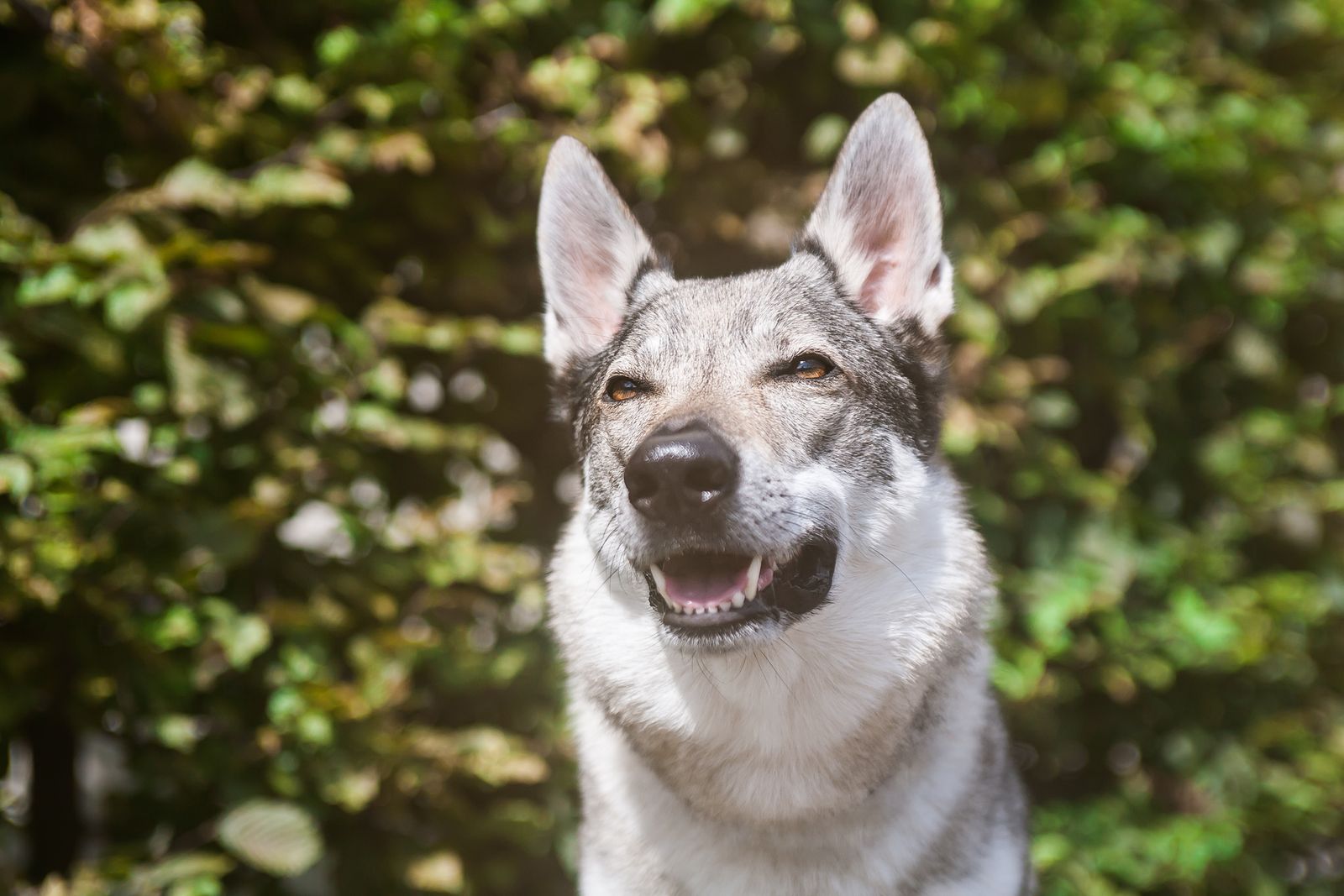
A highly affectionate, high energy, highly playful dog. On the practical side: low grooming demands and minimal drool. The trade-off is sheds plenty.
About the Czechoslovakian Wolfdog.
The Czechoslovakian Wolfdog (Ceskoslovensky Vlcak, often shortened to CSV) is a deliberate German Shepherd × Carpathian wolf hybrid, created in 1955 by the Czechoslovak military to combine wolf endurance and weather tolerance with shepherd trainability for border patrol work. The breed was recognised as a Czechoslovak national breed in 1982, FCI standardised in 1989, and accepted by Dogs NZ in 2014. NZ numbers are small, with under 30 NZKC registrations a year, and the breed sits firmly in the experienced working-dog handler bracket.
The first thing to know is that this is not a wolf-hybrid in the modern American sense. The founder generation is now seven decades back, and a CSV registered through Dogs NZ is a recognised breed with a closed studbook, not a recent crossbreed. That said, the wolf inheritance still shapes daily life in real ways. The breed is independent, reserved with strangers, suspicious of unfamiliar humans, less inclined to please a handler than a German Shepherd, and unusually high endurance.
Adults stand 60 to 70 cm at the shoulder and weigh 20 to 32 kg, lighter and leaner than a German Shepherd. The medium double coat is yellow-grey to silver-grey with the light mask required by the breed standard; wolf-grey colour patterning is the only accepted colour. Lifespan is 12 to 15 years, longer than most working breeds of similar size.
Personality and behaviour
CSVs are deeply bonded with their household, reserved with familiar humans outside the household, and actively suspicious of strangers. The default mode is alert and observational rather than reactive; the breed watches first, decides second, and acts third. NZ owners describe the dog as “thinking constantly,” and that is a reasonable summary.
The breed retains a meaningful pack dynamic. Familiar dogs in the household are managed well; unfamiliar dogs are assessed carefully. Same-sex aggression in adulthood is reported more often than in the German Shepherd parent stock, and most NZ CSV owners run mixed-sex pairs by preference. Casual dog-park interaction is not the breed”s natural mode; structured introductions and known social circles work better.
The trait that surprises new owners is the silence. Working CSVs bark rarely; the breed alerts through body language and posture before vocalising. Owners coming from a German Shepherd background often miss the cues for the first six to twelve months and learn to read the dog over time. Howling is more common than barking, especially in pairs.
The other surprise is the endurance. A German Shepherd on a 5 km run is tired; a CSV at 5 km is warming up. The breed was selected for long days at moderate output across the Czech-Slovak border patrol routes, and that physiology is unchanged. NZ CSV owners regularly run, hike, bike, canicross or skijor with their dogs as a daily routine, not as occasional weekend activity.
Around children, the breed is patient with its own household kids when raised together. Visiting children are managed through the handler; the breed does not warm up quickly to unfamiliar humans of any age. Most NZ breeders prefer households with children eight or older.
Care and exercise
Plan on at least two hours of structured activity a day, and most of that needs to be cognitively engaging rather than pure walking. Lead walks are a baseline; the breed needs running, scent work, mantrailing, canicross, agility or some other outlet that engages body and brain together. NZ CSV owners report that the breed excels at scent work and mantrailing in particular, and is unusually poor at competition obedience compared with the German Shepherd parent.
The medium double coat is the easiest part of CSV ownership. Realistic grooming routine:
- Brush once a week year-round, daily through the spring and autumn coat blow (two to three weeks each).
- Bath once or twice a year (the breed self-cleans like a working shepherd).
- Check ears weekly and trim nails every three to four weeks.
Diet is straightforward but the breed tolerates raw protein unusually well, and many NZ CSV owners feed a raw or partly-raw diet successfully. Free-feeding rarely works because the breed gorges; two meals a day is standard. Working CSVs at high activity levels eat more than their lean build suggests.
NZ climate fit is broadly good. The dense double coat handles Otago and Southland winters, Canterbury frosts and Wellington wet days without complaint. Heat tolerance in humid Auckland and Northland summer days above 25C needs management; shade, water and walks shifted to early morning or late evening cover most of the issue. The breed swims if introduced young but is not a natural water dog like the Labrador.
Fencing is the practical hard limit on suburban placements. The CSV jumps higher than owners expect (a motivated adult clears 2 m from standstill), digs out reliably and reads gates and latches faster than most breeds. Two metres of secure dig-proof fencing is the minimum, and gate self-closing hardware is sensible. Roaming CSVs on rural roads are a serious problem and council registration moves toward “menacing” classification quickly after any incident.
Training a Czechoslovakian Wolfdog in New Zealand
Training notes for the breed are different from training notes for a German Shepherd, even though the parent stock overlaps. The wolf inheritance shows up as independence, sensitivity to handler emotion, suspicion of repetition and a dislike of formal obedience drilling. Practical notes:
- Foundation handling and socialisation start week one. Introduce the puppy to expected household visitors, vets, traffic, livestock and rural sights and sounds between 8 and 16 weeks. The window for reducing adult suspicion is narrow.
- Reward-based methods are essential. Compulsion-based training damages the bond fast and produces a fear-aggressive adult that is dangerous and unmanageable.
- Short varied sessions with high-value reinforcement work better than drilled obedience. The breed loses interest in repetition and switches off if drilled.
- Working-dog clubs in NZ (NZKC obedience, IGP clubs, mantrailing groups) are the practical training routes. Cluster in Auckland, Hamilton, Wellington and Canterbury. Expect NZ$200 to NZ$500 a year in club fees.
- Recall in open spaces is unreliable for novice handlers and reliable for trained handlers. The variable is the handler.
- Adolescence (10 to 24 months) is harder than puppyhood. Reactivity, fence-running, selective recall and same-sex aggression all peak in this window. Drop training during adolescence and the dog usually surrenders to rescue at 18 to 30 months.
Where to find a Czechoslovakian Wolfdog in New Zealand
Sourcing is constrained. NZKC-registered CSV breeders are few, with under 30 puppies a year nationally and waitlists of 12 to 24 months. Prices run NZ$2,500 to NZ$4,500 for NZ-bred puppies and NZ$4,000 to NZ$6,500 for imported pups from European working lines. Reputable breeders interview rigorously and refuse buyers without prior working-dog experience, and the small NZ founder population means pedigree verification matters more than for high-volume breeds. Trade Me listings advertising CSVs at low prices are usually unverified and sometimes not pure-bred; the wolf-look attracts low-quality breeding into the supply chain.
Rescue is rare in NZ; surrendered CSVs almost always come from households that underestimated the breed and are rehomed through breeder networks rather than SPCA channels. The breed is not a sensible first dog under any reasonable definition, and reputable NZ breeders consistently enforce that on the supply side.
The Czechoslovakian Wolfdog, by the numbers.
Each trait scored 1 to 5 on the AKC scale. The verdict synthesises the data; the panels below show the strengths, group averages, and the full trait table.
Top strengths
Family Life
avg 3.3Affectionate with Family
Good with Young Children
Good with Other Dogs
Physical
avg 2.3Shedding
Grooming Frequency
Drooling
Social
avg 2.8Openness to Strangers
Playfulness
Watchdog / Protective
Adaptability
Personality
avg 3.8Trainability
Energy Level
Barking Level
Mental Stimulation Needs
Living with a Czechoslovakian Wolfdog.
A 24-hour breakdown of how this breed's day typically goes, scaled to its energy, mental-stimulation, and grooming needs.
What a Czechoslovakian Wolfdog costs to own.
An indicative NZ lifetime cost: purchase, setup, then food, vet, insurance, grooming and other annual outgoings. Adjust the inputs to see how your choices change the total.
A Czechoslovakian Wolfdog costs about
$287per month
$66
$9
$52,222
Adjust the inputs:
Where the monthly cost goes
Food
$107 / mo
$1,280/yr · breed-appropriate dry & wet food
Insurance
$81 / mo
$968/yr · lifetime cover protects against breed-specific claims
Vet (avg)
$54 / mo
$650/yr · routine checks plus breed-specific risk
Grooming
$8 / mo
$100/yr · brushes, shampoo, professional clips
Other
$38 / mo
$450/yr · toys, treats, dental, boarding
Indicative NZ averages calculated from breed weight, grooming need and screened-condition count. One-off costs (purchase $3,500 + setup $450) are factored into the lifetime total but not the monthly figure.
How does the Czechoslovakian Wolfdog compare?
This breed
Czechoslovakian Wolfdog
$52,222
14-year lifetime cost
- Purchase + setup$3,950
- Food (lifetime)$17,920
- Vet (lifetime)$9,100
- Insurance (lifetime)$13,552
- Grooming (lifetime)$1,400
- Other (lifetime)$6,300
Reference
Average NZ medium dog
$38,920
12-year lifetime cost
- Purchase + setup$2,200
- Food (lifetime)$13,200
- Vet (lifetime)$6,000
- Insurance (lifetime)$11,400
- Grooming (lifetime)$2,400
- Other (lifetime)$3,720
A Czechoslovakian Wolfdog costs about $13,302 more over a lifetime than the average nz medium dog, mostly higherfood and highervet.
What to ask the breeder.
Reputable NZKC breeders test for these conditions and share results without being prompted. If a breeder won't share screening results, that is itself an answer.
Occasional
3 conditionsHip and elbow dysplasia
Lower incidence than the German Shepherd parent breed. Ask for hip and elbow scores from both parents.
Degenerative myelopathy (DM)
DNA-testable through the German Shepherd inheritance; reputable breeders test before mating.
Hypothyroidism
An occasional condition in the Czechoslovakian Wolfdog. Worth asking about and DNA testing where available.
Rare but urgent
2 conditionsPituitary dwarfism
Specific to the breed and the German Shepherd lineage. DNA test is available.
Anaesthesia sensitivity
Some lines metabolise anaesthetics differently. Flag the breed and any wolf-content concerns with the vet before surgery.
The Czechoslovakian Wolfdog in NZ.
- Popularity: A very rare breed in NZ with under 30 NZKC registrations a year. The NZ working-dog community uses the breed for scent work, mantrailing and canicross more than for protection sport, and most placements come through breeder networks rather than online listings.
- Typical price: NZ$2500–4500 from registered breeders
- Rescue availability: rare
- NZ climate fit: The dense double coat handles cold and wet conditions easily. Heat tolerance is moderate; humid Auckland and Northland summer days above 25C need shade and water and walks shifted to early morning or late evening.
- Living space: Lifestyle blocks of one hectare or more, or rural property. Suburban houses work only with experienced handlers and structured daily outlets. Apartments are not realistic. Fencing must be 2 m minimum and dig-proof; the breed jumps and digs more capably than most owners expect.
Who the Czechoslovakian Wolfdog is for.
Suits
- Experienced working-dog handlers (IGP, GSD, Malinois, working-line backgrounds)
- Lifestyle blocks with secure 2 m fencing and full-time presence
- Households actively training in scent work, mantrailing, canicross or agility
- Owners who want a dog they can take running, hiking and biking daily
Less suited to
- First-time dog owners (consistently a poor outcome)
- Apartments and townhouses
- Households with young children unfamiliar with reactive working dogs
- Owners working long hours with the dog left alone
- Suburban properties without strong fencing
- Buyers attracted by the wolf look on Instagram
Common questions.
Is a Czechoslovakian Wolfdog legal to own in New Zealand?
How does the CSV compare to a German Shepherd?
How much does a CSV puppy cost in NZ?
Are CSVs good with other dogs?
If the Czechoslovakian Wolfdog appeals, also consider.
Breeds with a similar profile that might suit your household.

German Shepherd Dog
Athletic, sharp-minded working dog with strong protective instincts. Bonds tightly to its handler and needs a real job to be a good house dog.

Siberian Husky
Athletic Arctic sled dog with a thick double coat and a working brain. Friendly, vocal, escape-prone, and built for endurance rather than household lounging.

Alaskan Malamute
Heavy freight sled dog, larger and stronger than the Siberian Husky and built for power rather than speed. Affectionate with family, independent, vocal, and a serious commitment for first-time owners.
Last reviewed:
Sources for this pageInformation only. Breed traits and health notes on this page are aggregated from public registry and breed-authority sources. Individual animals vary; this page is general information, not veterinary, behavioural, or insurance advice. Always consult a registered NZ vet or breeder for guidance specific to your situation.