
Bolognese Dog Breed Information
Also known as: Bichon Bolognese, Bolognese Toy Dog, Bolo
A 3 to 4 kg Italian white toy from the Bichon family, quieter and more reserved than the Bichon Frise. The single fluffy white coat does not shed but mats fast without daily brushing. Rare in New Zealand, with most pups coming from a small handful of NZKC-registered breeders.
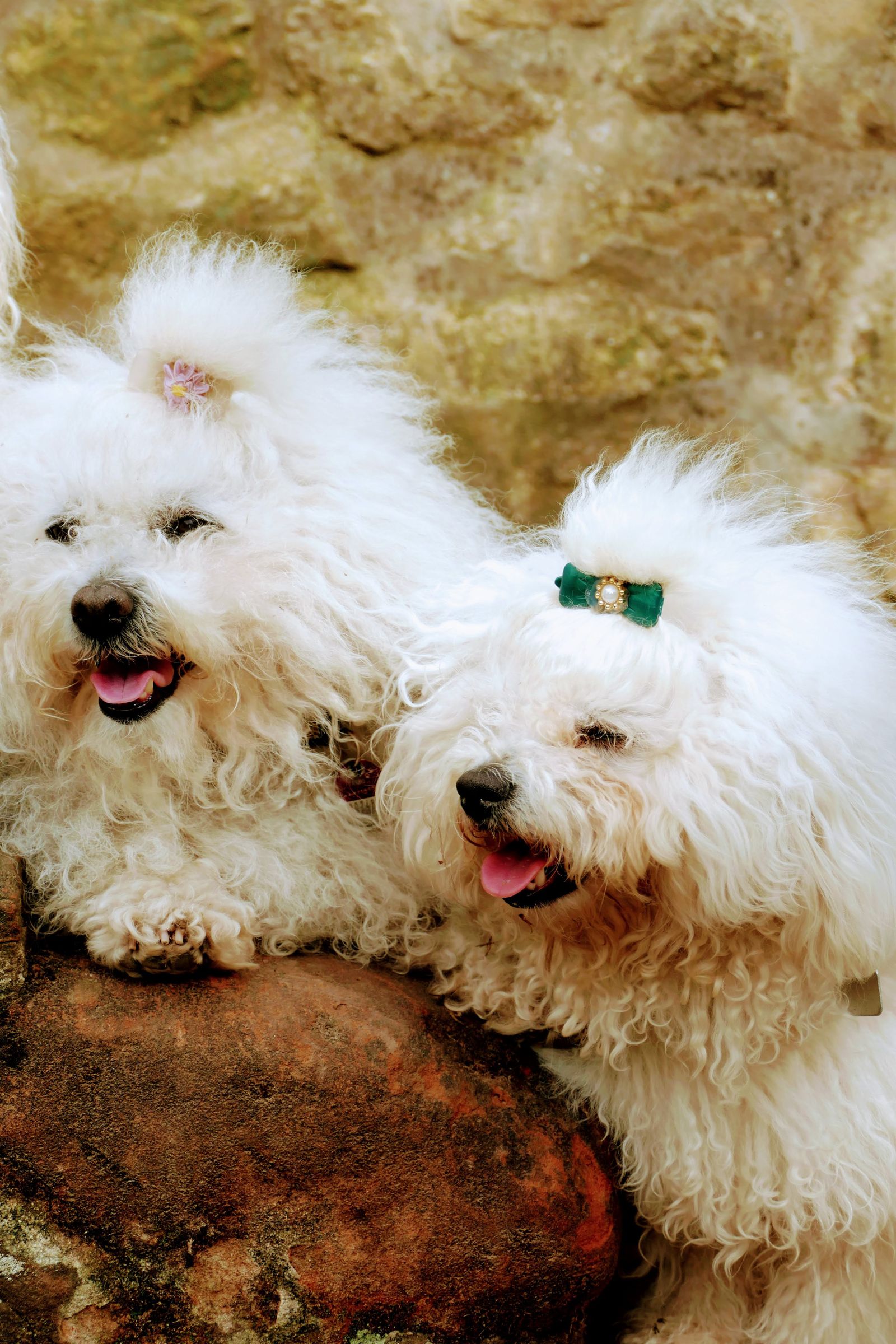
A highly affectionate, highly trainable dog. On the practical side: minimal drool and low shedding. The trade-off is high grooming needs.
About the Bolognese.
The Bolognese is the white Italian cousin of the Bichon Frise, named for the city of Bologna and the quietest of the small bichon-family breeds in New Zealand. The breed solves a specific problem for NZ owners: a small, low-shedding, low-energy companion that suits an apartment and is calmer in temperament than a Bichon Frise, less vocal than a Maltese, and less demanding of social contact than a Havanese. The trade-off is rarity, with most NZ Bolognese coming from a small handful of registered breeders and waitlists running 12 to 24 months.
Adults stand 25 to 30 cm at the shoulder and weigh 2.5 to 4 kg. The coat is single, long, pure white and “flocked” (small wavy locks that hang together rather than the curl of a Bichon Frise), and lifespan runs 12 to 14 years.
Personality and behaviour
Bolognese are deeply attached to their household and observably more reserved than their Bichon Frise cousins. The breed bonds closely to its people, follows a chosen person around the house, and tends toward quiet companionship rather than constant activity. Owners describe the breed as “thoughtful” and “watchful”, and the temperament across the small NZ population is consistent on this point.
Around strangers, the typical Bolognese is polite but cautious. The breed warms slowly to new people, will retreat to the owner’s lap rather than greet at the door, and is not the dog at the dog park rolling around with every newcomer. With other dogs the default is polite indifference rather than active sociability. Early socialisation matters; an undersocialised Bolognese can drift toward shy or reactive behaviour around unfamiliar people and dogs.
The bark is rare. Bolognese will alert at the door, often quieten on cue, and rarely settle into the constant vocal pattern that gets toys complained about by neighbours. The breed is one of the better small dogs for apartment and shared-wall living on the noise dimension, well below a Maltese, Pomeranian or Yorkshire Terrier.
The trait that surprises new owners is the separation distress. Bolognese bond closely and tend to struggle with full workdays alone. The breed develops barking, house-soiling regressions and excessive grooming when left for 8-hour stretches without preparation. Owners who can work from home some days, drop the dog at daycare on others, or share the day with a partner have the easier path.
Around children, the breed is patient with calm primary-school-aged kids and older. Toddlers are a poor match because the small frame is fragile and the breed dislikes rough handling. Most NZ breeders prefer households with children seven or older.
Care and exercise
Plan on around 35 minutes of exercise a day, split between two short walks and indoor play. The breed is low to moderate energy by toy standards: a 15-minute morning walk and a 20-minute afternoon walk, plus a play session and a short training drill, meet the daily need comfortably. Bolognese enjoy off-lead time in fenced parks, sniff-led walks and food puzzles. Long hour-long walks aren’t built for the breed; small legs cover less ground than they look like.
The grooming commitment is the breed’s defining ownership task. The single flocked coat does not shed loose hair into the house; it traps that hair in the coat, which is why the breed is allergy-friendly and why it mats so quickly. Daily brushing with a slicker and a metal comb is the minimum, paying particular attention to behind the ears, armpits, behind the legs, around the collar and across the chest where mats form fastest. Skip a fortnight and the coat felts.
Most NZ pet Bolognese visit a professional groomer every 6 to 8 weeks for a full bath, blow-out and trim. Expect NZ$80 to NZ$120 per session, NZ$600 to NZ$1,200 a year, and NZ$8,000 to NZ$15,000 across the dog’s lifetime. The grooming line is the largest single ongoing cost in Bolognese ownership and dwarfs the food bill. Some owners learn to clip at home, which cuts the lifetime grooming bill by half but adds an upfront NZ$300 to NZ$500 for clippers, blades and a grooming table.
Tear staining is a daily reality. The reddish-brown staining below the inner corner of each eye is mostly cosmetic but visible against the white coat, and persistent staining can mask shallow tear ducts that need vet checks. Daily wipes with warm water and a soft cloth keep visible staining manageable. Ear care matters too: the hairy ear canals trap moisture and ear wax, so most groomers pluck ear hair as part of the standard appointment.
Dental care is the third ongoing task. Toy-breed jaws crowd teeth, plaque builds fast, and most adult Bolognese need a scale-and-polish under anaesthetic from age 4 or 5. Daily home brushing slows the build-up but does not replace the descale, which runs NZ$500 to NZ$900 per visit at most NZ vet practices.
The dietary watch-out is portion control. A 3 kg adult eats 60 to 90 g of quality dry food a day. Treats need to come out of the daily allowance, not on top of it.
Where to find a Bolognese in New Zealand
Three paths, with the caveat that supply is tight.
- Registered NZKC breeders. The Dogs NZ breeders directory lists the small handful of registered Bolognese breeders. Expect a 12 to 24 month waitlist and NZ$3,000 to NZ$4,500 per puppy. A reputable breeder shows patella scores for both parents, eye certificates and bile-acid testing on puppies. Walk away from “rare colour” or “teacup Bolognese” listings; the breed comes in white only and the term “teacup” has no breed-standard meaning.
- Australian imports. Some NZ owners import from Australian NZKC-equivalent registered breeders. The cost runs NZ$5,000 to NZ$7,000 with shipping, paperwork and arrival care, but the supply is more reliable than the NZ population can offer.
- Toy-breed rescue and SPCA. Pure Bolognese in NZ rescue is essentially unheard of; the breed’s small population means almost none are surrendered. Bolognese-Maltese and Bolognese-Bichon crosses occasionally appear in SPCA centres at NZ$300 to NZ$600.
Council registration is required by 12 weeks under the Dog Control Act. The DIA national dog database holds the record; your local council issues the tag and the annual fee. Microchip details flow through the New Zealand Companion Animal Register.
The Bolognese, by the numbers.
Each trait scored 1 to 5 on the AKC scale. The verdict synthesises the data; the panels below show the strengths, group averages, and the full trait table.
Top strengths
Family Life
avg 4.0Affectionate with Family
Good with Young Children
Good with Other Dogs
Physical
avg 2.3Shedding
Grooming Frequency
Drooling
Social
avg 2.8Openness to Strangers
Playfulness
Watchdog / Protective
Adaptability
Personality
avg 2.8Trainability
Energy Level
Barking Level
Mental Stimulation Needs
Living with a Bolognese.
A 24-hour breakdown of how this breed's day typically goes, scaled to its energy, mental-stimulation, and grooming needs.
What a Bolognese costs to own.
An indicative NZ lifetime cost: purchase, setup, then food, vet, insurance, grooming and other annual outgoings. Adjust the inputs to see how your choices change the total.
A Bolognese costs about
$265per month
$61
$9
$45,501
Adjust the inputs:
Where the monthly cost goes
Food
$50 / mo
$598/yr · breed-appropriate dry & wet food
Insurance
$47 / mo
$559/yr · lifetime cover protects against breed-specific claims
Vet (avg)
$64 / mo
$770/yr · routine checks plus breed-specific risk
Grooming
$67 / mo
$800/yr · brushes, shampoo, professional clips
Other
$38 / mo
$450/yr · toys, treats, dental, boarding
Indicative NZ averages calculated from breed weight, grooming need and screened-condition count. One-off costs (purchase $3,750 + setup $450) are factored into the lifetime total but not the monthly figure.
How does the Bolognese compare?
This breed
Bolognese
$45,501
13-year lifetime cost
- Purchase + setup$4,200
- Food (lifetime)$7,774
- Vet (lifetime)$10,010
- Insurance (lifetime)$7,267
- Grooming (lifetime)$10,400
- Other (lifetime)$5,850
Reference
Average NZ medium dog
$38,920
12-year lifetime cost
- Purchase + setup$2,200
- Food (lifetime)$13,200
- Vet (lifetime)$6,000
- Insurance (lifetime)$11,400
- Grooming (lifetime)$2,400
- Other (lifetime)$3,720
A Bolognese costs about $6,581 more over a lifetime than the average nz medium dog, mostly highergrooming and lowerfood.
What to ask the breeder.
Reputable NZKC breeders test for these conditions and share results without being prompted. If a breeder won't share screening results, that is itself an answer.
Common
3 conditionsPatellar luxation
Slipping kneecaps. Reputable NZKC breeders score parents.
Dental disease
Toy-breed jaw crowding. Daily brushing slows it; annual scale-and-polish from age 5 is typical.
Tear staining and shallow tear-duct issues
Visible against the white coat. Mostly cosmetic; persistent staining can mask duct problems that need a vet check.
Occasional
3 conditionsEye conditions (cataracts, progressive retinal atrophy)
An occasional condition in the Bolognese. Worth asking about and DNA testing where available.
Hip dysplasia and Legg-Calve-Perthes disease
An occasional condition in the Bolognese. Worth asking about and DNA testing where available.
Hypoglycaemia in puppies
Toy puppies can crash blood sugar if meals are missed. Frequent small meals for the first 16 weeks.
Rare but urgent
1 conditionLiver shunt (portosystemic shunt)
Reputable breeders bile-acid test puppies before sale.
The Bolognese in NZ.
- Popularity: A genuinely rare breed in NZ, with NZKC registrations typically in single digits each year. Most NZ Bolognese come from a small group of registered breeders, with occasional imports from Australia. The breed is appearing more frequently in Auckland and Wellington apartment households among owners specifically seeking a quieter, more reserved alternative to the Bichon Frise or Maltese.
- Typical price: NZ$3000–4500 from registered breeders
- Rescue availability: rare
- NZ climate fit: The single coat is comfortable through most NZ weather. Heat tolerance is moderate and a clipped coat plus shade and water access manages upper-North-Island summers. Cold mornings in Wellington, Christchurch and Otago below 8 degrees benefit from a small fitted coat for walks.
- Living space: Excellent apartment dog. Quiet, small, low to moderate energy, and adapts well to flat life. The 35-minute exercise need is met on city walks. Daily brushing is non-negotiable.
Who the Bolognese is for.
Suits
- Apartment and townhouse households in any NZ city
- Older owners and retirees who want a quiet small companion
- Households where someone is home most of the day
- Owners willing to commit to daily brushing
Less suited to
- Households with toddlers or rough handlers
- Owners who can't commit to daily grooming or 6 to 8 weekly clipping
- Households left empty for full workdays
- Owners wanting a confident, party-ready small dog (look at the Bichon Frise instead)
Common questions.
How is the Bolognese different from the Bichon Frise?
Are Bolognese hypoallergenic?
How rare are Bolognese in New Zealand?
Do Bolognese bark a lot?
If the Bolognese appeals, also consider.
Breeds with a similar profile that might suit your household.

Bichon Frise
A 5 kg white powder-puff toy with a soft curly double coat, a friendly playful temperament, and a defining grooming commitment. A common choice in NZ apartments for owners who want a low-shedding small dog and accept the cost of a 6-weekly groomer appointment.

Maltese
A 3 kg lapdog with a long white coat, a confident streak and a strong bark. Affectionate, glued to one person, and one of the longest-lived breeds at 12 to 15 years.

Havanese
The only dog breed native to Cuba and the country's national dog. A 5 kg silky-coated companion descended from Mediterranean Bichon-type lapdogs brought by Spanish colonists. Increasingly popular in NZ apartment households for the affectionate temperament and low shedding.

Coton de Tulear
A 4 to 6 kg fluffy white toy from the bichon family and the national dog of Madagascar, where the breed was once reserved for the noble households of the port city Tulear. The cotton-soft coat does not shed but mats fast without daily brushing. A growing presence in NZ apartment households for owners drawn to the social, biddable temperament.
Last reviewed:
Sources for this pageInformation only. Breed traits and health notes on this page are aggregated from public registry and breed-authority sources. Individual animals vary; this page is general information, not veterinary, behavioural, or insurance advice. Always consult a registered NZ vet or breeder for guidance specific to your situation.